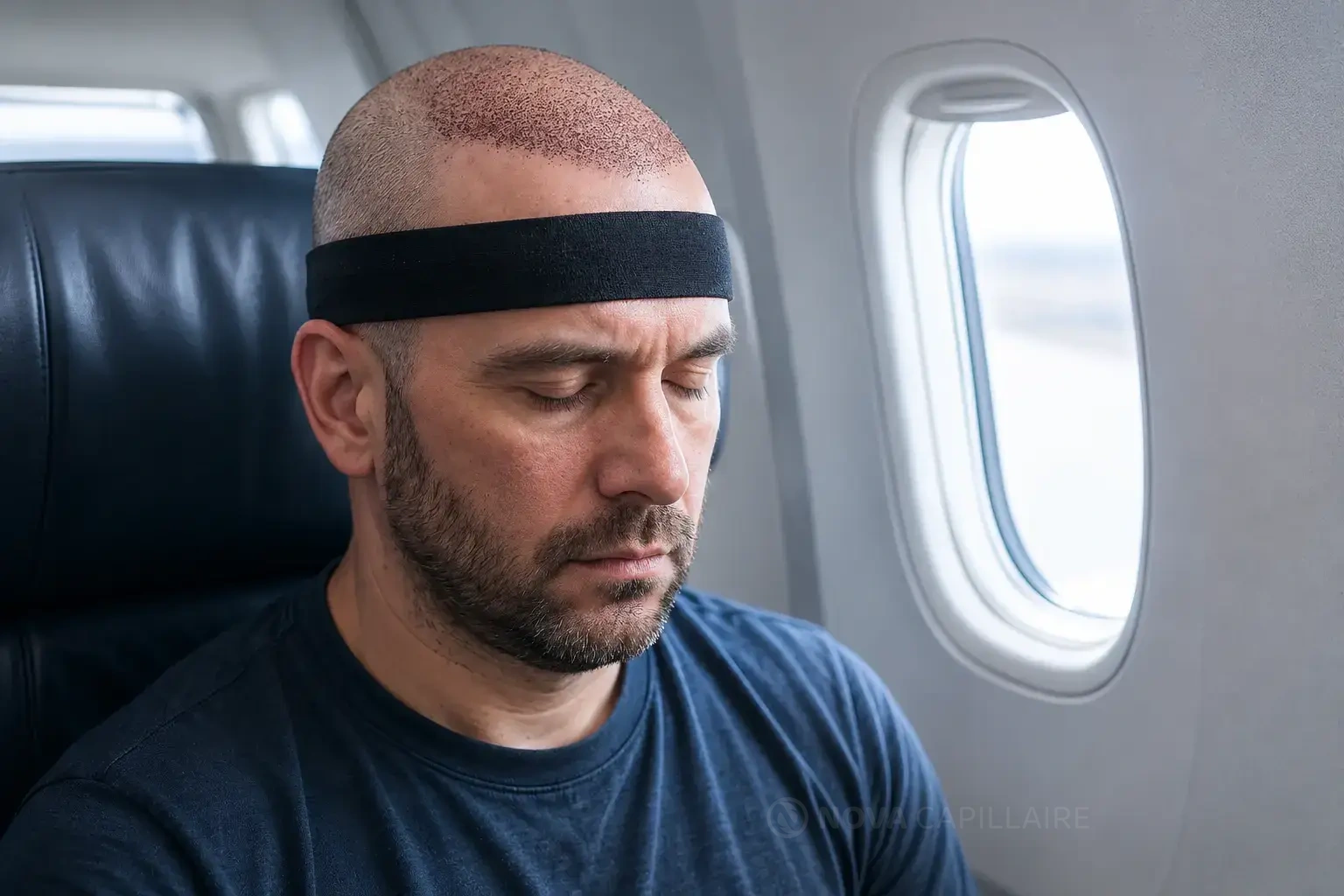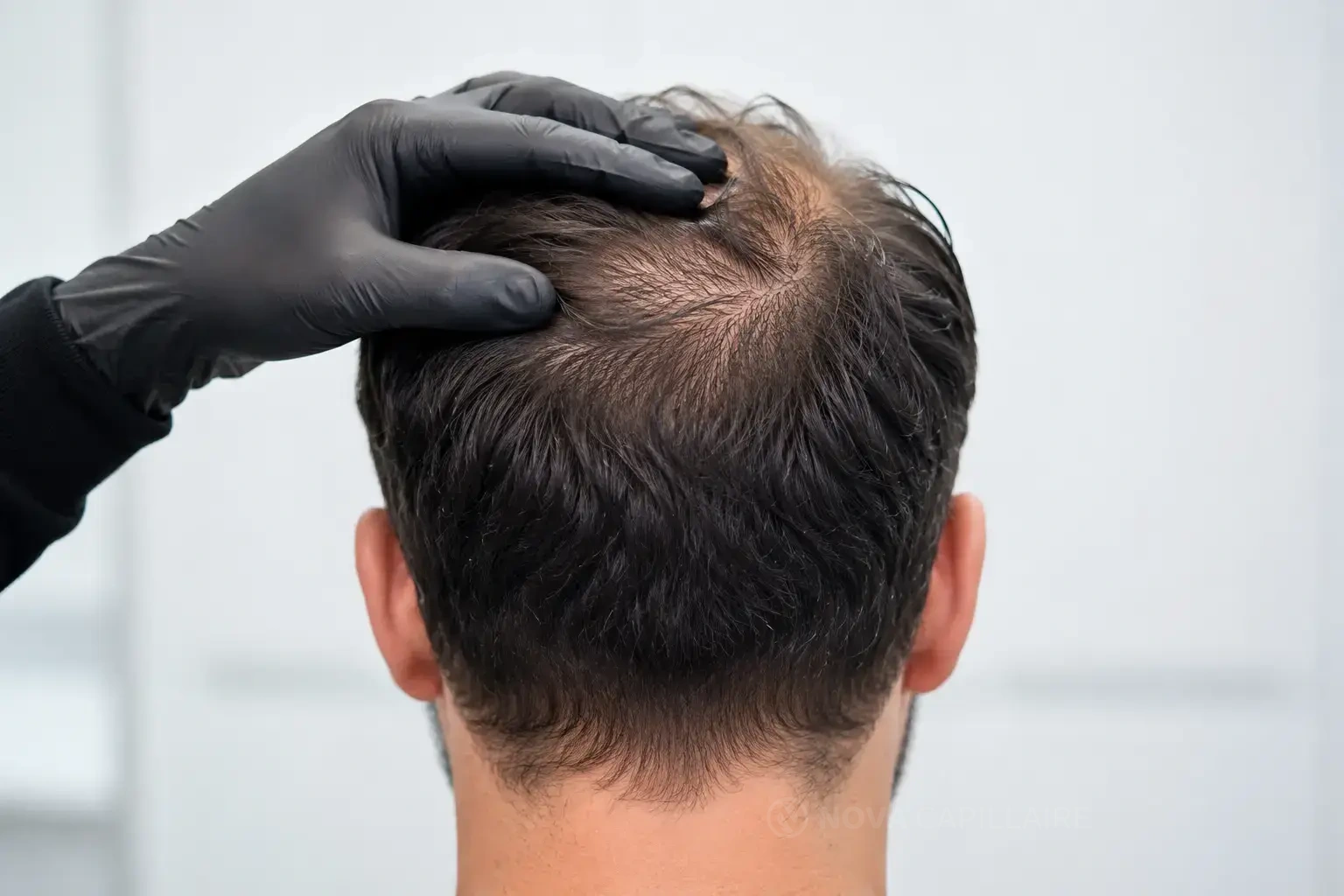
In a hair transplant, the graft is the basic unit. It carries the hair follicle from the donor area to the recipient area. Its quality, handling, and distribution directly influence the final appearance of the transplant.
Knowing what a graft is helps you understand a cost estimate, ask the right questions, and assess a proposed treatment plan. Graft count matters, but it cannot predict the result on its own.
NOVA // LOG · THE GRAFTS
What is a graft?
A graft, or micro-graft, is a small group of hair follicles. It is harvested from an area of the scalp where hair is more resistant to loss and then implanted in thinning areas.
These micro-grafts are essential for a successful hair transplant. They contribute to density, orientation, and natural appearance of the final result.
NOVA // LOG · THE GRAFTS
Graft composition
A micro-graft associates hair follicles with the surrounding tissues. Discover the elements represented in this diagram.
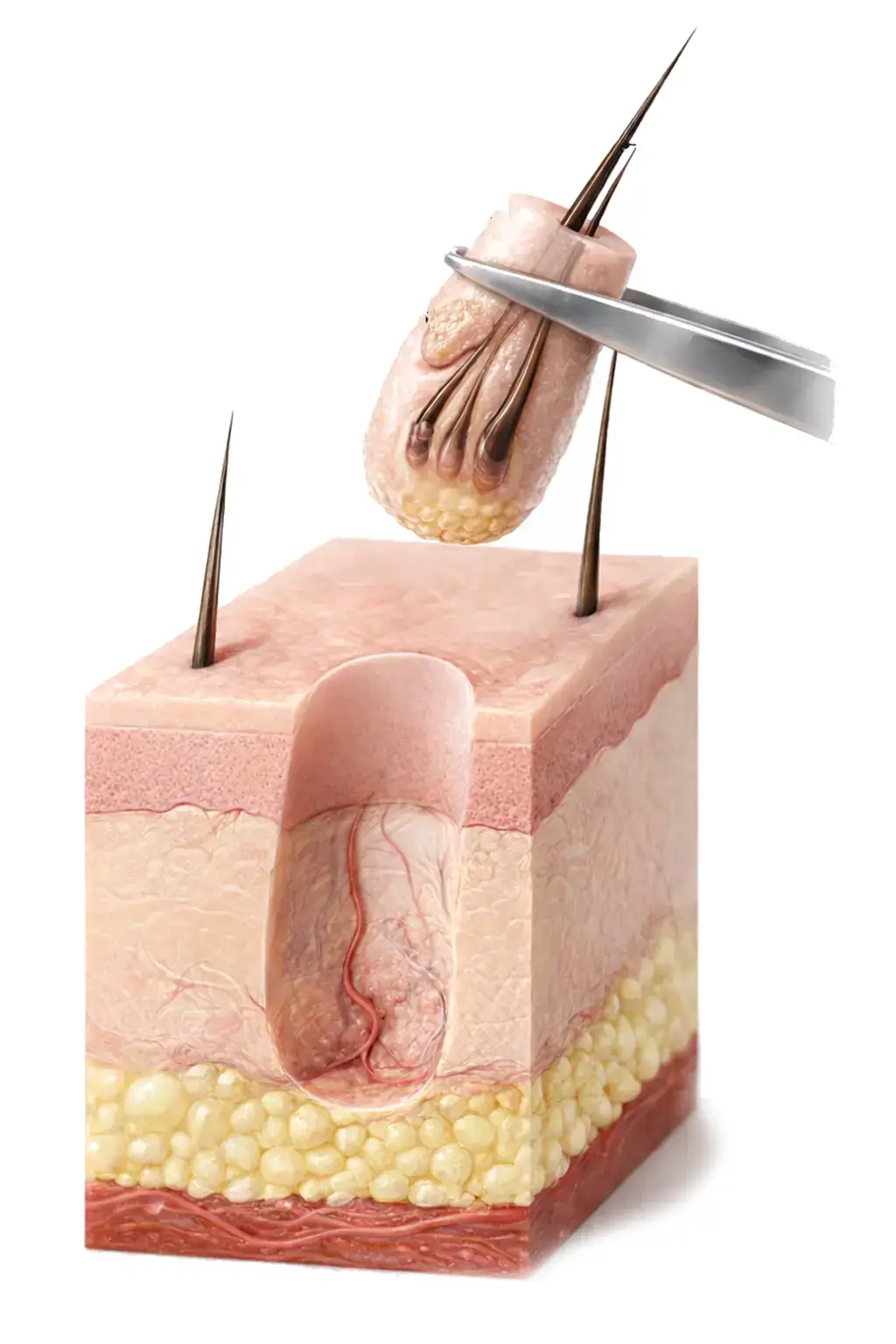
EXPLORE THE DIAGRAM
Touch a marker or choose a part below.
Follicular unit
A hair graft can contain from 1 to 5 hairs.
Hair shaft
Visible part of the hair emerging above the skin.
Sebaceous gland
Produces sebum that lubricates the hair and skin.
Hair root
Part of the hair located under the skin within the hair follicle.
Epidermis
Superficial skin layer pierced by the hair shaft.
Dermis
Support layer containing follicles, glands, and blood vessels.
Hypodermis
Deep layer rich in adipose tissue beneath the dermis.
Muscle
Muscle layer depicted beneath the various skin layers.
A micrograft is an essential unit in hair transplantation, composed of several fundamental elements:
- Hair follicles: each micrograft contains between 1 and 4 hair follicles, which influences the density and natural appearance.
- Follicles derived from a donor area that is suitable are generally less sensitive to DHT-related hair loss.
- Hair retains its characteristics after transplantation.
Characteristics of grafts
A hair graft can contain between 1 and 4 hair follicles. Their size and structure vary depending on the extraction technique used.
The choice of extraction and implantation method directly influences the distribution and viability of micrografts.
NOVA // LOG · THE GRAFTS
Regrowth, in pictures.
The eight images below are from the NOVA website series. The dates correspond to the montage: they illustrate this process, not a guaranteed result.
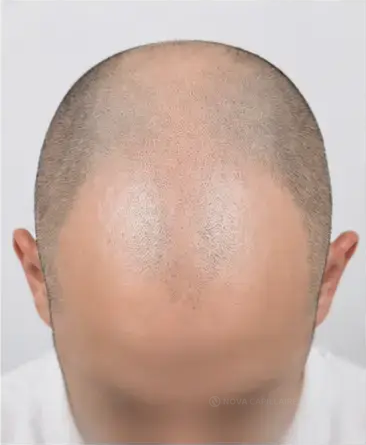
Before the procedure
Starting point
This view shows the situation before the transplant. It serves as a reference for follow-up, not a prediction of results.
1 / 8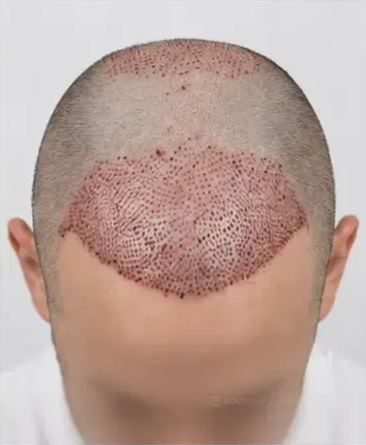
Day 2
The first days
The implantation areas are visible in this example. The appearance varies; this photo alone does not allow you to judge your own healing.
2 / 8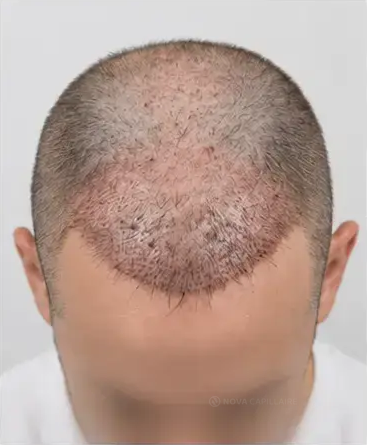
Week 2
A transitional phase
The scalp’s appearance changes during healing. Implanted hair shafts may begin to fall out: do not pull on the hair or scabs.
3 / 8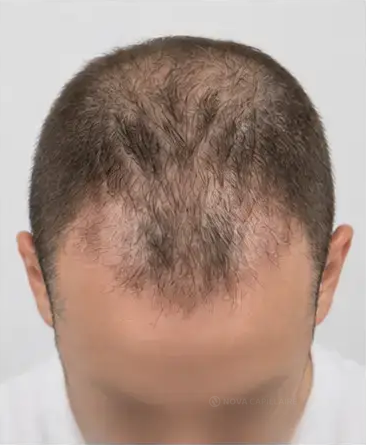
Month 1
Appearance may fluctuate
The visible hair here does not correspond to the density expected for all patients. Shedding of shafts may still occur.
4 / 8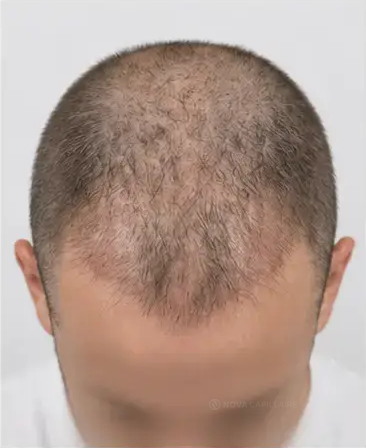
Month 3
Patience remains important
In this example, coverage seems less dense than in the first month. Progress is not linear; regrowth may become visible later.
5 / 8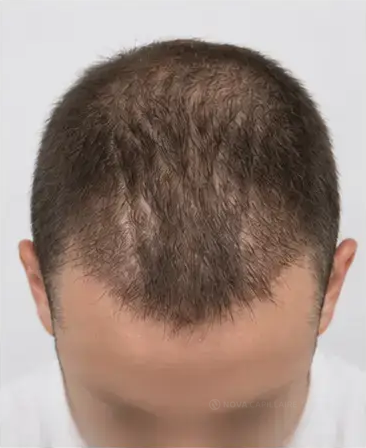
Month 6
Progressive development
Coverage changes over the months. Only your clinical follow-up allows you to appreciate your own evolution.
6 / 8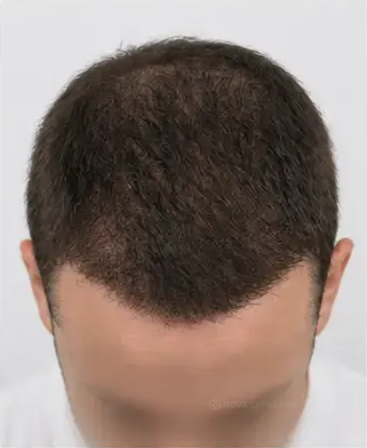
Month 9
Density and texture evolve
This example shows greater coverage. Hair length and styling also influence the photographic appearance.
7 / 8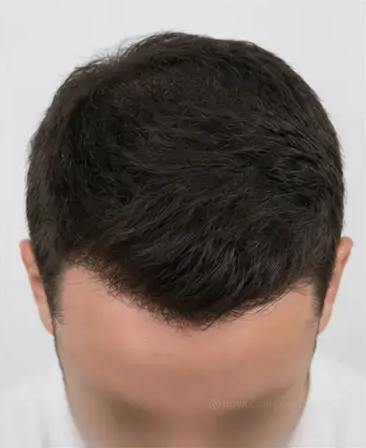
Month 12
Discuss your situation with your clinician
This image illustrates this case at twelve months, without guaranteeing a similar result. Evaluation of maturation can continue up to eighteen months.
8 / 8Illustration photos: your result depends on your situation. In case of unusual symptoms, contact your team without waiting for the next step.
Months 1 to 4 · The beginning
A resting phase and temporary shedding of shafts may precede regrowth. Initial hairs appear gradually; volume remains modest.
Months 5 to 6 · Progression
Coverage may improve. Thickness and texture evolve at different rates depending on the person.
Months 7 to 8 · Development
Growth continues and appearance may become denser. This stage does not necessarily correspond to final density.
Months 9 to 12 and beyond · Maturation
Your results continue to develop. Depending on your situation and follow-up care, they may be assessed over a period of up to 18 months.
NOVA // LOG · THE GRAFTS
Understanding the number of grafts implanted
To ensure the number of grafts promised matches the number actually implanted, it is recommended to:
- check if the clinic clearly details the process on the estimate;
- ask how the grafts are counted after extraction;
This verification ensures greater transparency and helps to better understand what was actually done.
NOVA // LOG · THE GRAFTS
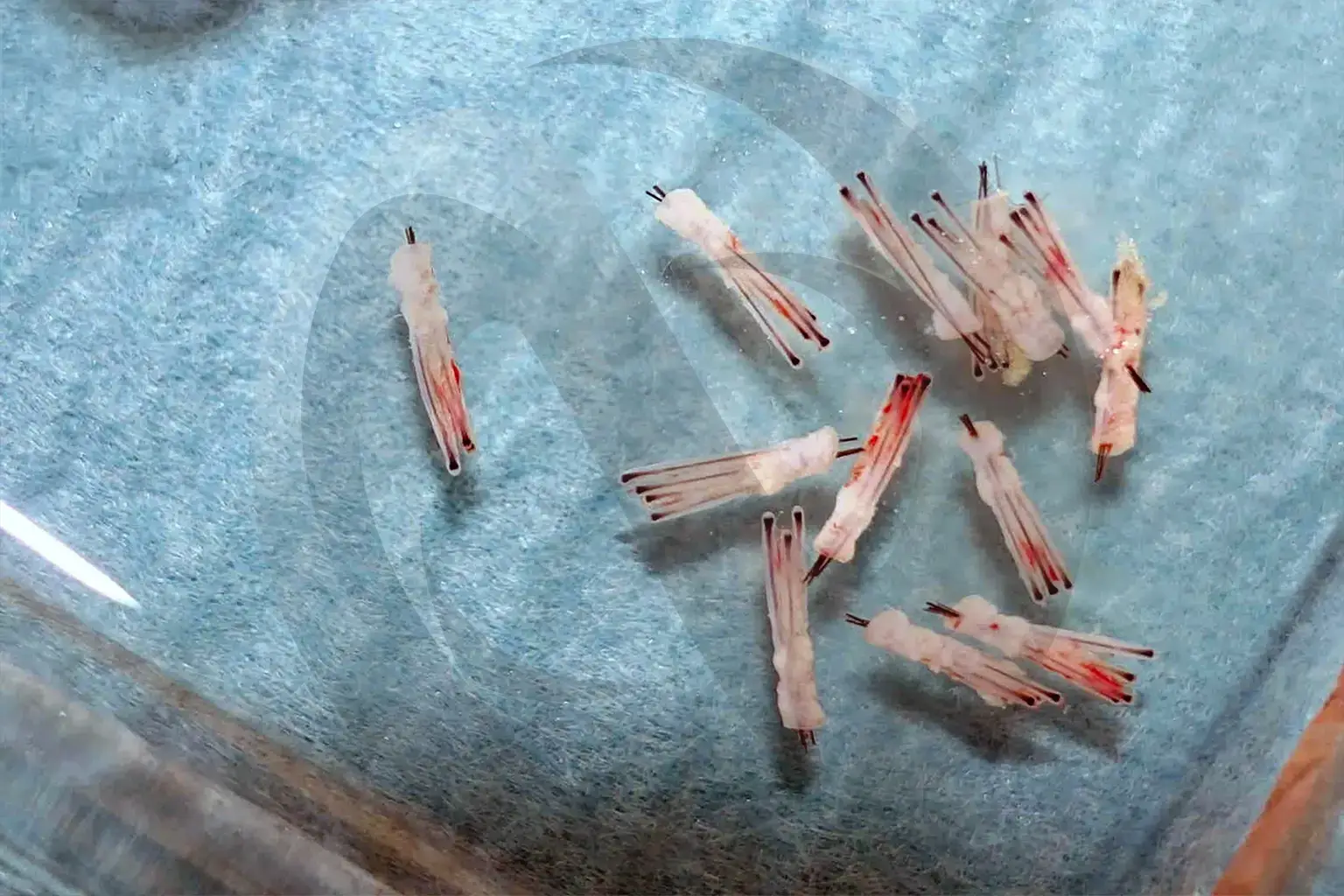
Preservation of grafts between extraction and implantation
Grafts are fragile and require optimal conditions for their survival, including:
- Storage in a nutrient solution: grafts must remain hydrated to avoid drying out.
- Appropriate refrigeration: stable and controlled temperature helps preserve their viability.
NOVA // LOG · THE GRAFTS
What is graft transection?
Transection occurs when a hair follicle is partially damaged during extraction. The graft becomes less usable for producing new hair.
This factor can affect the overall success of the transplant. To minimize this risk, it is essential to choose an experienced team equipped to work precisely.
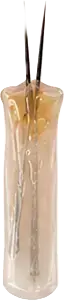
Complete transection
The follicle is completely cut. No bulb present.

Partial transection
The follicle is partially cut. Part of the bulb is missing.
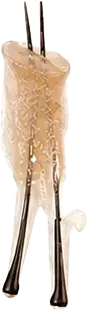
Follicle stripping
Cells of the follicle’s outer sheath are ripped off (stripping).
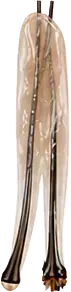
Dermal papilla (DP) damage
The dermal papilla, essential for hair growth, is damaged or absent.
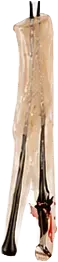
Bulb damage
The follicle is completely cut. No bulb present.
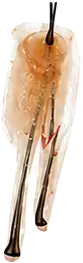
Follicular fracture
The follicle has a fracture in its structure.
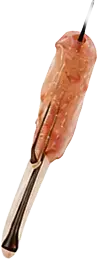
Presence of follicles in telogen phase
The follicle is in the telogen, or resting phase. This appearance differs from damage caused by extraction.
Views A to G from the original article are retained. This table illustrates different follicle aspects without allowing diagnosis from an image alone.
NOVA // LOG · THE GRAFTS
Coily hair grafts: a specific challenge
Coily hair has a more curved structure and particular density, making extraction and implantation more delicate. This curvature varies per individual and requires specific expertise to minimize follicle damage.
In this context, the team’s experience is an important factor. Adapted extraction and regular implantation contribute to a more uniform result.
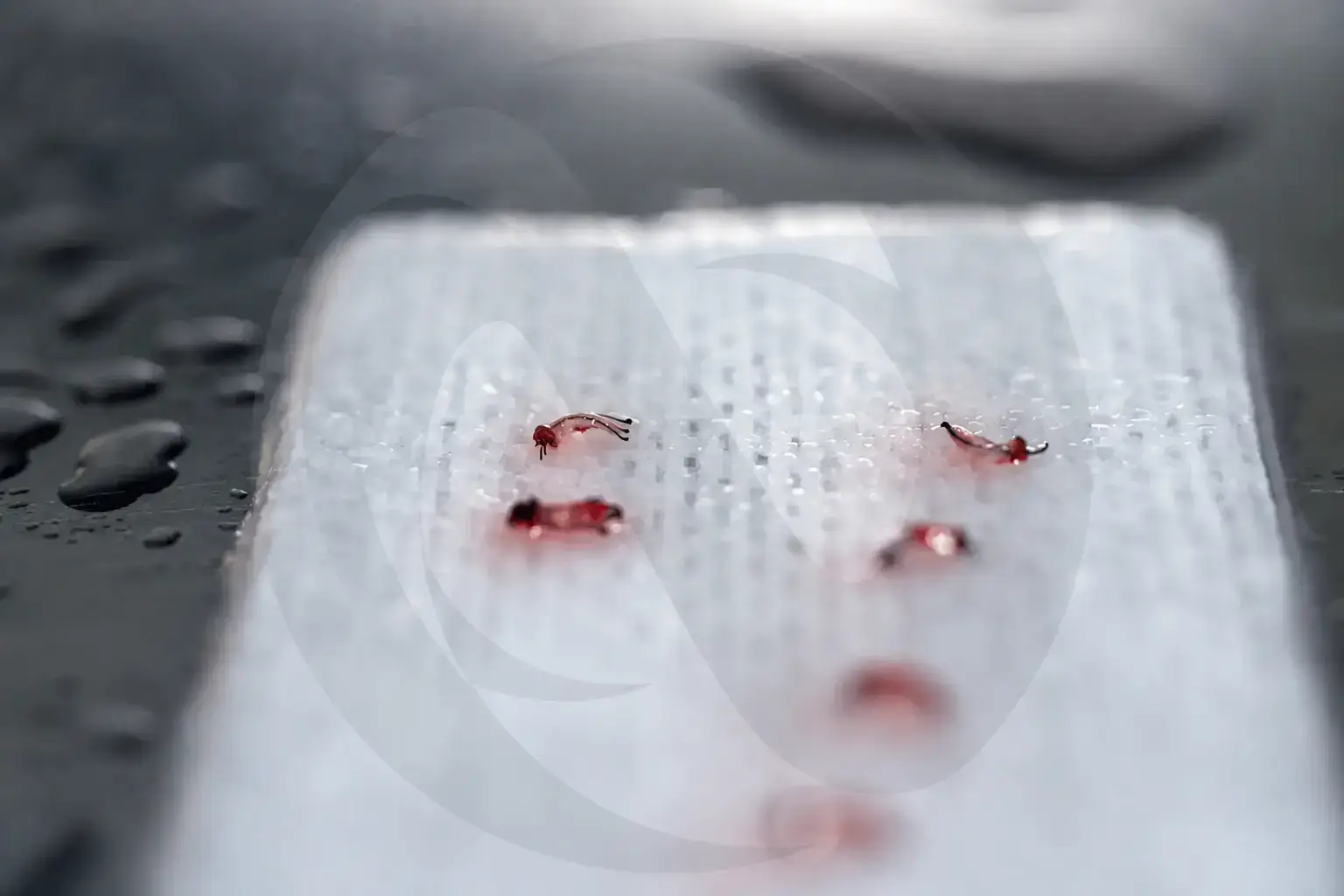
To go further: Afro and coily hair transplantation.
NOVA // LOG · THE GRAFTS
What to consider for an optimal result
Several elements must be considered for a successful hair transplant:
- the number of grafts needed according to the area size;
- individual characteristics, such as hair thickness and the density of the donor area ;
- the quality of graft preparation and storage;
- the experience level of the team performing the procedure;
- the graft distribution strategy to achieve a natural appearance.
NOVA // LOG · THE GRAFTS
Graft arrangement: a key method for a successful outcome
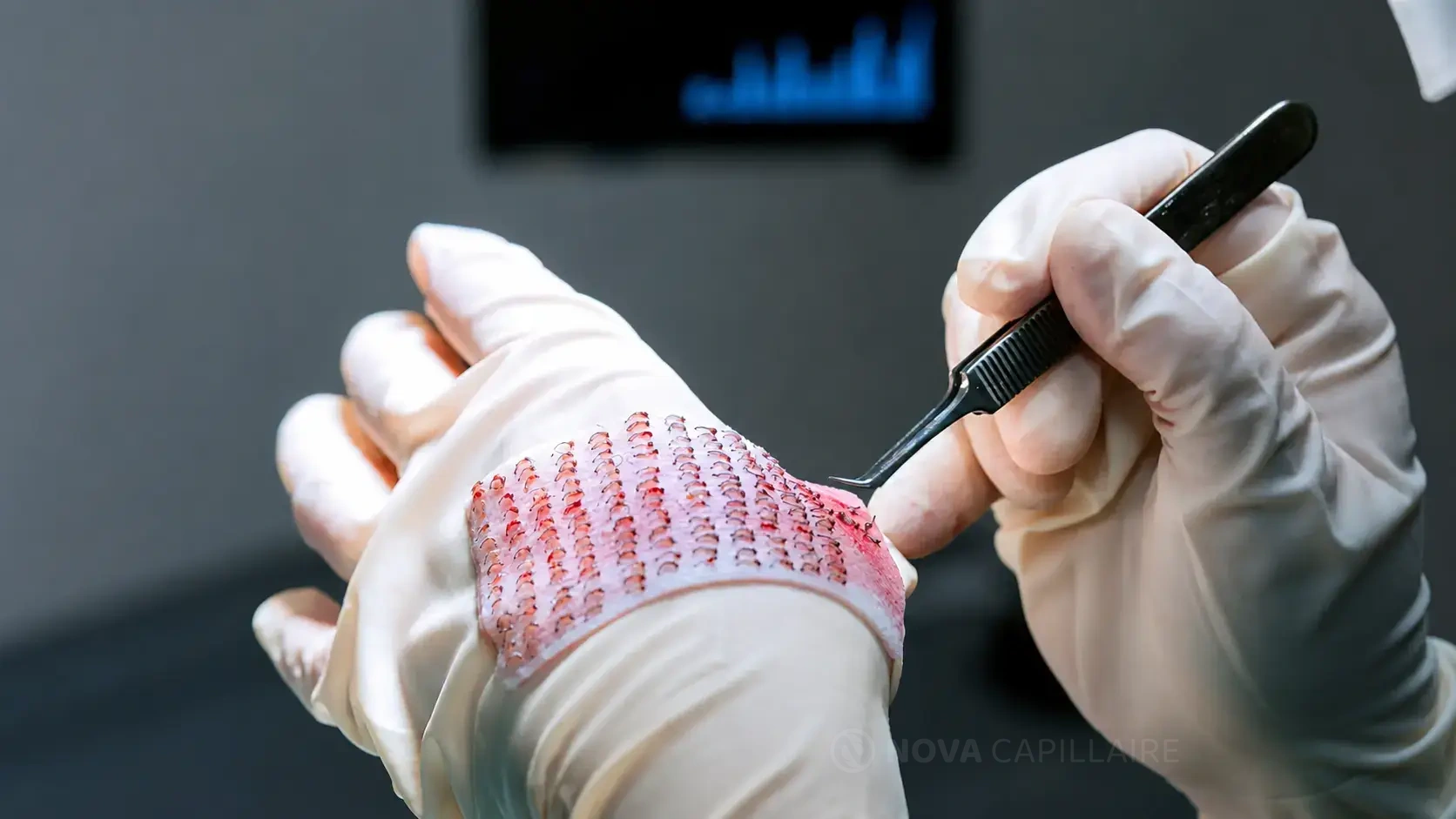
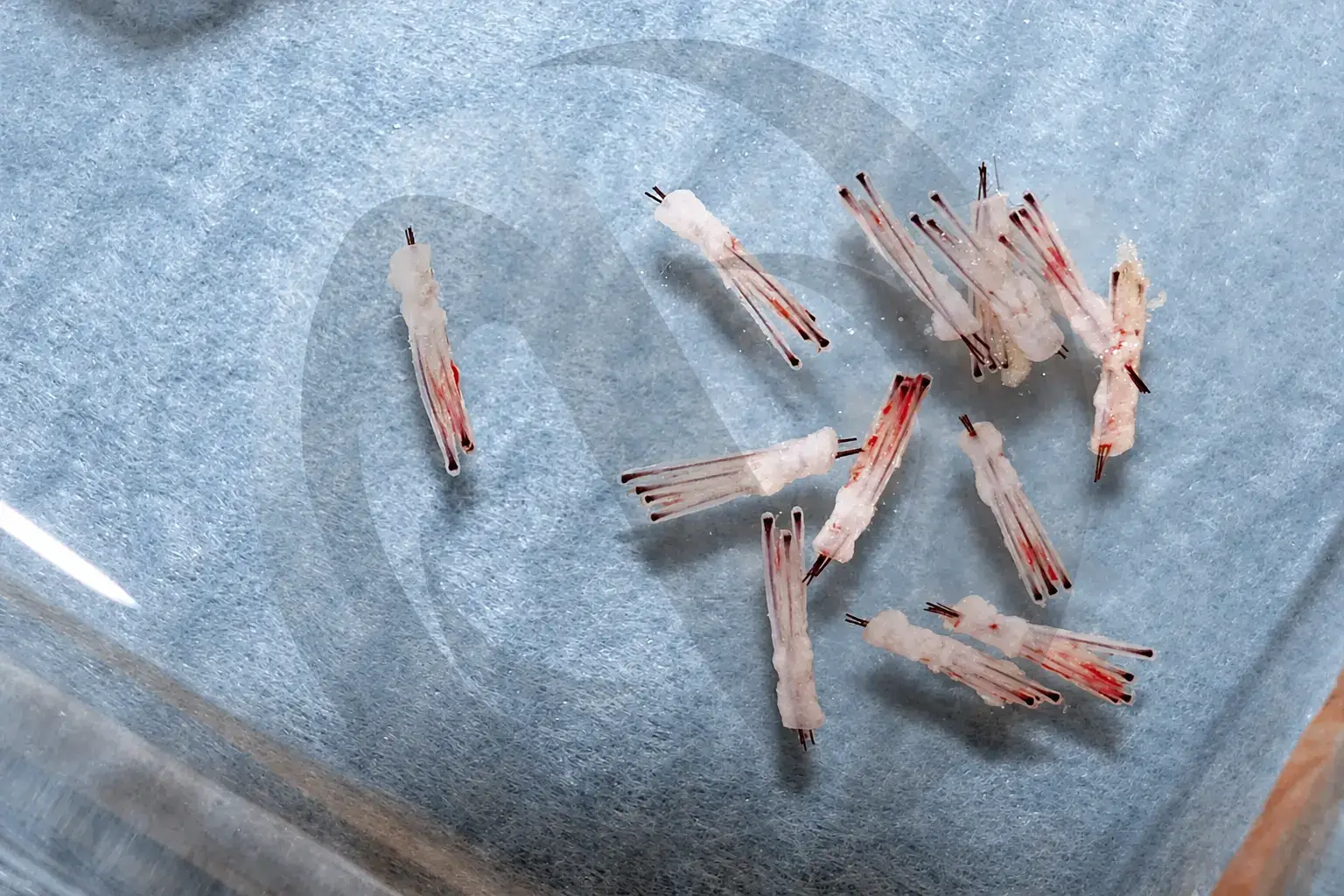
In hair transplantation, grafts are generally placed side by side on compresses containing a limited number of units. This organization offers several essential advantages: it allows precise graft counting, viability verification, and easier distribution control.
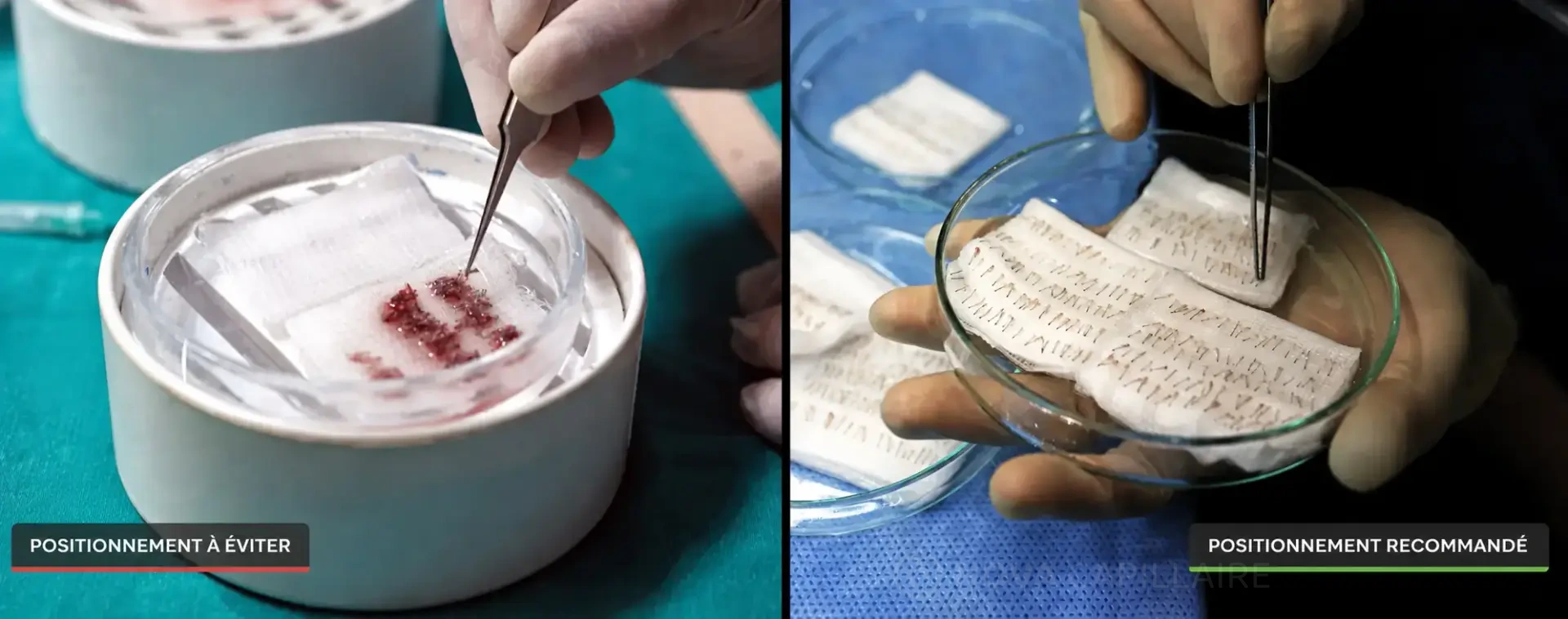
Optimal organization
Arranging grafts in a clear manner also facilitates the surgeon’s and team’s work. This method ensures quick visualization of the number of grafts available for the patient, while limiting unnecessary handling.
Moreover, it helps preserve the grafts in good condition until implantation, which remains essential for successful treatment.
NOVA // LOG · THE GRAFTS
In conclusion
Hair transplantation is an art requiring careful preparation and precise expertise. The result depends not only on the number of grafts implanted, but also on how they are handled, their ability to take root well, and, of course, the experience of the team supporting you.
By choosing a serious and competent clinic, you maximize your chances of obtaining a denser, more harmonious hairstyle suited to your situation.
The information presented does not replace a medical consultation. Each case requires individual evaluation.
Return to NOVA // LOG