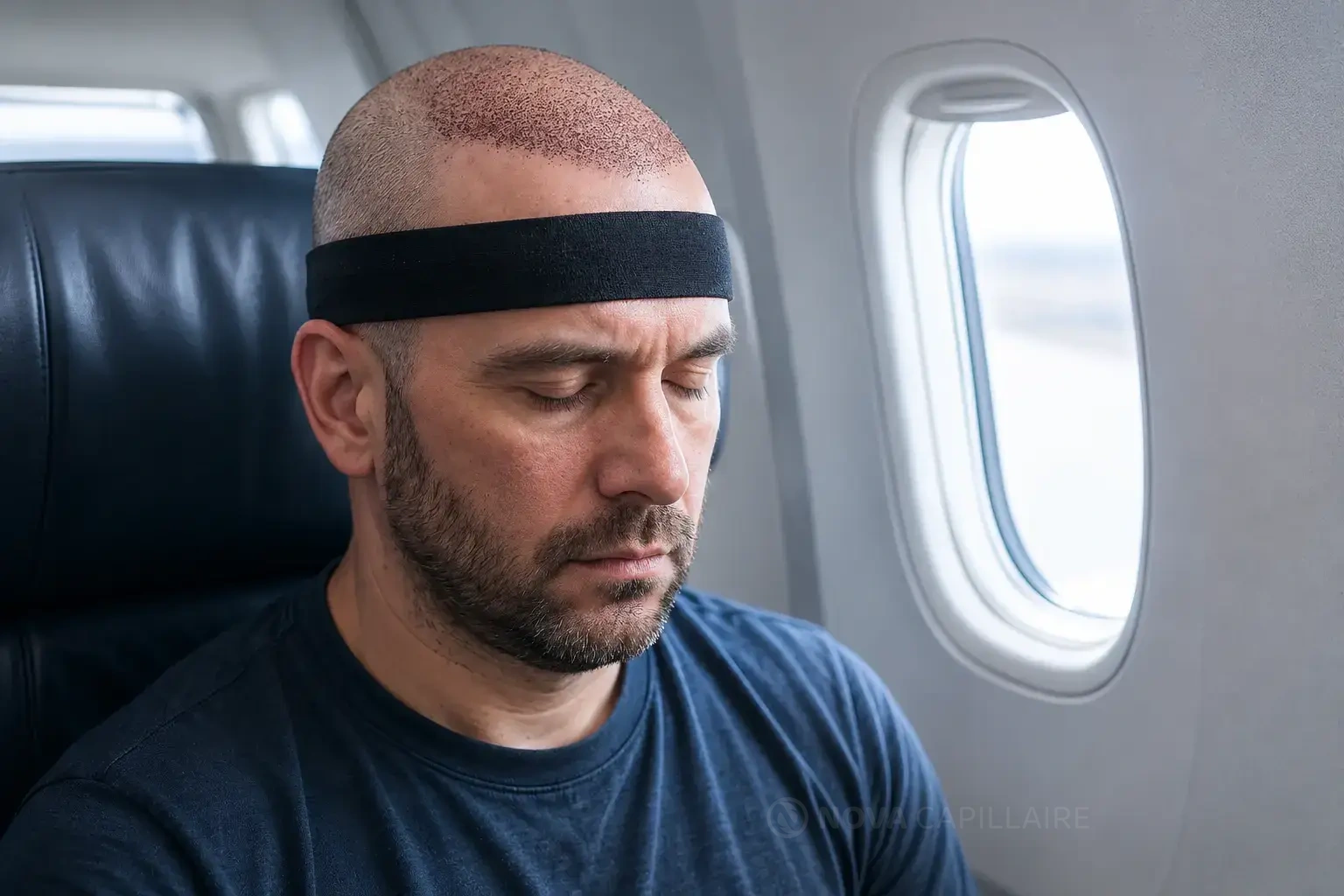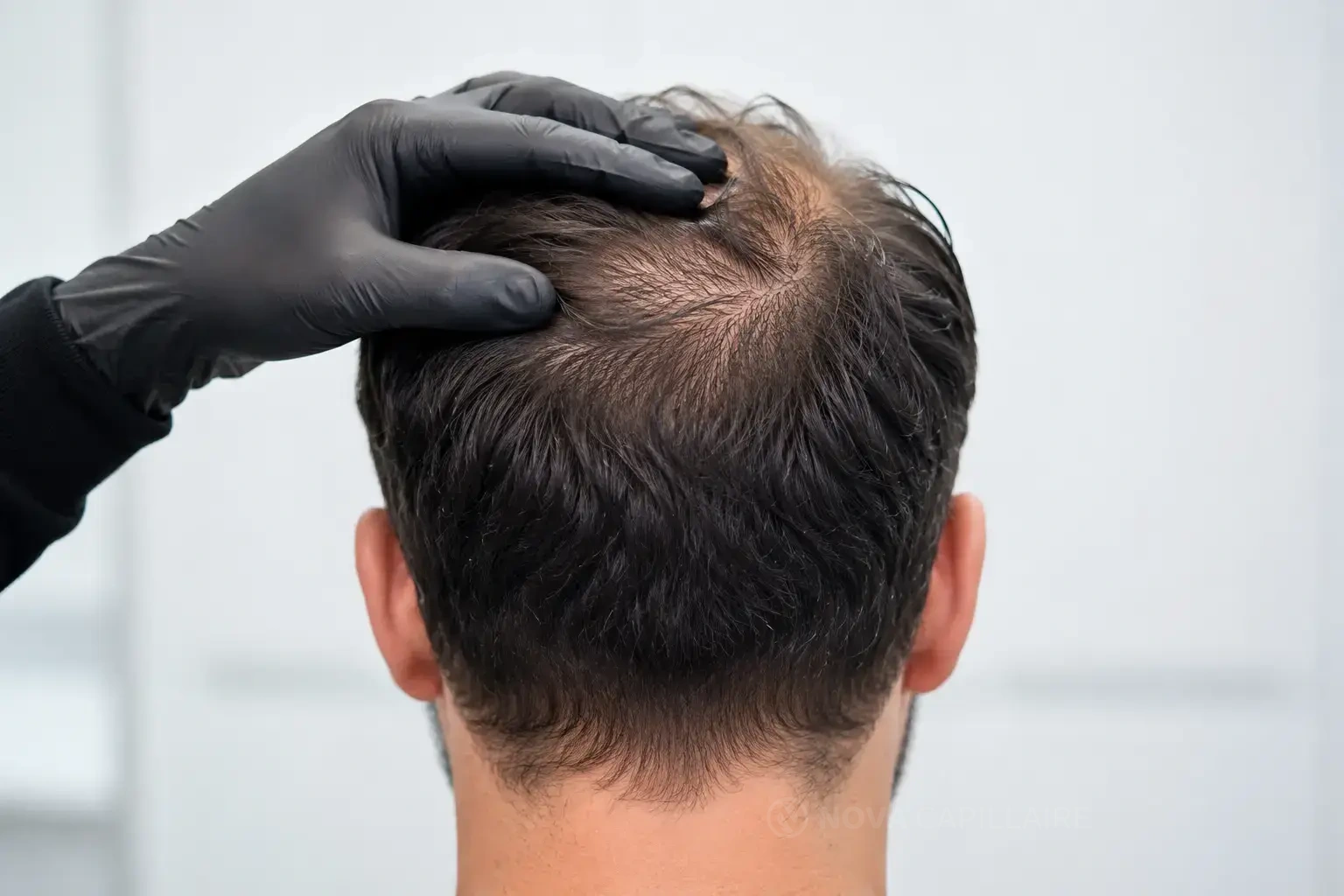
A hair transplant is not prepared only by looking at areas to be filled. It also begins by evaluating the donor area: a precious, limited reserve which must be preserved for today and the years to come.
The donor area: where do the grafts come from?
The donor area is the part of the scalp from which follicles are harvested to be transplanted into the thinning areas called recipient zones. It is usually located at the back and sides of the head.
In androgenetic alopecia, some hairs in this region are less sensitive to DHT, a hormone involved in follicle miniaturization. Selected follicles usually retain their characteristics after relocation. This is one of the principles on which the transplant is based.
To understand the difference between a hair, a follicle and a follicular unit, see our guide on hair grafts.
How is a donor area evaluated?
Each patient has a different capital. A personalized analysis must confront the needs of the area to cover with what the reserve can actually provide, without sacrificing its appearance.
Density and distribution
Not only whether hair seems abundant is assessed. The distribution in the harvesting area and density remaining after the procedure must be evaluated.
Caliber and texture
Thickness, curvature, color of hair and contrast with scalp influence the coverage impression. Two patients with the same number of grafts will not necessarily have the same result.
How baldness progresses
Age, hair loss stage and family history matter in strategy. A transplant must remain coherent if non-transplanted hair continues to thin.
Previous harvests
An already operated area must be re-evaluated. Used grafts, extraction distribution and scars can limit the possibilities of a new procedure.
How many grafts can be harvested?
There is no valid number for everyone. The available amount depends notably on exploitable surface, density, hair diameter, previous harvests and predictable hair loss evolution.
In extensive baldness, the area to cover can be large while reserve remains limited. Priorities must be discussed: hairline, central part or vertex, rather than promising the same density everywhere.
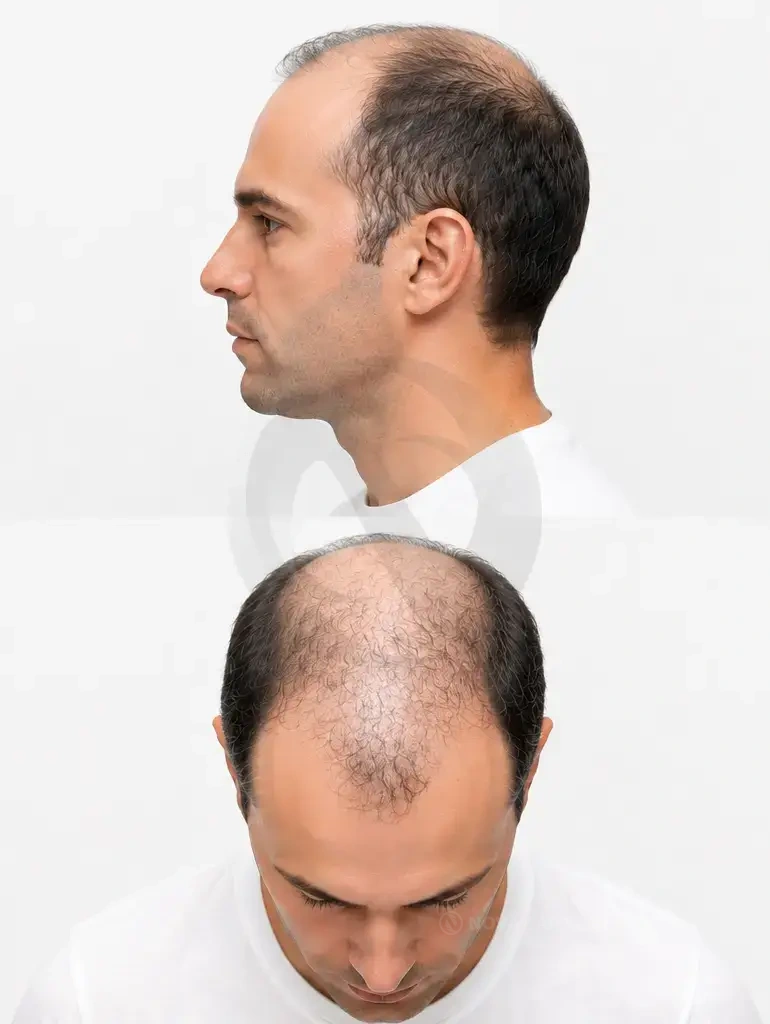
A large thinning area requires distributing grafts according to priorities defined in consultation.
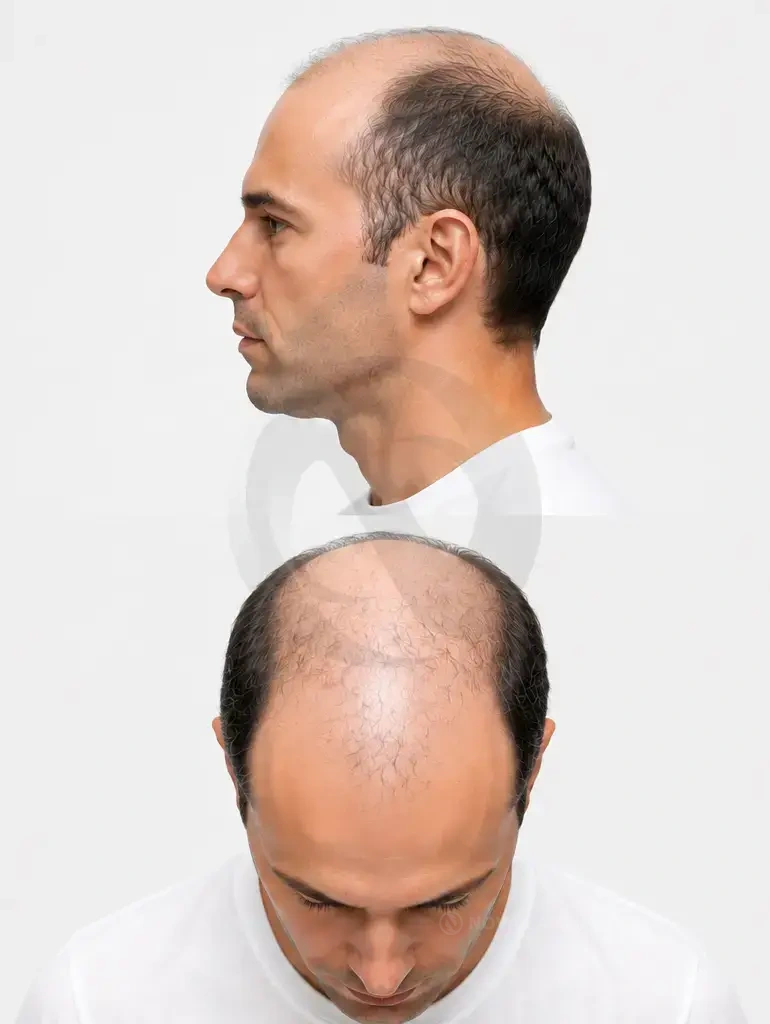
More advanced baldness may reduce coverage possibilities. This diagram alone does not allow quantifying the reserve.
The goal is not to harvest the maximum, but to find the right balance between coverage and preservation.
The precision of the harvesting is as important as the reserve.
A good starting density is not enough. Planning and quality of the procedure are essential to distribute extractions and limit trauma. The team's experience also plays a role in choosing which areas to preserve.
In the donor area
In FUE, follicular units are harvested individually using a small circular instrument called a punch. The harvesting must be distributed and adapted to the characteristics of the follicles.
In the recipient area
In our Sapphire FUE protocol, sapphire blades are used to prepare the implantation channels. They do not perform the extraction and do not make the graft reserve unlimited.
Find our Sapphire FUE protocol and the differences between FUE and FUT harvesting.
Why should overharvesting be avoided?
Harvesting too many grafts or concentrating them in the same area can leave a sparse or uneven appearance. These consequences can be long-lasting and reduce the possibilities for a future transplant.
Preserving appearance
A thoughtful distribution aims to avoid overly sparse areas. Hair length and hair characteristics also influence the visibility of the harvesting.
Saving options for tomorrow
Excessive extractions reduce the reserve available to address progressive baldness or to consider future correction.
Do the hairs regrow in the donor area?
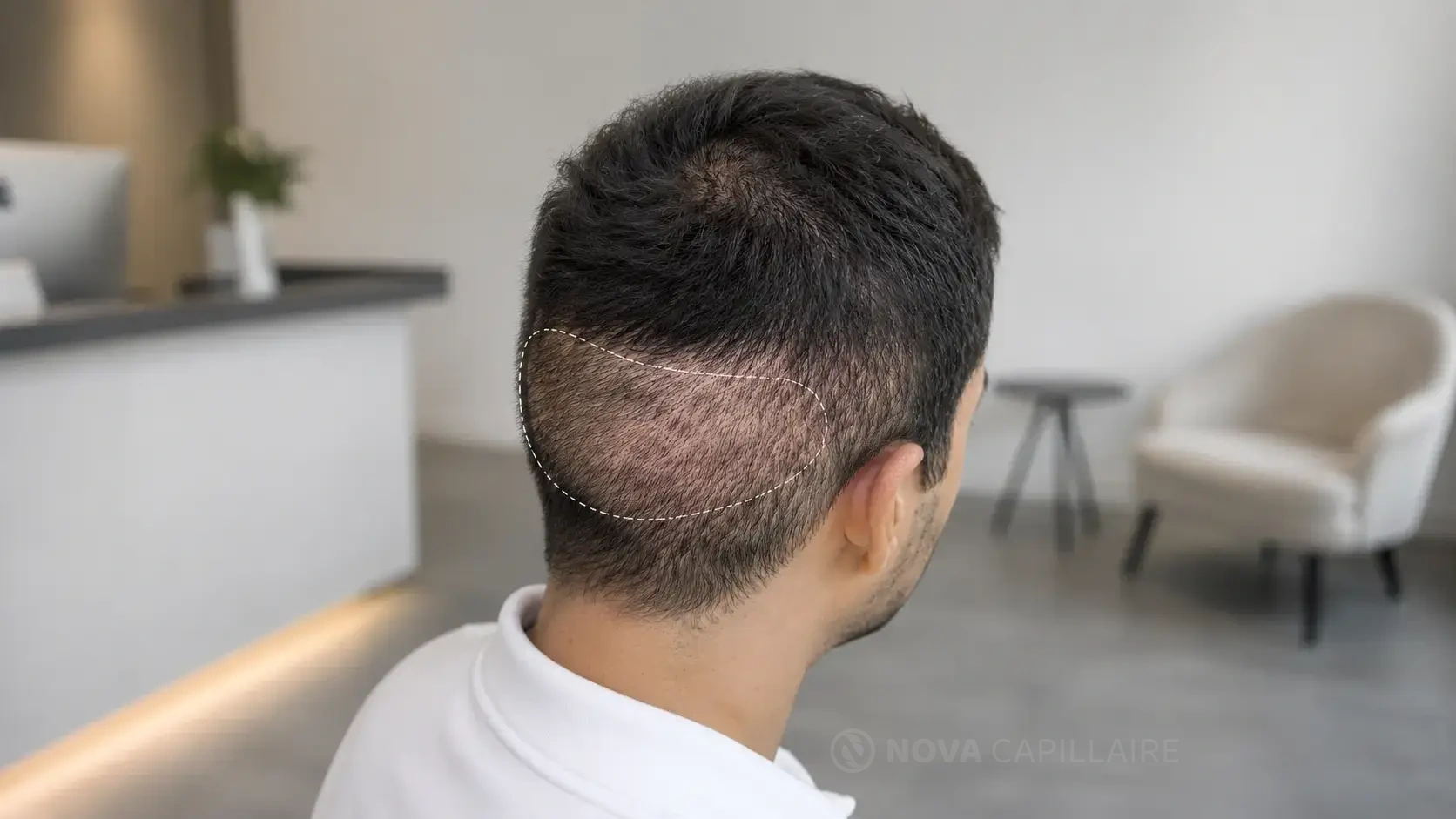
The harvested follicles do not regenerate in their original location. They have been moved to the recipient area. Hairs that remain in place may continue to grow and contribute to visual coverage, but this does not renew the harvested capital.
A uniform harvest aims to maintain a natural appearance. However, it does not guarantee invisible density loss for every patient. FUE leaves small punctate scars, whose visibility varies especially depending on the skin, harvesting, and hair length.
The result should not be judged solely on the first few days. If the appearance worries you, send photos to the team following your case so they can assess healing and progress, rather than concluding alone from an image.
How to take care after the transplant?
The protocol given after your procedure remains the reference. Precautions aim to protect the skin during healing without unnecessary manipulation.
Limit friction
Avoid scratching the area or pulling off scabs. Follow washing instructions and avoid tight headwear during the indicated period.
Adjust activities
Return to intense sports and sun exposure must respect the timelines given by your team. These depend on your procedure and healing.
Our guide to post-hair transplant care details actions and follow-up. For sensations after the procedure, also consult the article on pain and discomfort.
Preserving the donor area is preparing for the future
An already weakened reserve requires a specific evaluation. Our article on failed hair transplants and correction options explains the points to examine before a new procedure.
Poor management of this reserve can compromise not only the first procedure's result but also future transplant possibilities if baldness progresses. Choosing a center should therefore not be based solely on price or announced number of grafts.
Before deciding, ask how your reserve was evaluated, what density will remain at the back of the head, and what priorities are proposed if the entire area cannot be covered. These explanations are part of the plan, just like the drawing of the hairline.
At NOVA, our approach is to confront your expectations with this reality: a well-planned transplant depends on careful management of the available hair, not just on placing follicles.
Discuss my optionsSources and guidelines
ISHRS — Evaluation and preservation of the donor site : hair characteristics, family history, and planning.
ISHRS — Understanding FUE harvesting : technique, scars, and risks of overharvesting.
ISHRS — Risks of overharvesting : consequences of promises of maximal harvesting.
NHS — Hair transplant : limits, recovery, and risks of the procedure.