The hairline is the boundary between the forehead and the first hairs. In both men and women, its design influences facial balance. A hairline transplant can restore temples, advance implantation, or densify a thinning area, but its shape must be personalized according to diagnosis, face, existing hair, and donor area reserve.
What is the hairline of the hair?
The hairline, also called hairline, frames the upper face and connects to the temples on each side. It is not naturally perfectly straight or strictly symmetrical. Its height, curve, temporal recesses, hair direction, and density transition all contribute together to its appearance.
In a hair transplant, follicular units are harvested from a donor area then transplanted to the hairline area. A transplant does not create new follicles and does not necessarily stop hair loss in non-transplanted areas. The plan therefore needs to account for future changes.
Men’s and women’s hairlines: what differences?
Observed shapes often differ between men and women, but these are trends, not mandatory rules. Age, face shape, history, hair texture, and personal identity matter as much as sex.
| Studied point | In men | In women |
|---|---|---|
| Contour | An adult hairline may retain more marked temples and frontotemporal angles. | The contour is often rounder, with a smoother transition to the temples. |
| Pattern of loss | Frontal recession and accentuation of temples are common in male androgenetic alopecia. | Thinning can be more diffuse and affect the part or the area behind the hairline. |
| Common goal | Rebuild the frontal frame while anticipating possible baldness progression. | Densify, soften the temples, or rebalance a high hairline after identifying the cause. |
| Point of caution | Avoid a hairline that is too low or too juvenile, which would needlessly consume the donor reserve. | Check for any diffuse loss and the quality of the donor area before any indication. |
These differences are described in the practice recommendations on hair transplantation, but they must always be adapted to the individual. See the published recommendations.
How is a natural hairline designed?
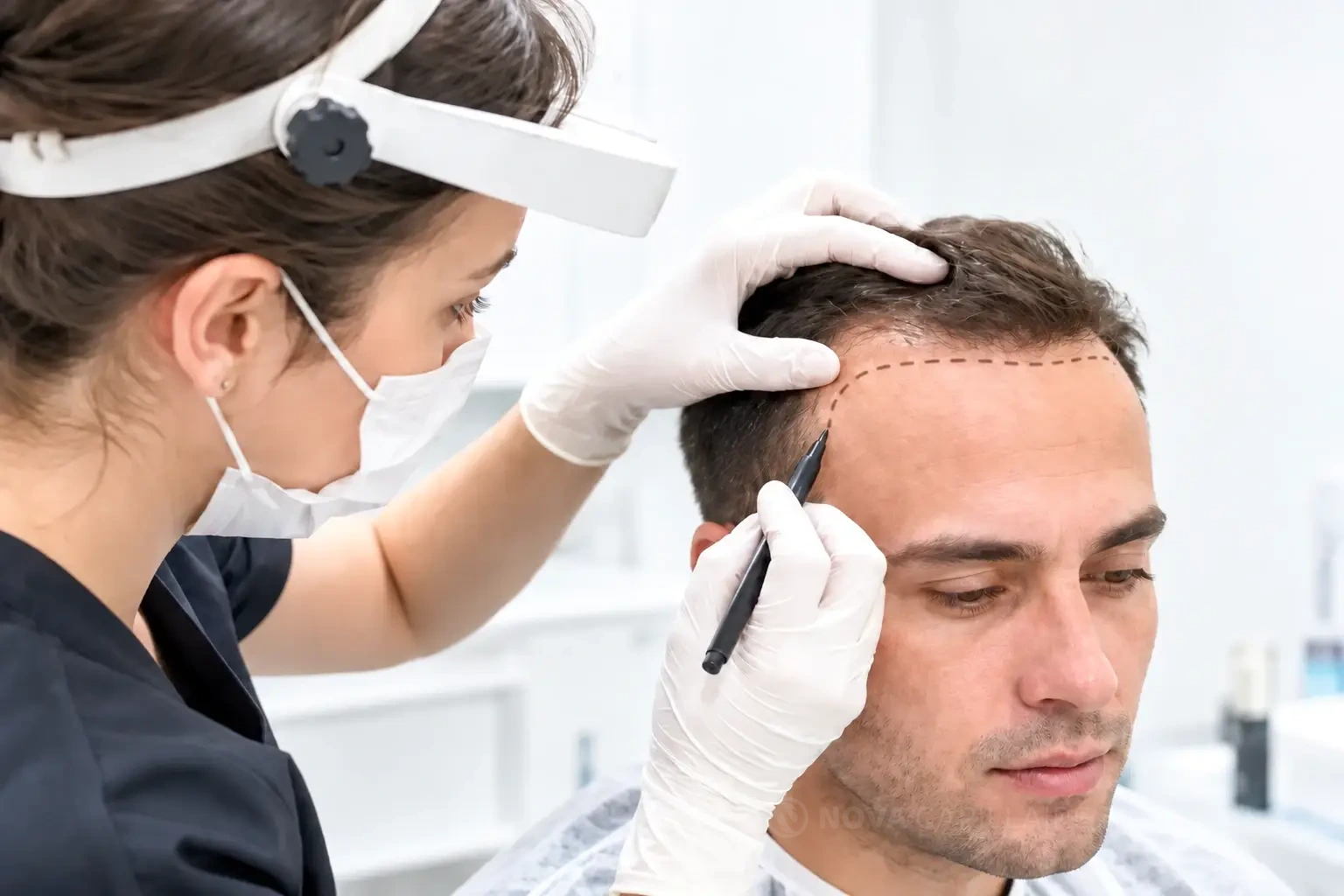
Hairline design starts before the procedure, with you standing and the hairline viewed from several angles. It is about more than simply lowering the forehead. The aim is a convincing hairline today that also accounts for future changes in your hair and the available follicles.
- The height is related to the proportions of the face and age, without a universal formula.
- The contour connects the center of the forehead to the temporal recesses and temples with geometry adapted to the face.
- The transition avoids a harsh line effect by gradually organizing the first hairs and density behind it.
- The orientation follows the direction of the existing hair and varies between the center, the sides, and the temples.
A measuring device to prepare the design
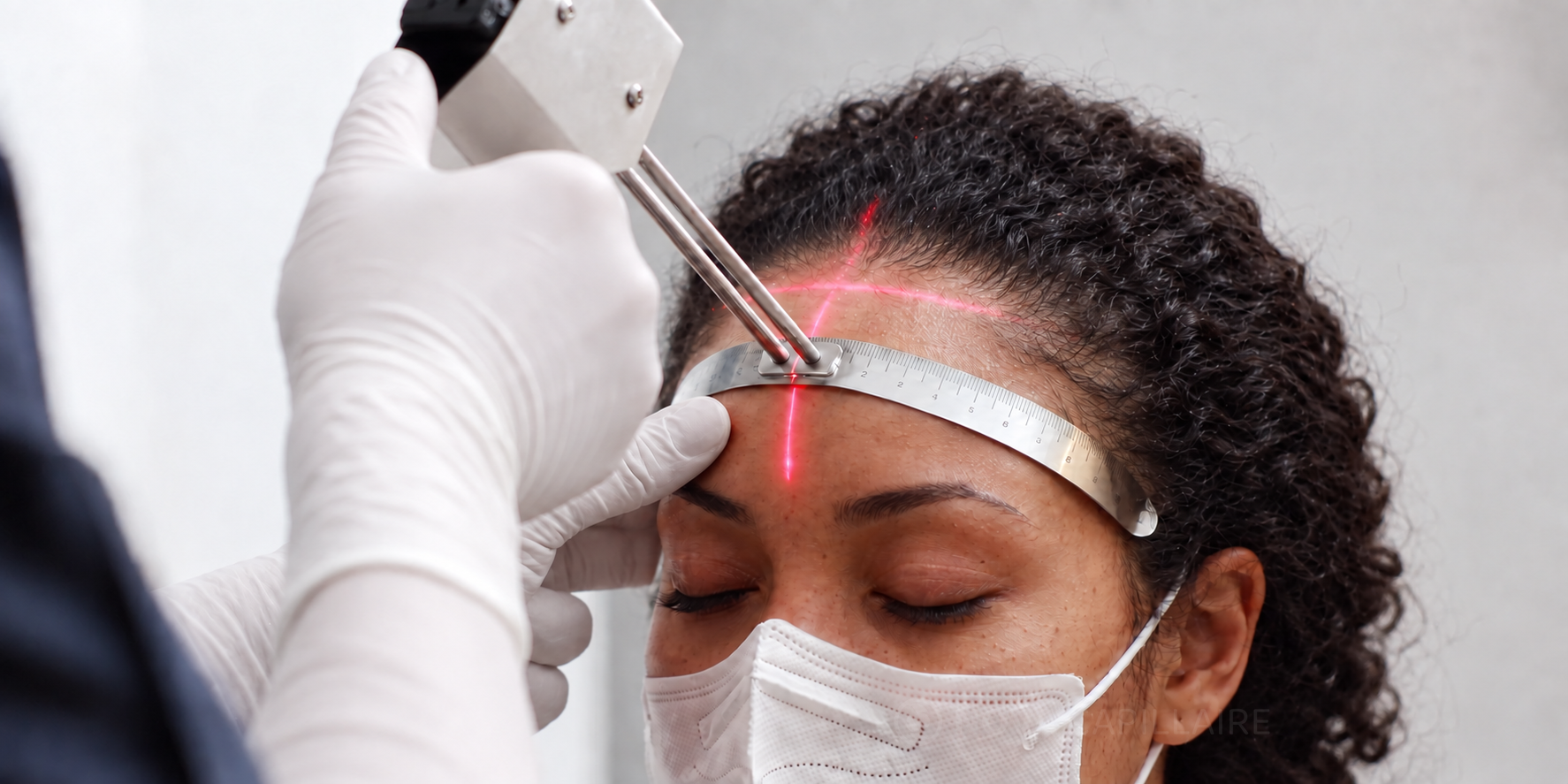
We use this device to visualize the facial axis and record coherent reference points on the forehead. The graduated ruler helps compare contour points, while the laser facilitates alignment when preparing the hairline.
The device does not draw an "ideal" line in place of the team nor does it turn the plan into a mathematical formula. Measurements complement the examination of the face, hair, temples, and donor area. The final design remains personalized and discussed before the procedure.
For men: restoring the facial frame without depleting the reserve
In men, the request often concerns a receding hairline, deeper temporal recesses, or a thinning frontal area. The design must consider the possible progression of androgenetic alopecia. A very low implantation uses more grafts and can become less coherent if the hair behind continues to thin.
A natural male hairline is not necessarily straight. Depending on the face and hair, it may preserve some opening of the temporal recesses, subtle variations, and a gradual transition. The number of grafts depends on the surface area, desired density, hair caliber, and donor reserve: a photograph alone is insufficient to determine it.
Also see the dedicated page on male hair transplantation and our method for Sapphire FUE transplant.
For women: identifying the cause before altering the hairline
In women, a request for hairline transplantation may concern marked temporal recesses, a high hairline, a scar, or frontal thinning. Diffuse loss must be examined carefully, as the donor area may also be affected. Other causes of hair loss can resemble female-type alopecia.
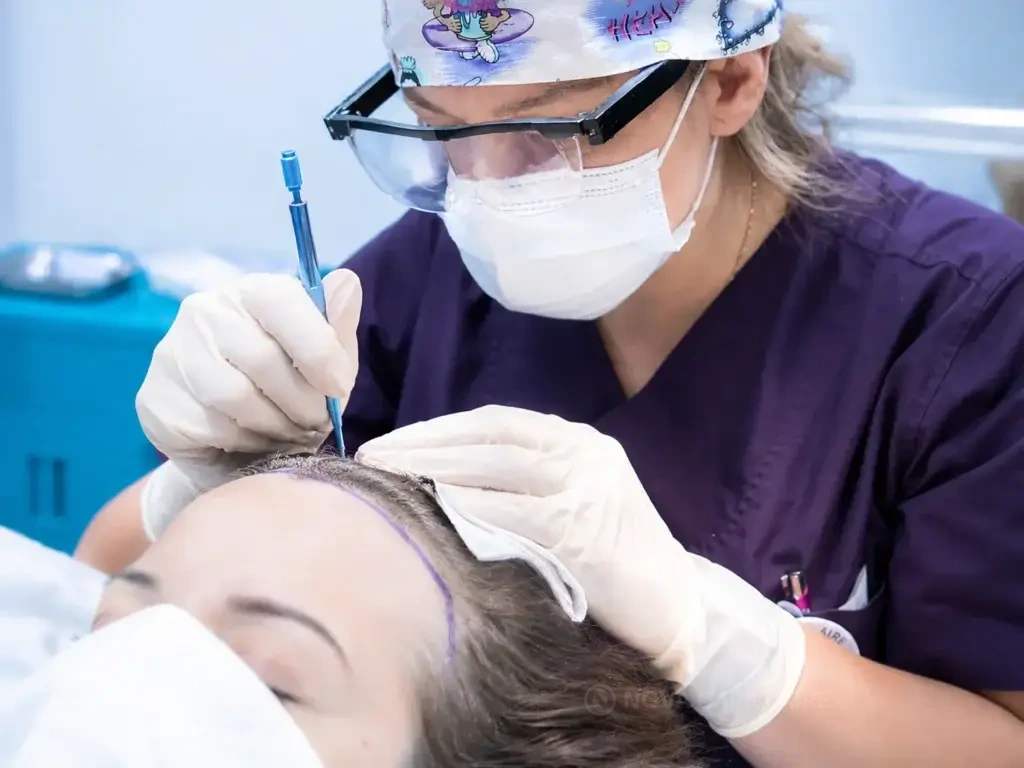
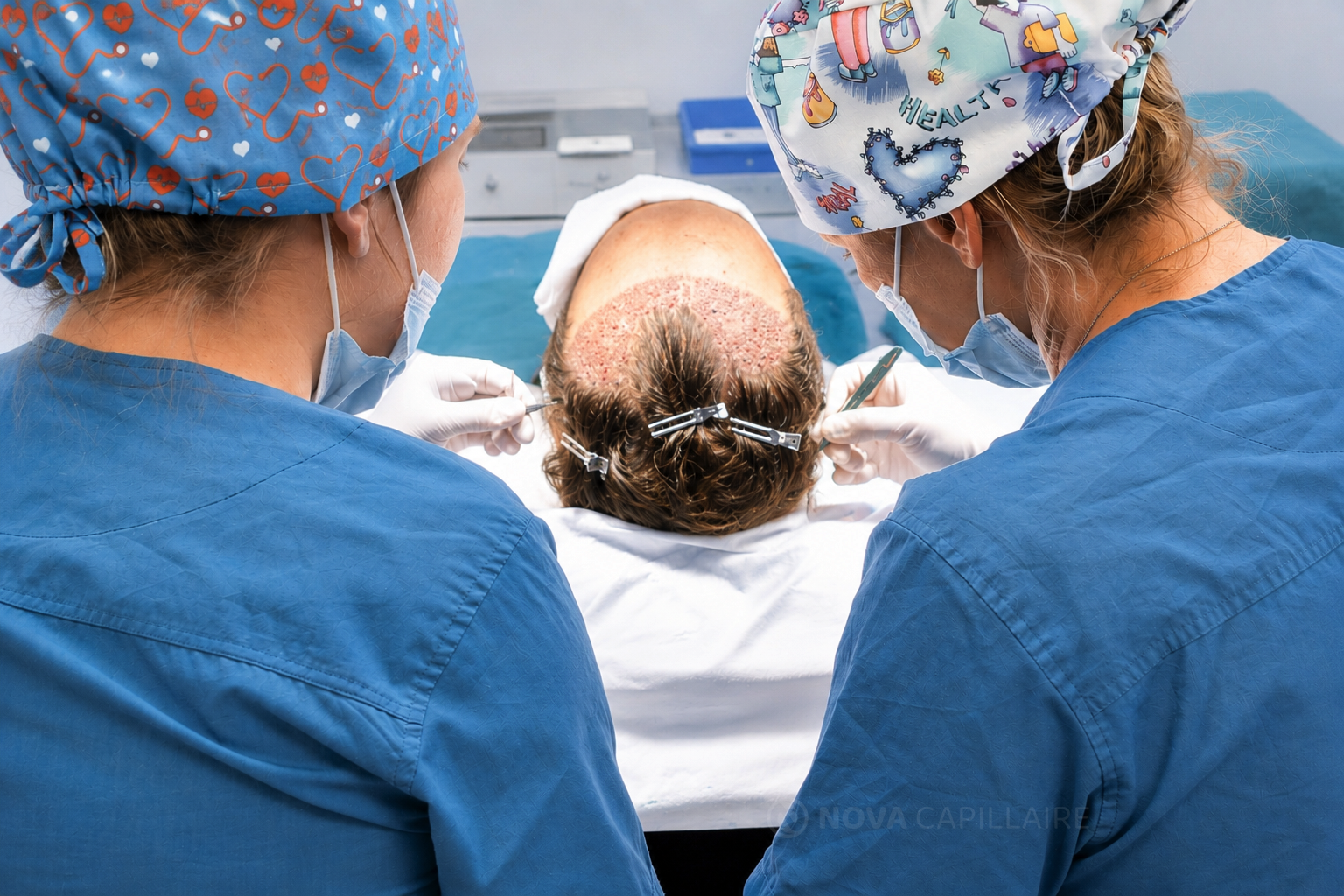
The indication and design remain personalized after scalp study.
Women’s hairlines are often more rounded, with softer angles at the temples. That does not mean the same curve suits every woman. The design takes the existing hairline, styling habits, face shape, and natural direction of hair growth into account.
The American Academy of Dermatology notes that transplantation may suit some women, but diffuse thinning over the entire scalp may limit the quantity of healthy hair available. Read the AAD guidelines. Also see our page on female hair transplantation.
Hair texture also alters planning
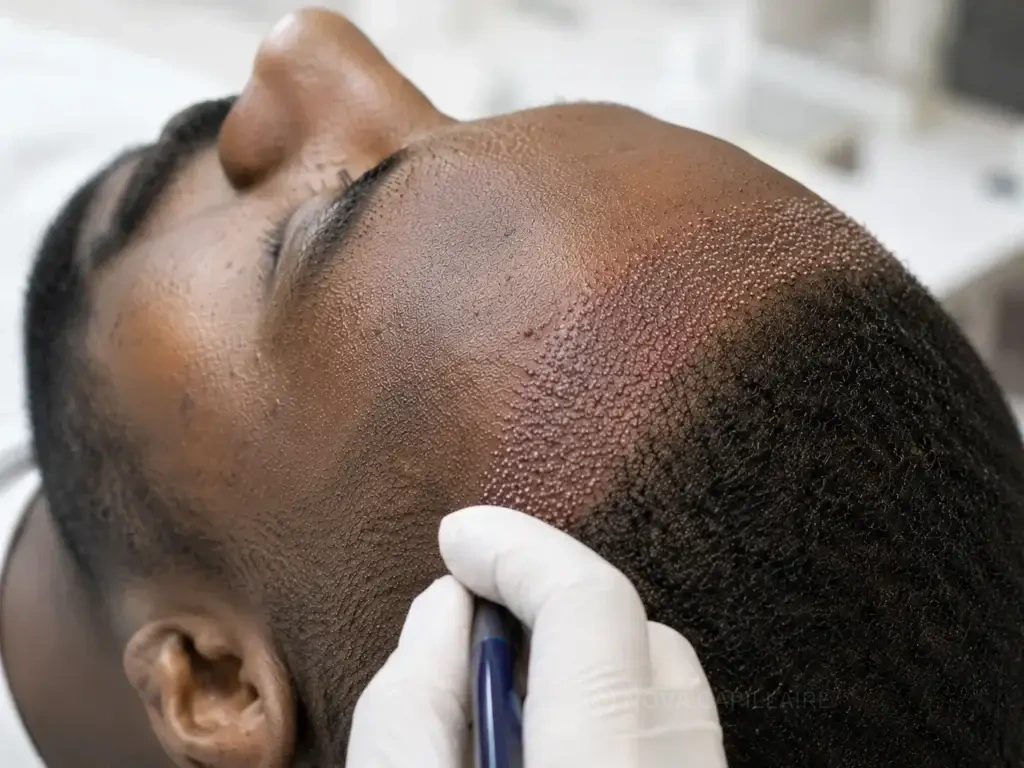
A male or female hairline is not planned independently from hair texture. Caliber, curvature, and contrast between hair and scalp influence visual coverage and how follicular units are organized. On coily hair, the curl continues under the skin and requires an adapted approach during harvesting.
These characteristics do not determine a unique hairline shape. They add to face proportions, temporal recesses, temples, and donor area. Find dedicated information on Afro and coily hair transplants.
What makes a hairline credible after transplantation
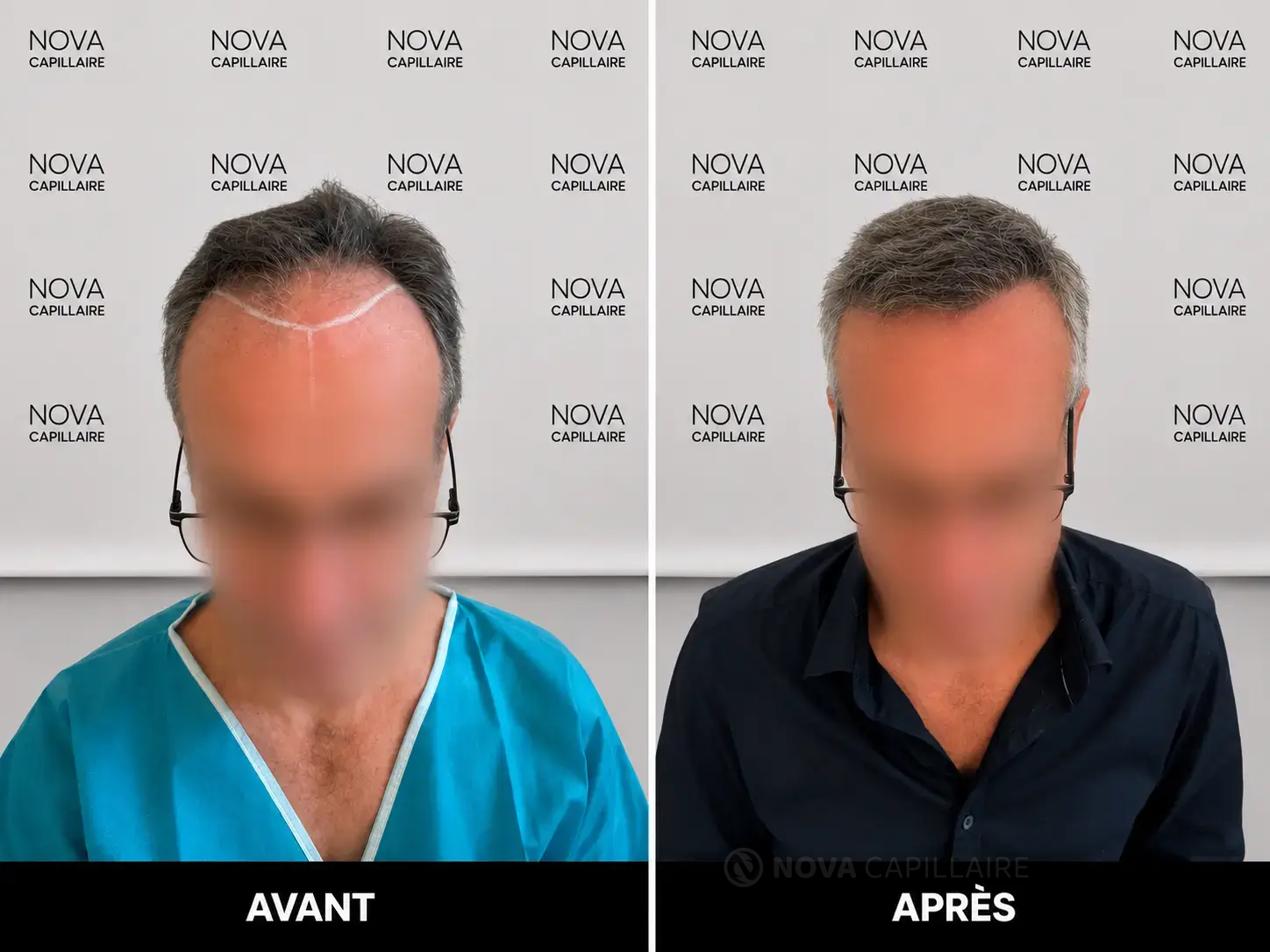
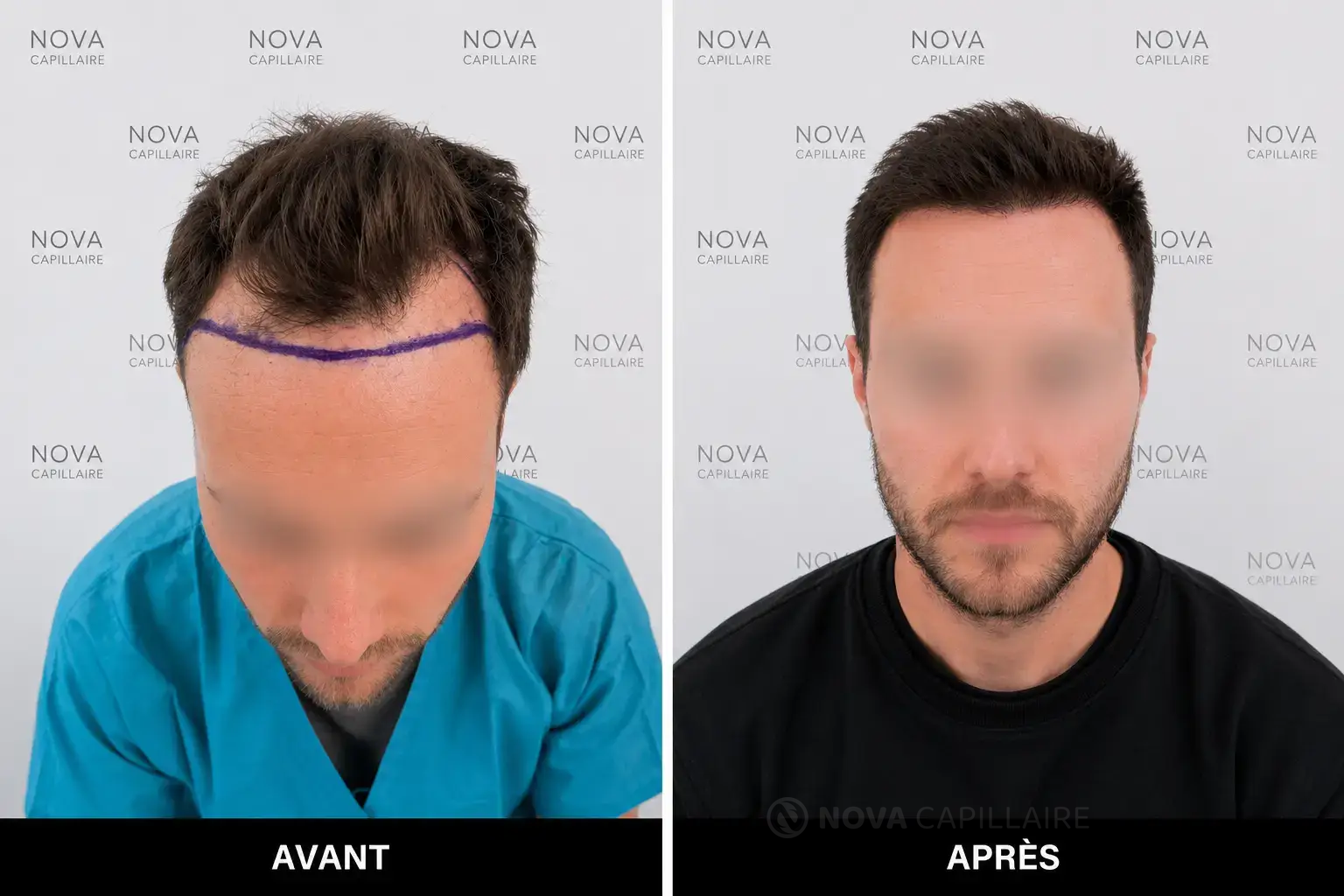
The appearance does not depend solely on the technique name. Literature on hairline design highlights several elements: height, general contour, junction with temples, fine variations at the hairline edge, as well as hair direction and angulation.
Why can a hairline that is too straight appear artificial?
A uniform, very sharp edge with identical density along its length can attract attention. A more gradual transition and small controlled variations more closely resemble natural implantation. Conversely, “irregular” does not mean disorderly: the design remains constructed and must harmonize with other hair.
Why does hair angle matter?
Frontal hairs emerge with a specific direction. Poorly oriented recipient sites may produce a difficult-to-style movement or a visible break with native hair. Orientation and distribution are therefore planned zone by zone.
Observe the hairline from multiple angles
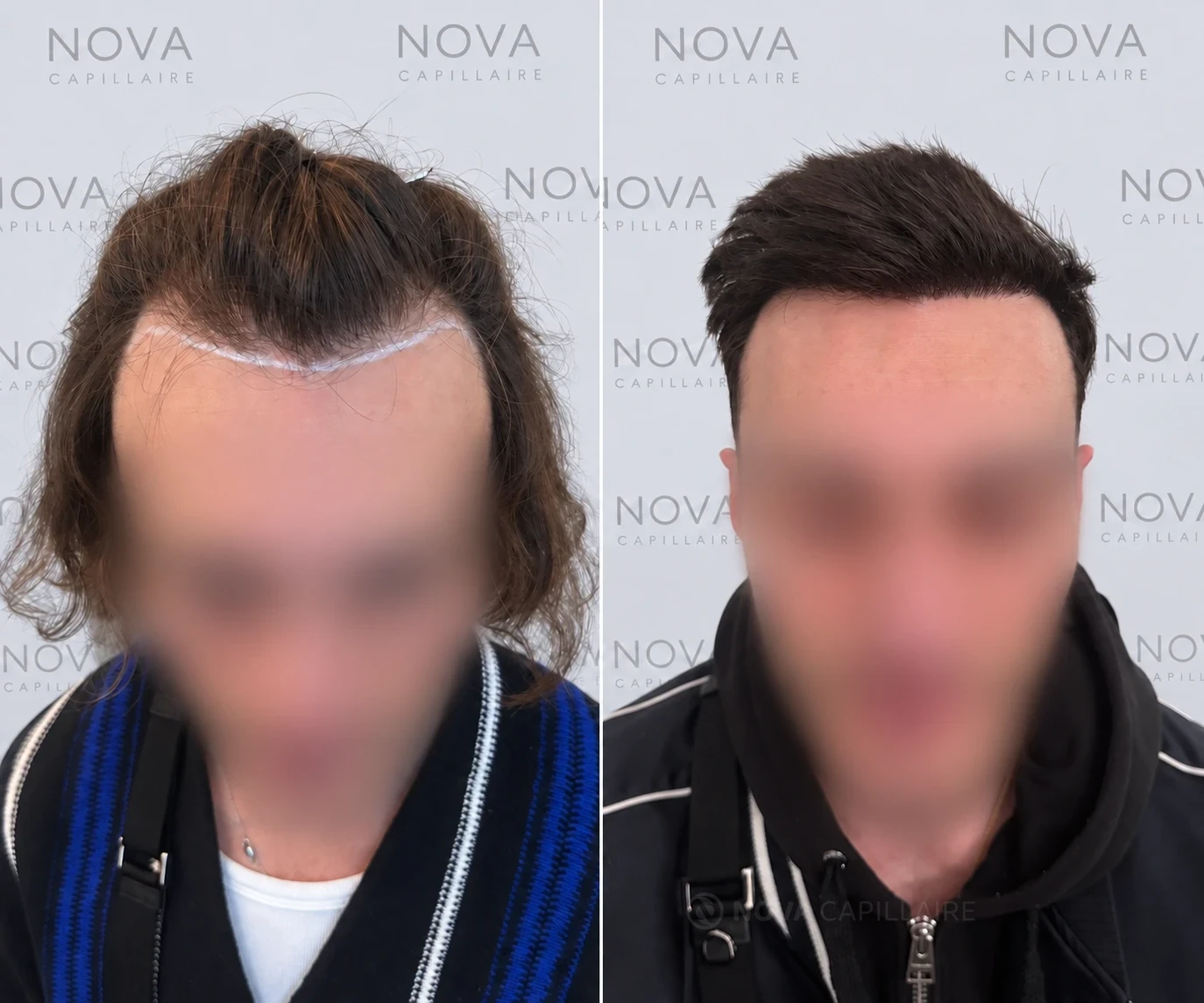
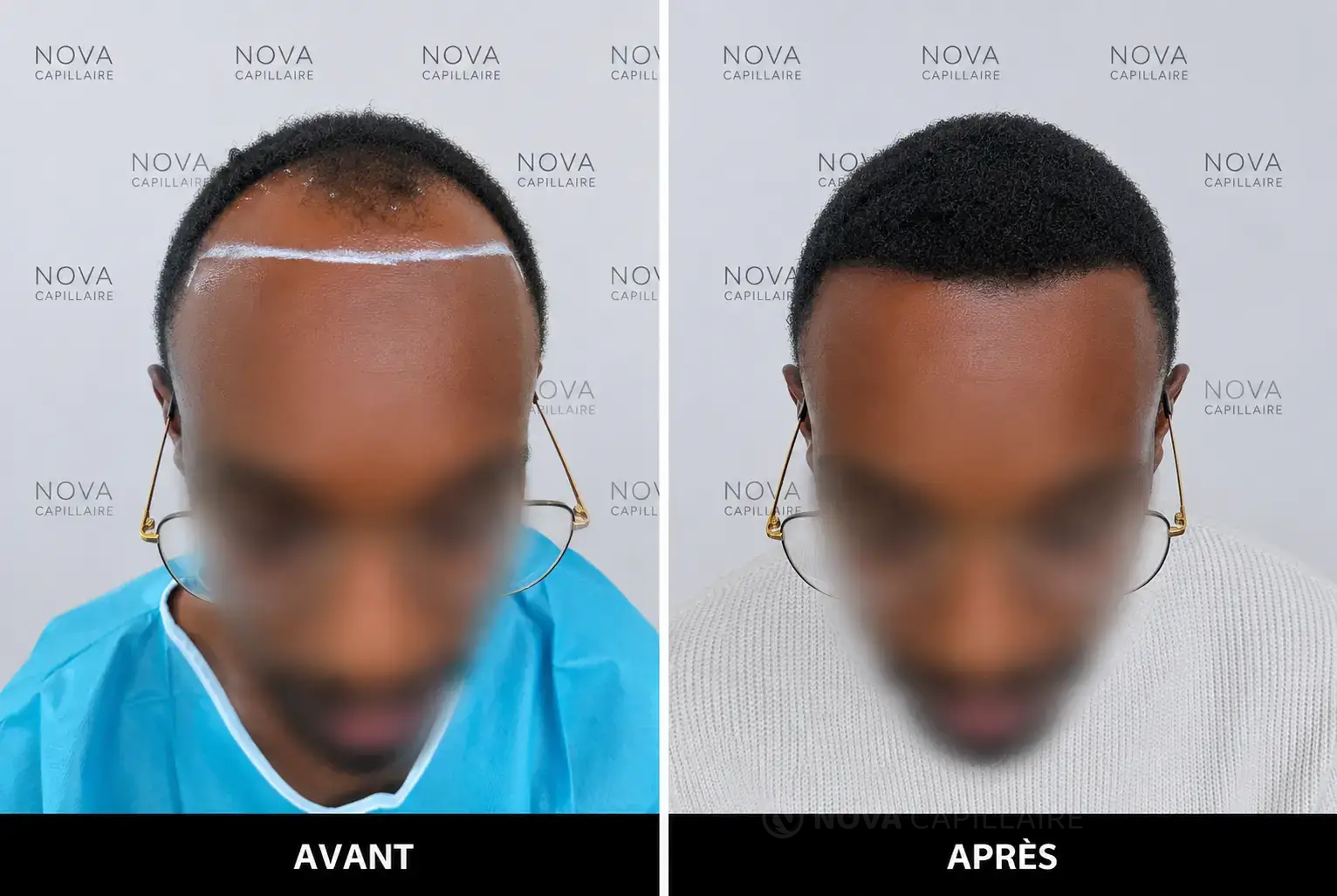
To compare results, look at the center and profile hairline, continuity with temporal recesses and temples, hair direction, and density behind the first line. A single image does not provide information on diagnosis, graft number, associated treatments, or future progression. See other cases on the page hair transplant before/after.
What evaluation before hairline transplantation?
The evaluation aims first to understand the cause and progression of loss. It examines the frontal area, hair behind, temples, and donor area. In men and women, active, diffuse, or inflammatory loss may alter indication or lead to postponing the procedure.
| Question | What it evaluates |
|---|---|
| Why has the hairline changed? | Distinguish androgenetic alopecia from other causes of loss or a naturally high hairline. |
| Is the loss stable? | Account for future changes in the non-transplanted hair behind the new hairline. |
| What is the donor reserve? | Define the amount of follicular units available without over-thinning the back of the scalp. |
| What contour is desired? | Balance expectations, face, hairstyle, and long-term limits. |
In Paris Montparnasse, you can present your situation using the NOVA online hair diagnosis. Photographs prepare the exchange but do not replace the exam needed to confirm indication.
Frequently asked questions about the hairline
How to achieve a natural hairline?
The design must be adapted to the face, age, existing hair, and donor reserve. Contour, density transition, follicular unit choice, and hair orientation all matter together. None guarantees the result alone.
How many grafts are needed for the hairline?
There is no standard number. The size of temporal recesses, height of the new contour, existing density, hair characteristics, and donor supply affect the estimate. The number is justified after examination.
What is the price of a hairline transplant?
The cost depends on your treatment plan, the number of grafts, and how the procedure is scheduled. See our NOVA pricing : un devis personnalisé confirme la formule adaptée et ce qu’elle comprend.
Can a woman undergo hairline transplantation?
Yes, in certain cases. The cause of loss must first be identified and the donor area checked for sufficient healthy hair. Diffuse loss can reduce harvesting possibilities.
Does transplantation prevent the hairline from receding again?
Transplantation redistributes follicles, but non-transplanted hair may continue thinning. Planning must anticipate this evolution and medical follow-up may include other options discussed with a professional.
Sources and guidelines
Written by: NOVA Capillaire. References consulted on September 17, 2026. This summary provides general information and does not constitute a diagnosis or individual surgical plan.