Diffuse hair loss can be alarming without meaning follicle loss. Telogen effluvium corresponds to a temporary change in the cycle of many hairs. It often appears a few months after a triggering event.
Regrowth is usually possible in the acute form. The key is to identify the cause and allow the hair cycle time to rebalance.
Understanding the delay between the event and hair loss
Hair grows
The follicle produces a shaft that lengthens gradually.
A transition
Activity slows before entering rest.
Rest, then renewal
Hair remains in place for a time before falling out and being replaced.
The follicle is generally not destroyed. This distinguishes this hair loss from scarring alopecias, but does not allow for self-diagnosis.
Signs that may guide you
Distributed loss
More hair in the shower or on the brush, an overall reduced volume: hair loss usually affects several areas rather than a single patch.
An unusual change
A thinner ponytail or different density may draw attention. The scalp often looks normal.
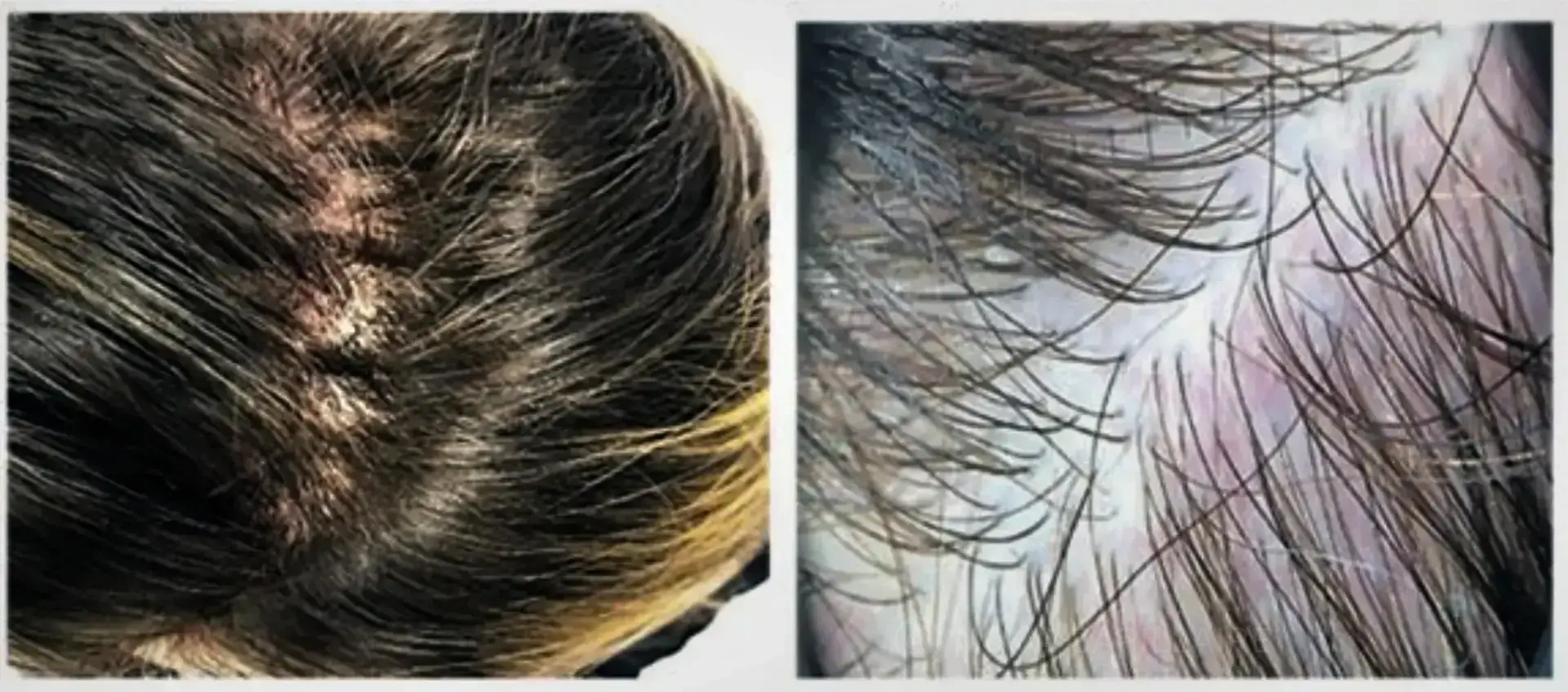
It is not necessary to count every hair. Length, washing frequency, and styling habits modify what is observed daily.
Look for the trigger without attributing everything to stress
A physical event
Illness, fever, surgery, or hospitalization can temporarily disrupt the hair cycle.
A hormonal change
After childbirth, many hairs may enter rest around the same period.
Insufficient intake
Rapid weight loss, restrictive diets, or deficiency can contribute to diffuse hair loss.
Medical context
Thyroid disorder, low iron stores, or treatment changes are factors to consider based on your medical history.
Significant stress may also be involved. Multiple factors can accumulate: attributing all hair loss to stress may overlook other causes.
Diagnosis: history of hair loss and examination
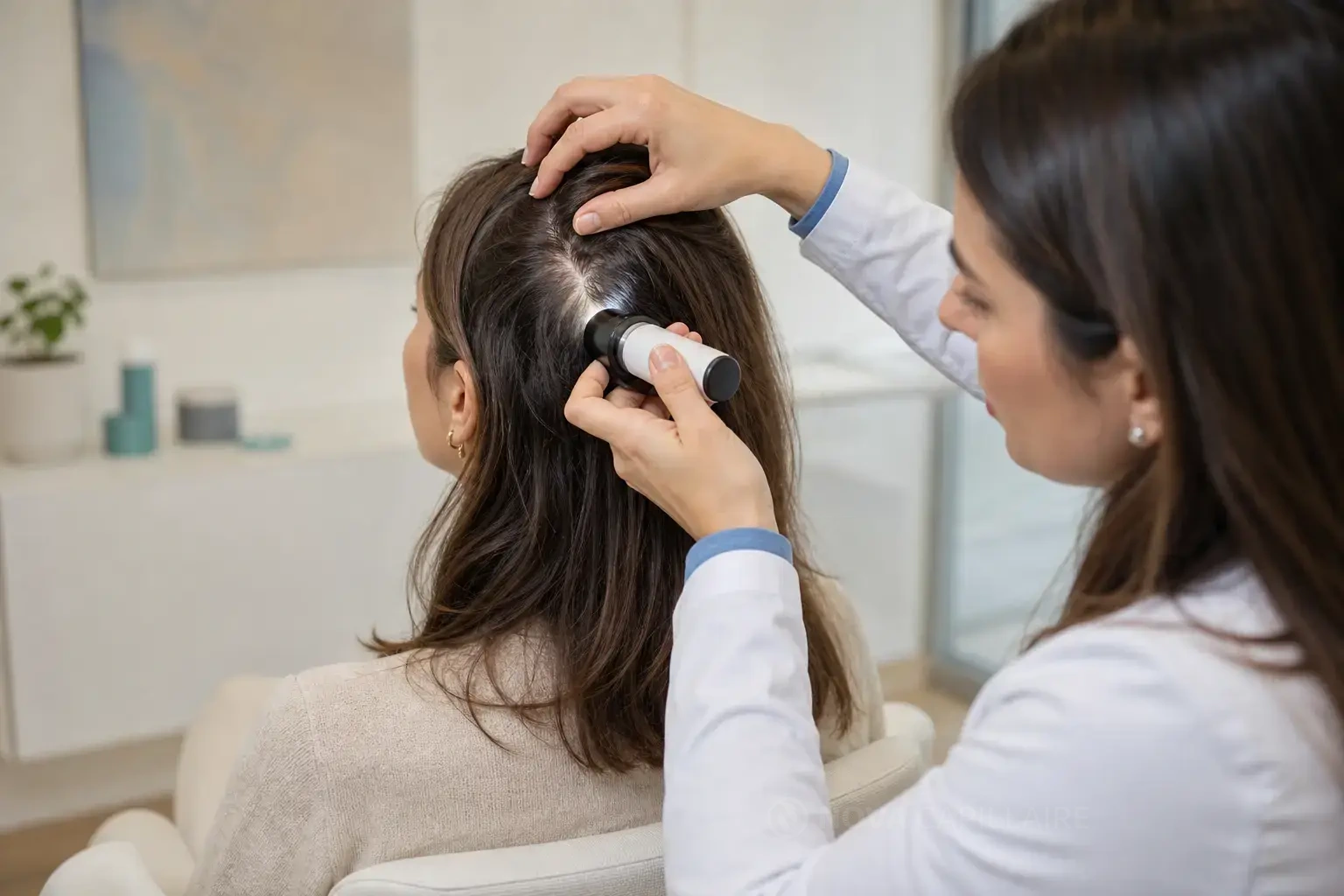
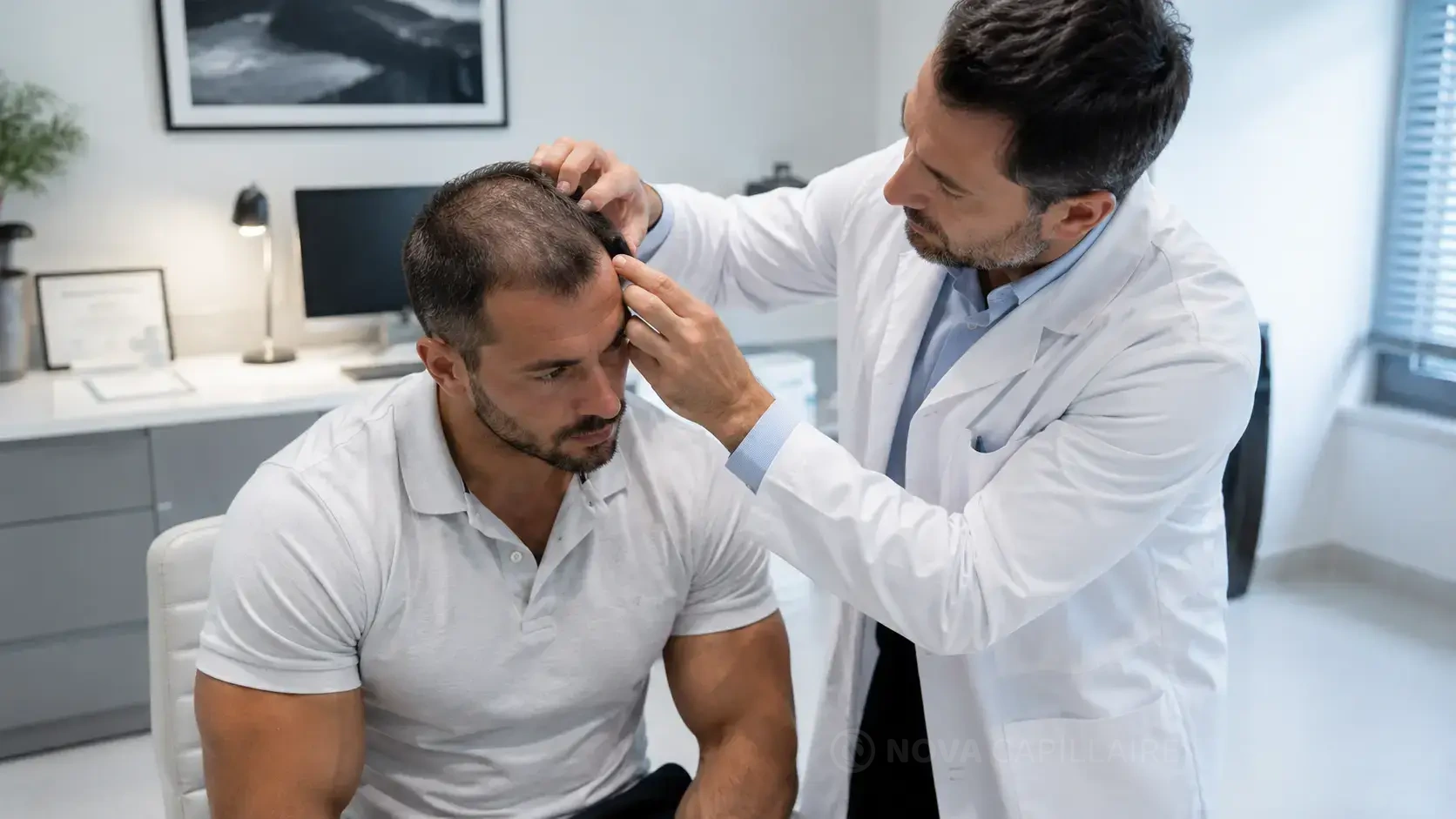
The dermatologist examines distribution, scalp, and hair diameter. Trichoscopy or a pull test may complement the exam. Blood tests are ordered based on context, not systematically.
Telogen effluvium
Rather diffuse and sometimes sudden hair loss with delayed triggering factor. Often temporary if the cause disappears.
Androgenetic alopecia
Progressive hair thinning, for example at the temples, vertex, or along the central part. It can coexist with effluvium.
Alopecia areata
Often presents in patches, but some forms are diffuse. Dermatological examination distinguishes it.
Preparing the consultation
Note the start of hair loss, events in prior months, treatments, and other symptoms. A few comparable photos may help.
Hair loss may slow before volume returns
Identify and correct the cause
Hair loss may continue for a time as some hairs are already in rest phase.
Observe new hairs
Loss decreases then new hairs lengthen. Regaining volume takes more time.
Density recovery may require about six to twelve months, sometimes longer. This is neither a deadline nor an individual guarantee.
What to do daily?
Maintain gentle care
Wash based on scalp needs. Shampoo mainly removes hairs already at cycle end. Avoid tight hairstyles and aggressive brushing.
Eat sufficiently
A varied diet and adequate intake support normal follicle function. Supplements are not automatic.
Prioritize follow-up
Spaced photos under consistent conditions are more useful than constant brush monitoring.
Discuss treatments
The minoxidil is not an automatic treatment for acute effluvium. Options depend on the dermatological diagnosis.
Rest and stress management may improve well-being but do not immediately stop planned hair loss. No shampoo or supplement replaces finding the cause.
When to seek advice?
You may consult earlier if concerned: it is not necessary to wait six months to seek help.
And hair transplantation?
A transplant does not treat the cause of active effluvium. The diagnosis and evolution must first be clarified. If permanent alopecia coexists, a possible plan is discussed considering the graft reserve.
Your questions about regrowth
Can hair regrow?
Yes, usually in the acute form when the cause has disappeared or been corrected. Volume recovery takes time.
Should washing be spaced out?
Not necessarily. Spacing washes may simply group more hairs fallen on wash day. Maintain gentle care suited to your scalp.
Is biotin enough?
It is not recommended systematically without established deficiency. Supplementation should meet an identified need with a professional.
Can two types of hair loss occur simultaneously?
Yes. Effluvium can reveal previously minor androgenetic alopecia. Follow-up and trichoscopy help distinguish them.
Sources and guidelines
British Association of Dermatologists — Telogen effluvium
Original NOVA content reorganized. This general information does not establish your diagnosis.