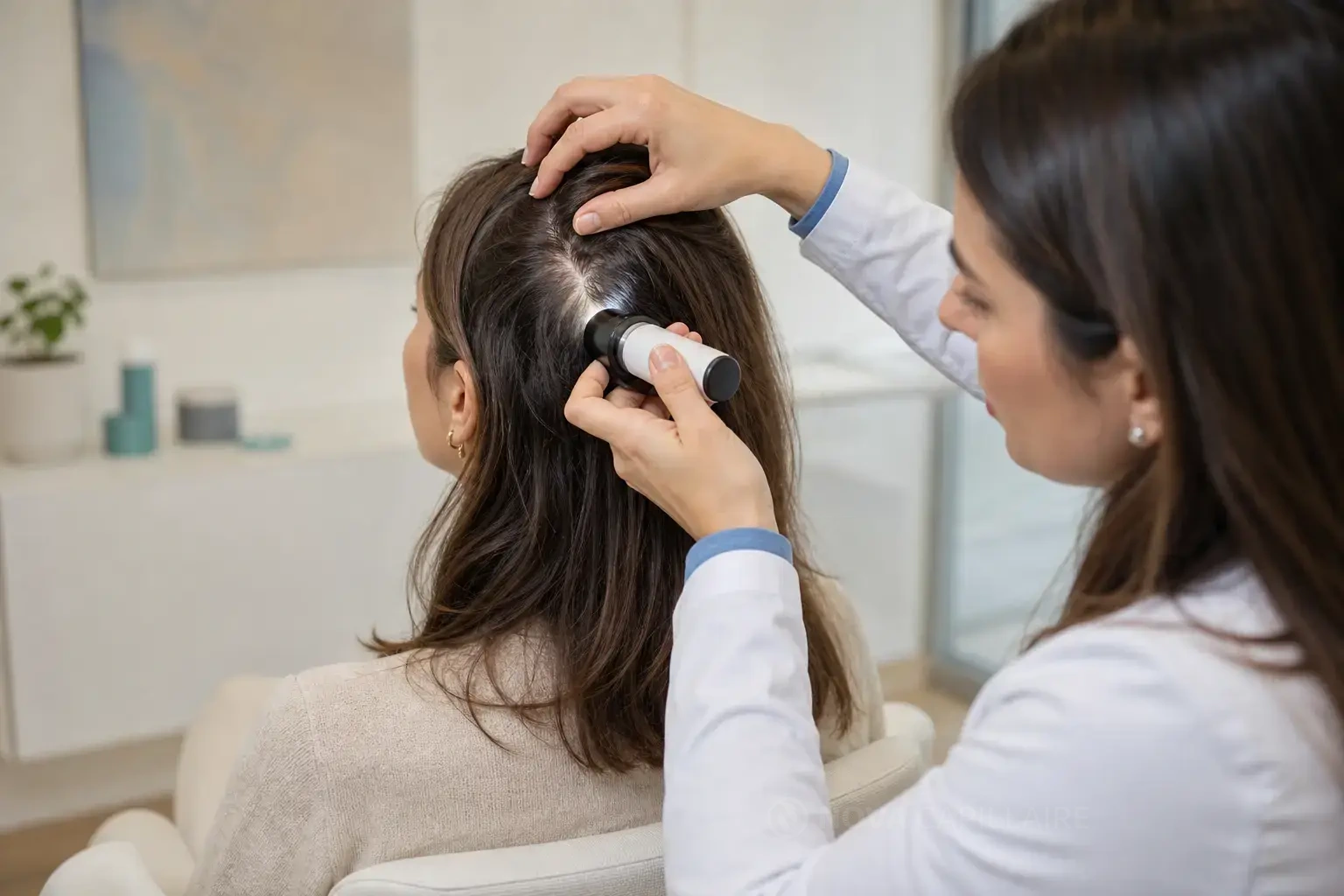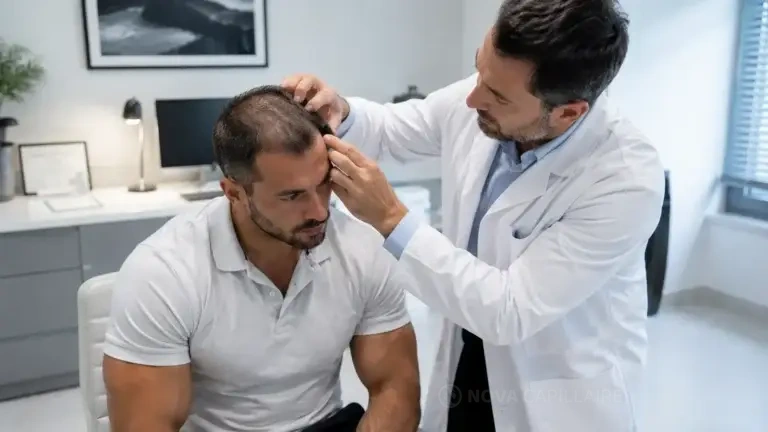
Yes, anabolic steroids can promote or accelerate hair loss. The risk varies notably with follicle sensitivity to androgens and exposure to the products. It is neither identical for everyone nor predictable from the name of a substance alone.
If you notice a change in density during or after use, the right reaction is to have the hair loss and your overall health evaluated. The goal is not to judge you but to understand what is happening and avoid improvised responses.
Which steroids are we talking about?
Anabolics
They reproduce certain effects of testosterone and are sometimes misused for bodybuilding or performance. It is mainly these substances discussed in this article.
Corticosteroids
These are other medications, notably used against inflammation. They should not automatically be assigned the same effects. Some are even used by dermatologists against particular forms of alopecia.
Why can hair become finer?
In androgenetic alopecia, follicles sensitive to androgens gradually produce finer hair. The DHT, derived from the transformation of part of testosterone, participates in this mechanism. The response also depends on local follicle sensitivity.
Hormonal exposure
Taking anabolics increases or modifies androgen action. Not all products use exactly the same metabolic pathways.
Sensitive follicles
In a predisposed person, this exposure can promote the progression of alopecia. A family history is an indication, not an individual prediction.
Changing density
Finer hair and less coverage can become visible. The speed and extent of change remain variable.
What changes to observe?
A receding hairline
In men, the temples and crown are common thinning areas related to androgenetic alopecia.
A widening part
In women, density loss can be more diffuse. Hair loss associated with new hormonal signs deserves medical advice.
Not all hair loss occurring during product use is necessarily androgenetic alopecia. An telogen effluvium, scalp disease or another factor can coexist. Photos taken under the same conditions help describe the evolution but do not replace examination.
Mentioned products: landmarks, not a safety ranking
The previous article presented several frequently encountered names. We keep them to help you identify what to report to the doctor, not to guide product choice.
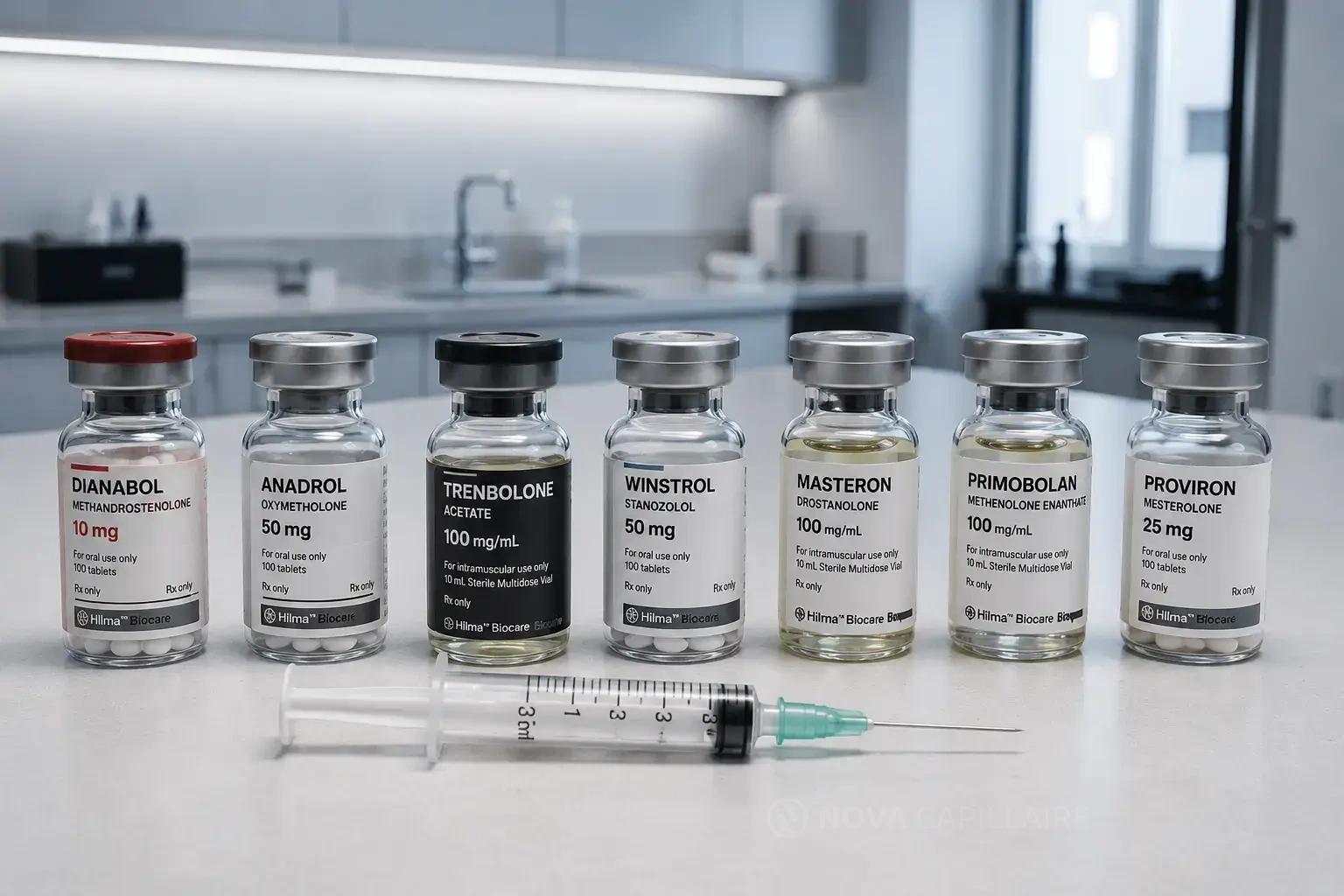
Swipe the illustrations with your finger.
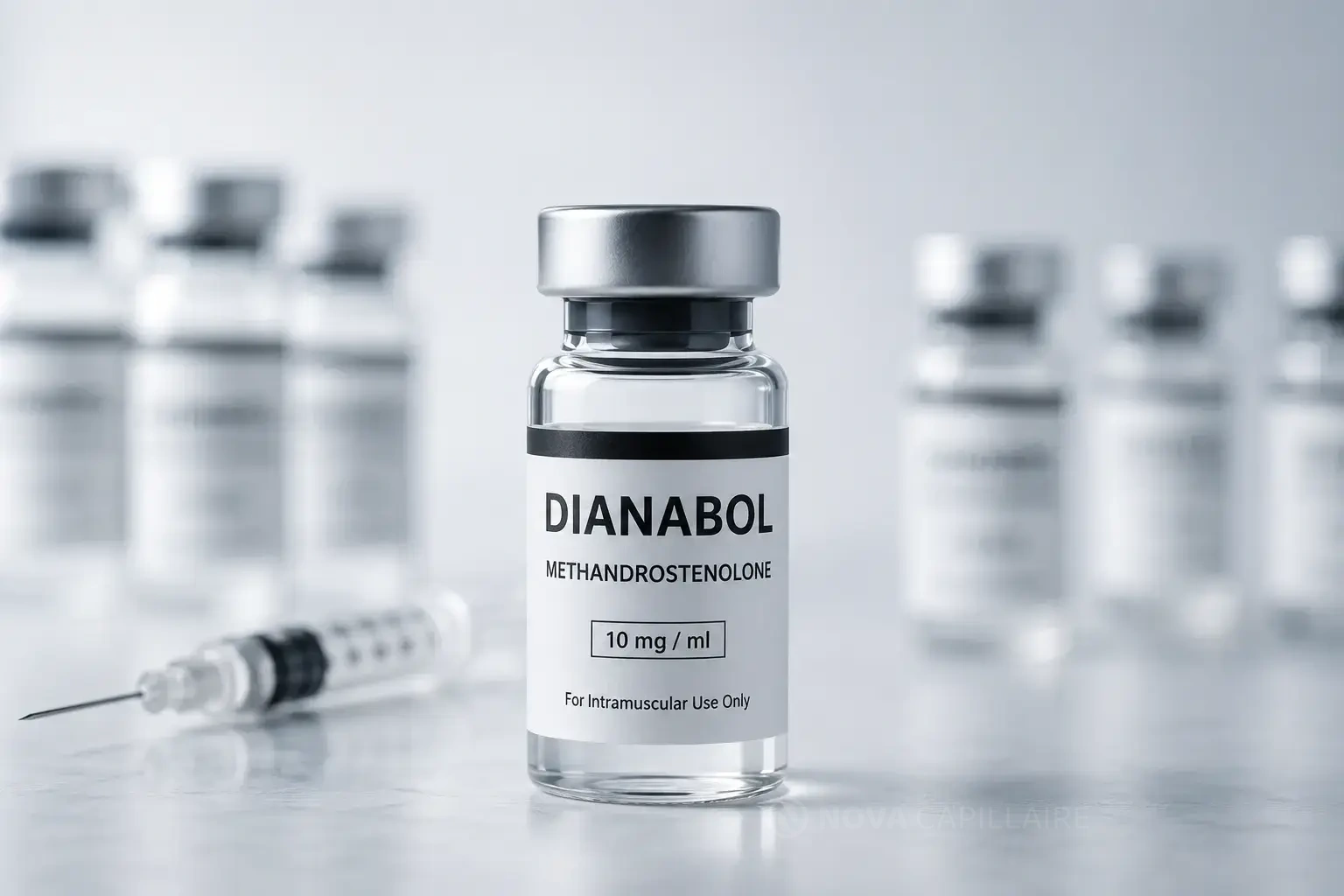
Methandienone, also called methandrostenolone: a synthetic anabolic with androgenic effects and risks notably for the liver.
An androgenic anabolic steroid. Its hormonal action alone does not predict the extent of hair loss.
Stanozolol: a synthetic anabolic. Its effects are not limited to hair; hepatic toxicity is notably described.
Drostanolone: a DHT derivative. This hormonal relation does not allow quantifying your individual hair loss risk.
Methenolone: an androgenic anabolic. Its reputation as a “light” product does not mean it is without risk.
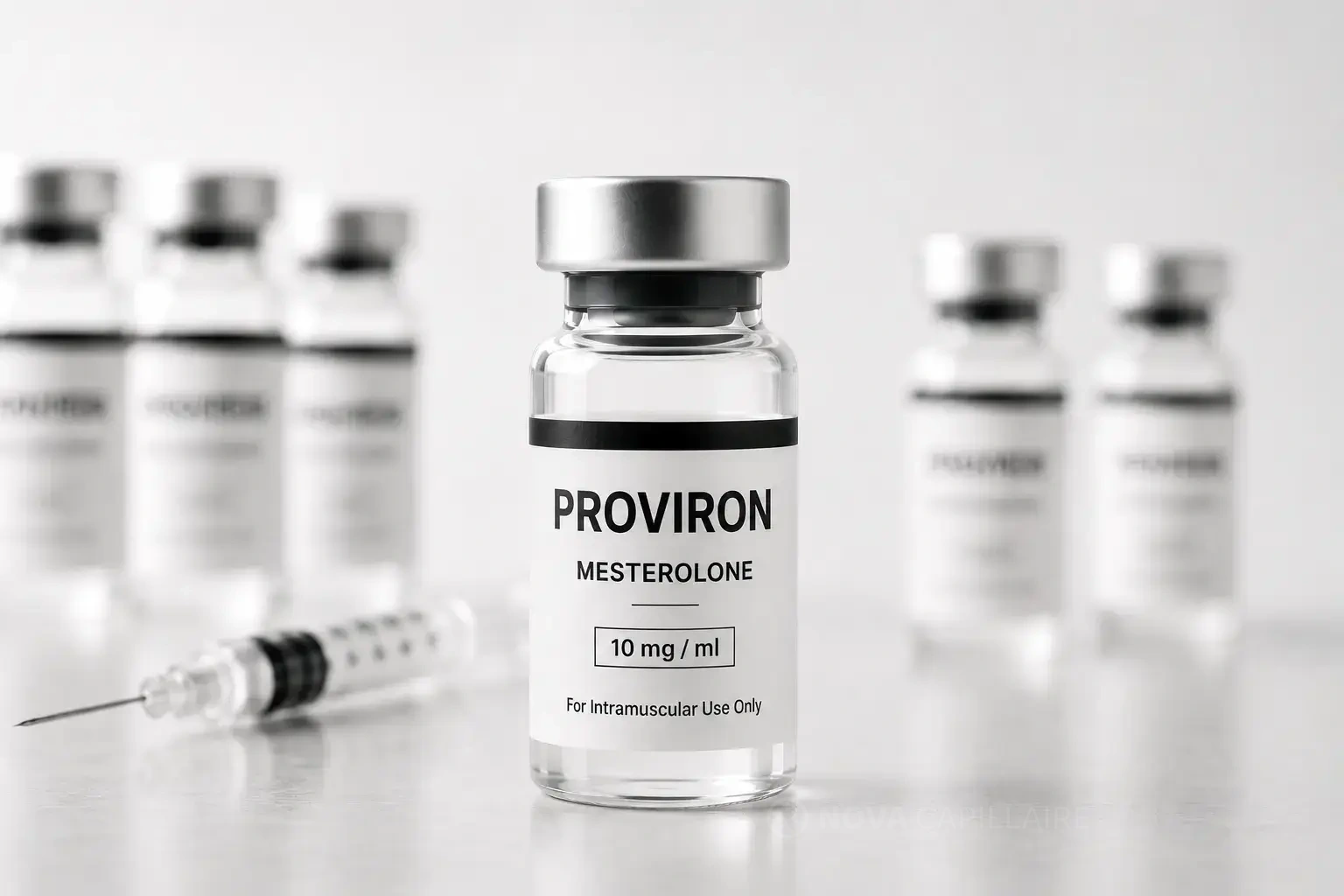
Mesterolone: an androgen derived from DHT. It is not a treatment intended to protect hair.
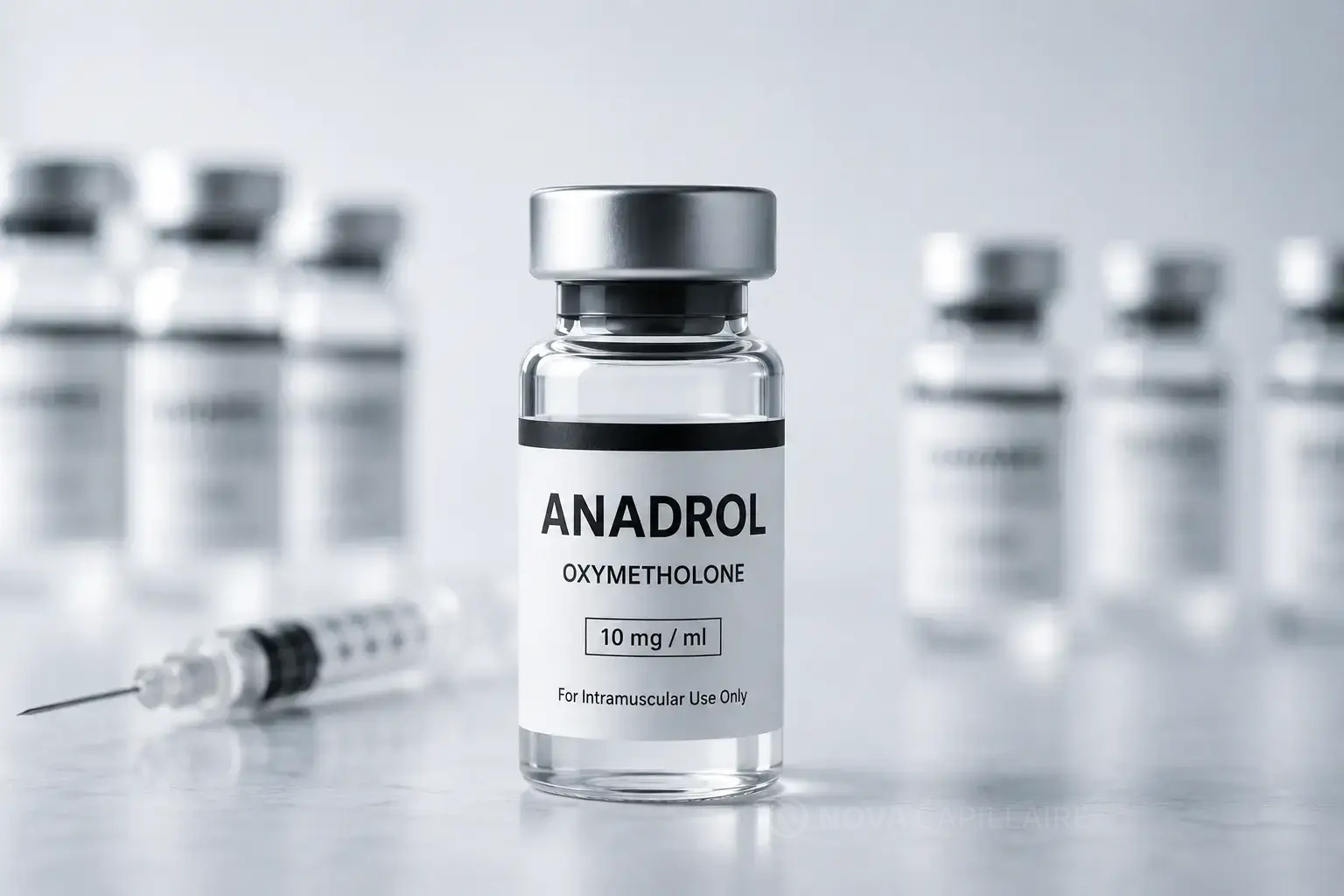
Oxymetholone: a synthetic anabolic that can cause significant adverse effects, notably hepatic. Not to be confused with Dianabol.
LiverTox — Androgenic Steroids · Endotext — Androgen Pharmacology · Mesterolone and drostanolone: DHT derivatives
No order in this gallery implies one product is safer than another. Data do not allow reliably predicting your hair risk from a commercial ranking.
What to do if hair falls out?
Document usage
Note names, dates, actual quantities taken, combinations and supplements. Bring packaging or photos: this information is useful even if the product was not prescribed.
Have hair loss examined
A dermatologist looks for its form, duration and possible causes. Depending on the situation, your doctor can complete the workup or refer you to an endocrinologist.
Avoid adding hormone treatments, “anti-DHT” products, or post-cycle hormone regimens found online. If you use anabolic steroids without medical supervision, seek medical help to plan your care and stopping their use. Withdrawal can involve physical or psychological difficulties.
Can hair regrow?
There is no guaranteed answer. Reversible hair loss and already established androgenetic alopecia do not have the same evolution. Management depends on the observed cause and stage, and changes are evaluated over time.
The dermatologist can discuss hair treatments, including minoxidil in some indications. No hair treatment makes continuing anabolics safe. Adequate nutrition and gentle care support general health without cancelling hormonal exposure.
What about a hair transplant?
The transplant redistributes grafts available; it does not correct a hormonal imbalance or protect all non-transplanted hair. A transplant can be considered after assessing the hair loss, how it is progressing, and the donor area, not as an immediate response to active use.
When to seek help?
Rapid hair loss, plaques or a painful or inflamed scalp justify dermatological advice. Also inform your doctor of mood disorders, marked fatigue or hormonal signs appearing during or after use.
Frequently asked questions
Do steroids cause hair loss in everyone?
No. The response varies by person. Not observing hair loss does not mean their use is without health consequence.
Can a shampoo prevent this hair loss?
A shampoo can improve scalp comfort, but it does not neutralize the hormonal effects of anabolics. Persistent hair loss deserves diagnosis.
Is creatine an anabolic steroid?
No. Creatine and anabolic steroids are different substances. Find studies and their limitations in our article on creatine.
Should I tell the doctor about non-prescribed products?
Yes. Providing complete information allows evaluation of possible effects and interactions and organizing suitable support.
Sources for Further Reading
NHS — Anabolic steroid misuse : risks, distinction from corticosteroids and help with cessation.
Anabolic–androgenic steroids: How do they work and what are the risks? : mechanisms and knowledge limitations.
American Academy of Dermatology — Causes of hair loss : diagnosis and diversity of causes.
American Academy of Dermatology — Diagnosis and treatments : indications to individualize.
Endocrine Society — Medical consequences of performance-enhancing substances : effects beyond only hair issues.