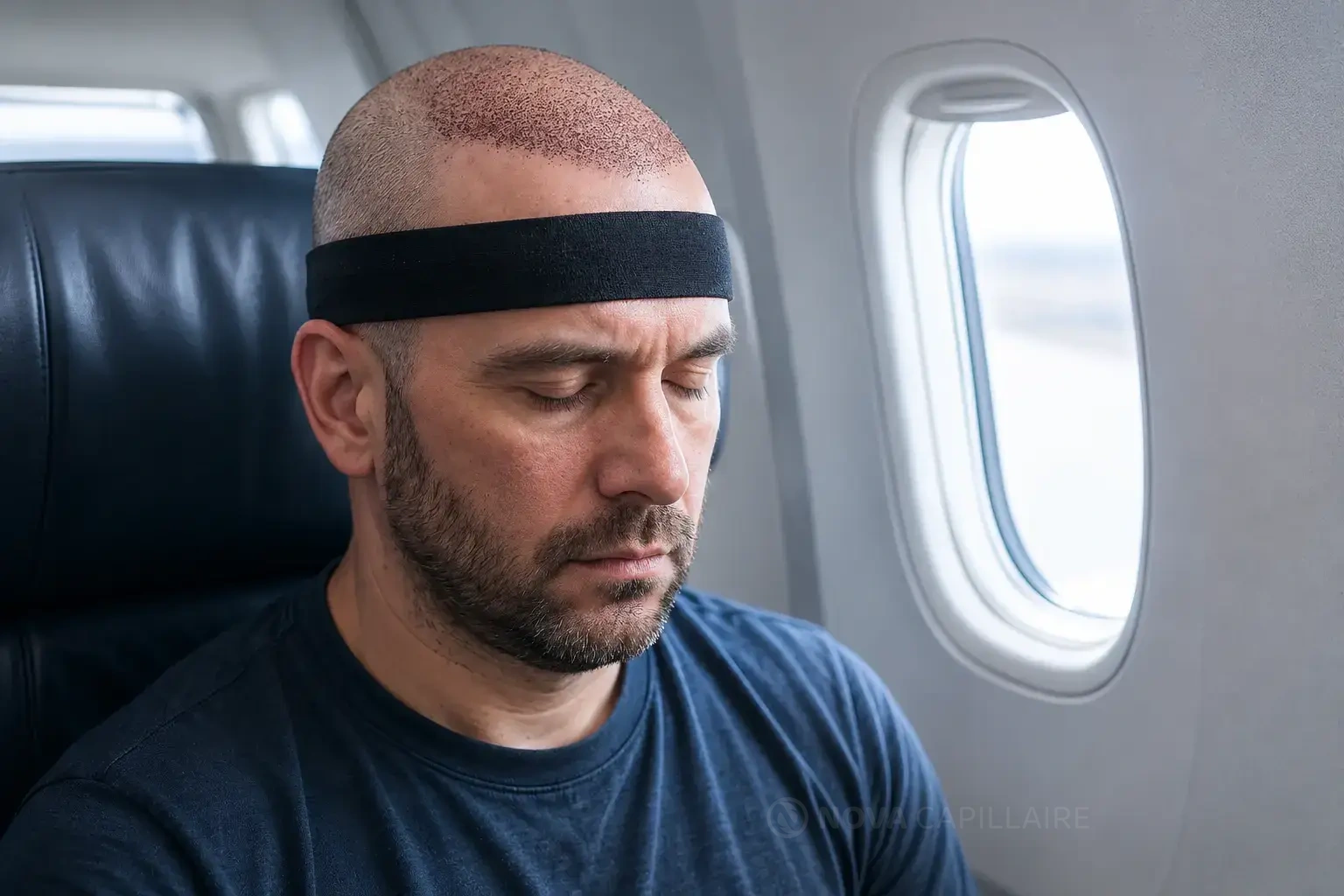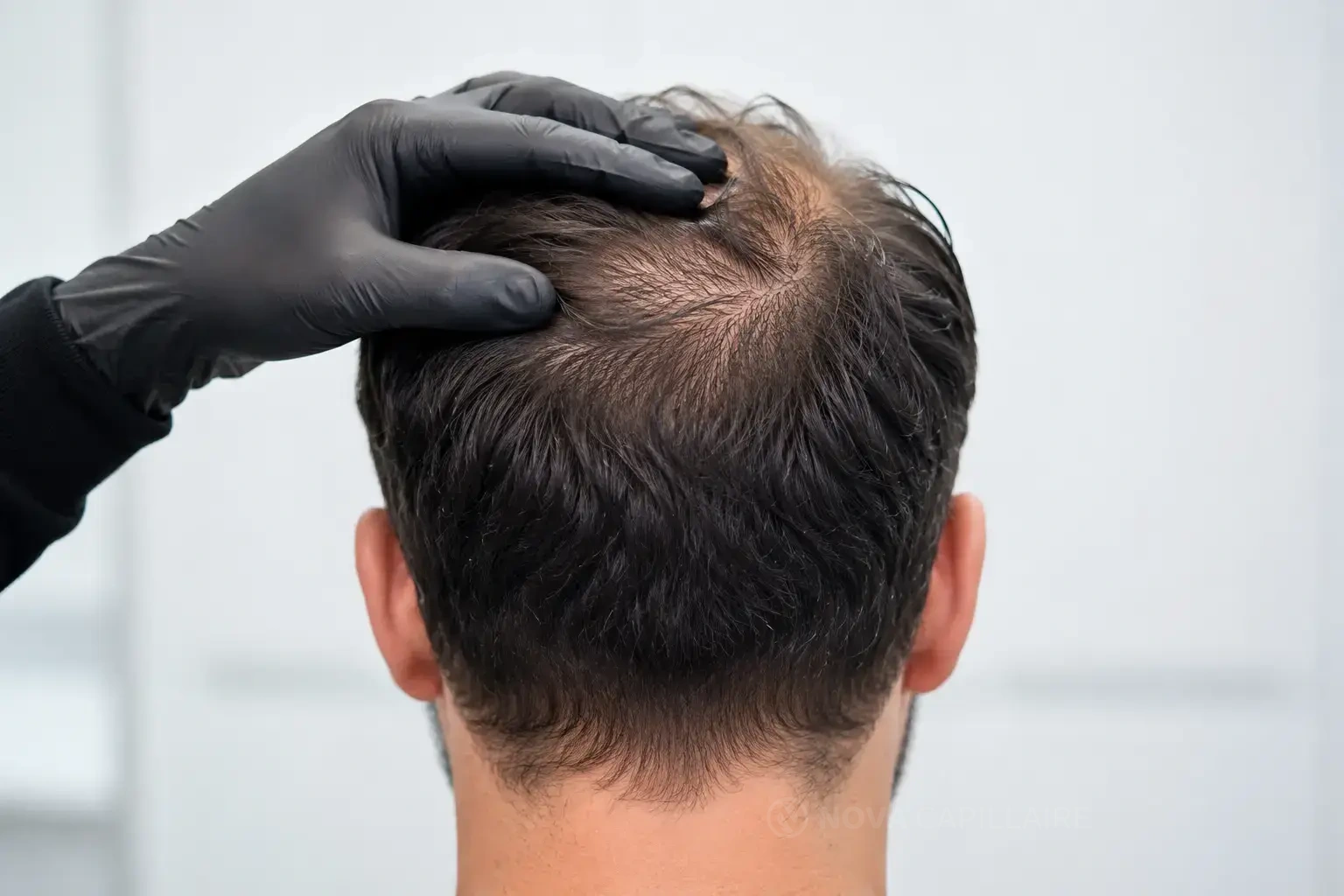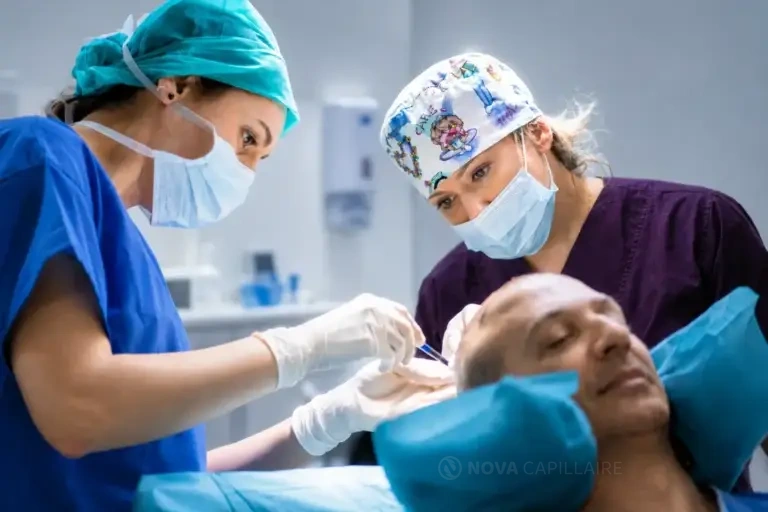
A hair transplant is generally well tolerated thanks to local anesthesia. The first injections may be sensitive, then the scalp becomes numb. During the session, you mainly feel contact or pressure.
Your comfort is prepared during consultation and monitored throughout the procedure. You can report discomfort at any time: there is no need to endure it silently.
During the session: three stages, different sensations
These photos show the team's actions. They help understand the process; they do not reflect the pain felt when the area is anesthetized.
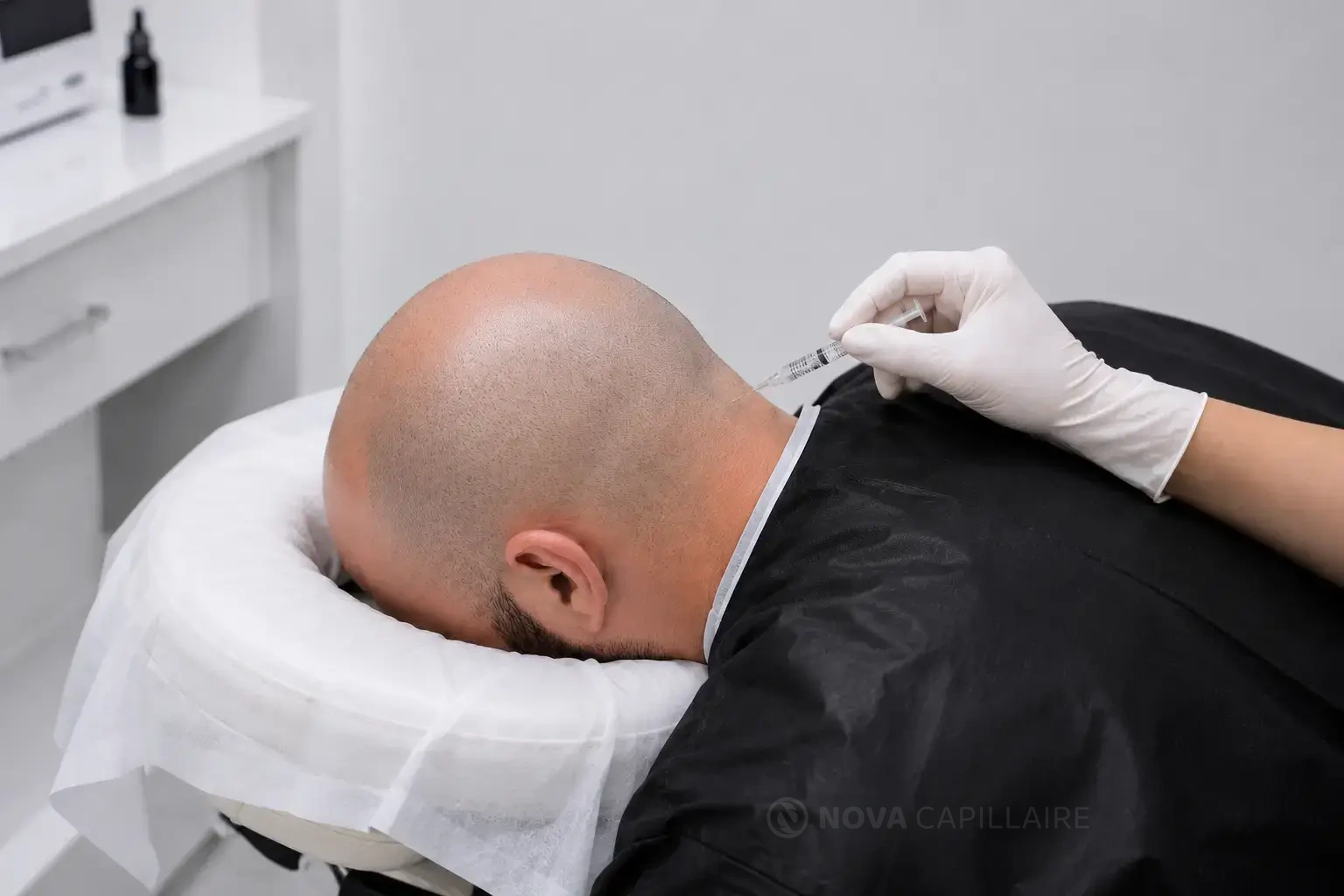
Establishing comfort
A brief pinch or tingling may accompany the injections. The area gradually becomes numb.
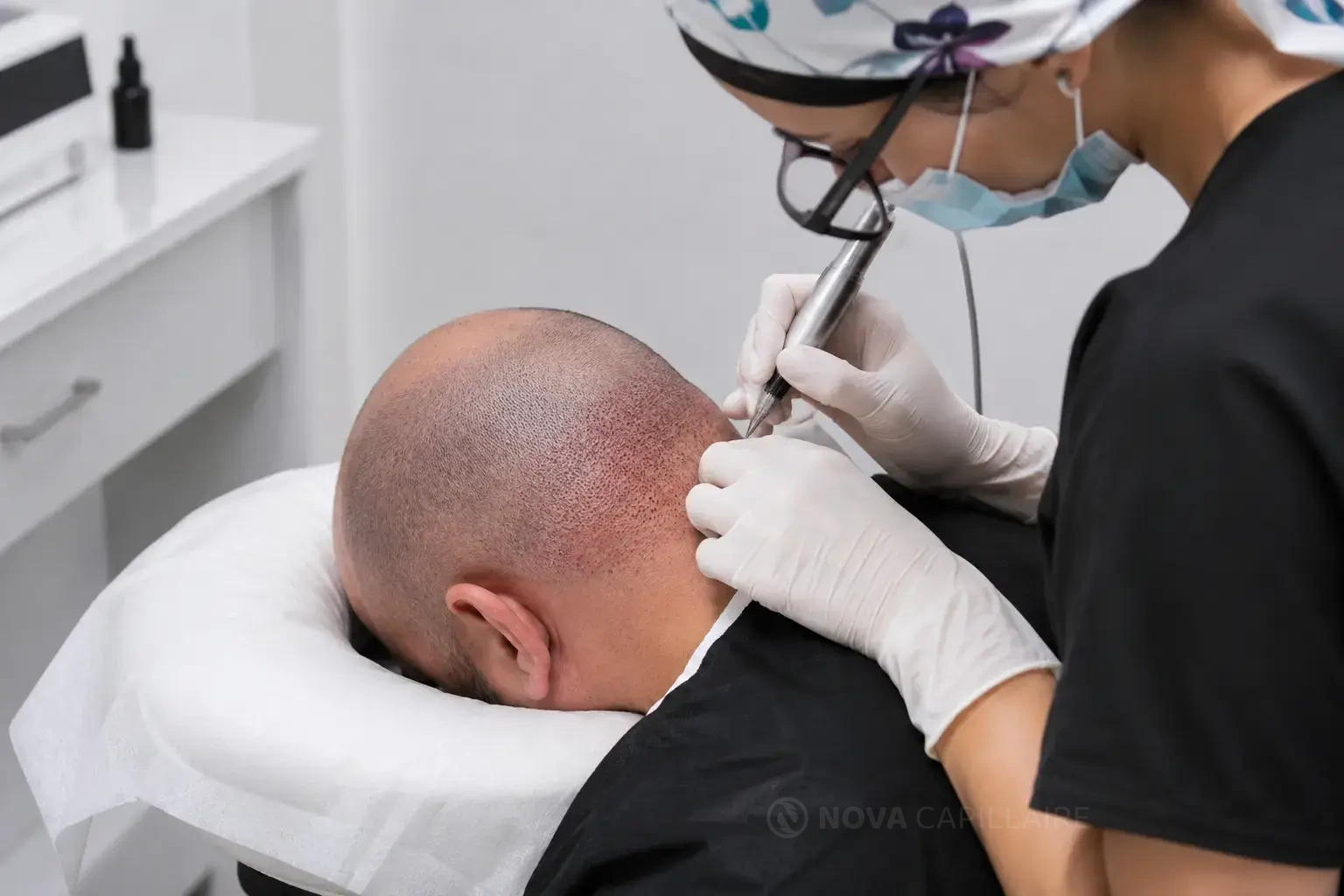
Contacts, pressure
Once anesthesia is effective, harvesting may be perceived as contact or vibration, without expected sharp pain.
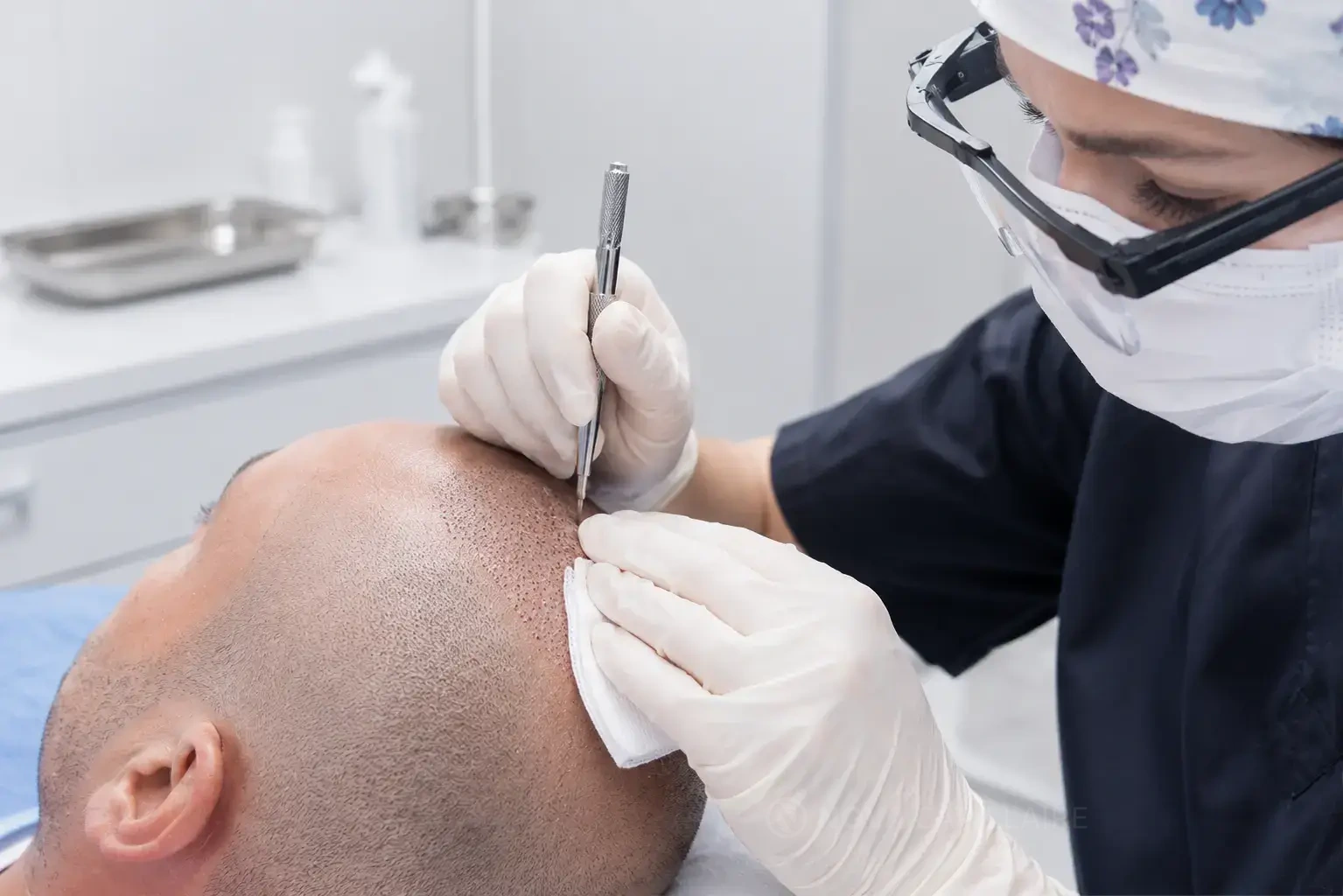
Staying attentive to you
The recipient area is also anesthetized. If sensitivity returns, notify the team so they can check it.
To discover the complete procedure, consult our article on the Sapphire FUE transplant.
How anesthesia supports you
The anesthetic temporarily blocks the transmission of pain signals in the treated area. You generally remain awake and can communicate with the team.
Before starting
Sensitivity is checked before the procedures. Report your allergies, treatments, and any previous reaction to anesthesia.
During the procedure
Pain, an uncomfortable position, or anxiety should be reported. The team assesses the situation and adjusts management accordingly.
Sensitivity varies by individual, session length, and treated areas. The goal is to support you comfortably, without promising an identical experience for all.
After the transplant: decreasing sensitivity
When sensitivity returns, pulling sensations or scalp discomfort may appear. The donor area is sometimes more sensitive than the implanted area, especially on contact with the pillow.
Take time to recover
Tension, mild headache, or moderate swelling may accompany recovery. Follow the instructions and prescription provided by the team.
Observe improvement
Discomfort should decrease. Itching or small scabs may occur: avoid scratching or rubbing the transplanted area.
There is no identical timeline for everyone. Increasing pain rather than decreasing justifies contacting the team.
Some guidelines for a smooth recovery
Follow your prescription
Use only the medications approved for you. Do not add painkillers without checking combinations with your doctor or pharmacist.
Protect the grafts
Avoid friction and respect the recommended sleeping position. Washing follows the protocol given by your team.
Adjust activities
Resume exertion according to given indications. Heat and sweating can increase discomfort during recovery.
Keep in touch
If in doubt about care or sensations, ask the team. An exchange helps you know what to do without interpreting symptoms alone.
FUE and FUT: different after-effects
FUE: individual harvesting
Follicular units are collected one by one without linear suturing. Temporary sensitivity of the donor area remains possible.
FUT: strip harvesting
The donor area is closed with a suture. This can cause different pulling sensations during recovery.
Comfort matters but does not alone determine technique choice: the donor area and your plan remain essential.
When to contact the team?
The most useful indicator is evolution: mild discomfort that decreases differs from pain that intensifies. In case of unusual symptoms, do not wait for your next appointment to seek advice.
Worried about the session? Let’s talk before
Fear of needles or a difficult medical experience can be prepared for. In consultation, ask how anesthesia, breaks, and comfort monitoring proceed.
Follow instructions regarding rest, meals, treatments, and return logistics. These details allow you to arrive with clear guidelines.
Frequently asked questions
Is the first injection sensitive?
A pinch or tingling may be felt. This sensation is usually brief and lessens as anesthesia takes effect.
What to do if I feel pain during the session?
Tell the team immediately. They check the area's sensitivity and adjust care. There is no need to wait until the end of a step.
Is it normal for the back of the head to be sensitive?
The donor area may be sensitive for the first days, especially on contact. This discomfort should lessen; if it increases or worries you, contact the team.
Can one sleep during a transplant?
The procedure generally takes place awake under local anesthesia. Rest options and instructions depend on the medical protocol; ask the team what is planned for you.
Sources and guidelines
NHS — Hair transplant, recovery and follow-up
NHS — Understanding local anesthesia
Article reorganized from original NOVA content. Your practitioner's instructions and prescription take precedence.