Folliculitis decalvans can cause permanent hair loss in scarred zones. With this disease, priority is to control inflammation with a dermatologist. A hair transplant is neither the first treatment nor a cure for folliculitis.
An inflammatory disease, not simple baldness
Folliculitis decalvans is a rare, chronic condition affecting hair follicles. Inflammation can destroy them and leave a scar: called scarring alopecia. It is therefore not equivalent to androgenetic baldness or simple dandruff.
Pustules, crusts around hairs, sensitivity or itching may accompany thinning areas. Several hairs sometimes seem to emerge from the same follicle, forming tufts. None of these signs alone confirms the disease. DermNet describes its manifestations and differential diagnoses.
The disease can fluctuate between active and inactive periods. Its aesthetic and emotional impact warrants serious attention: seeking help does not mean surgery will be necessary or possible.
Why consult before considering a transplant?
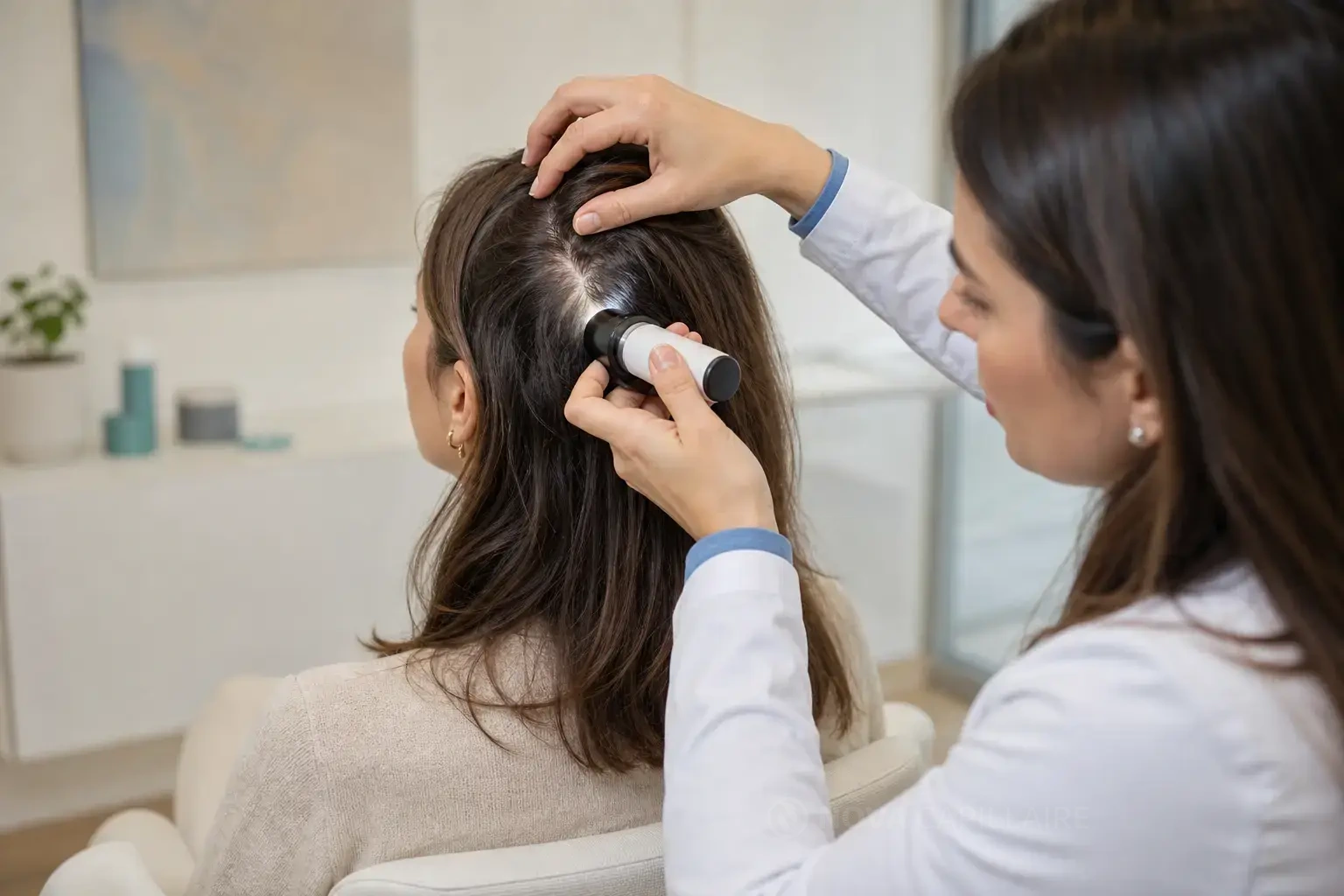
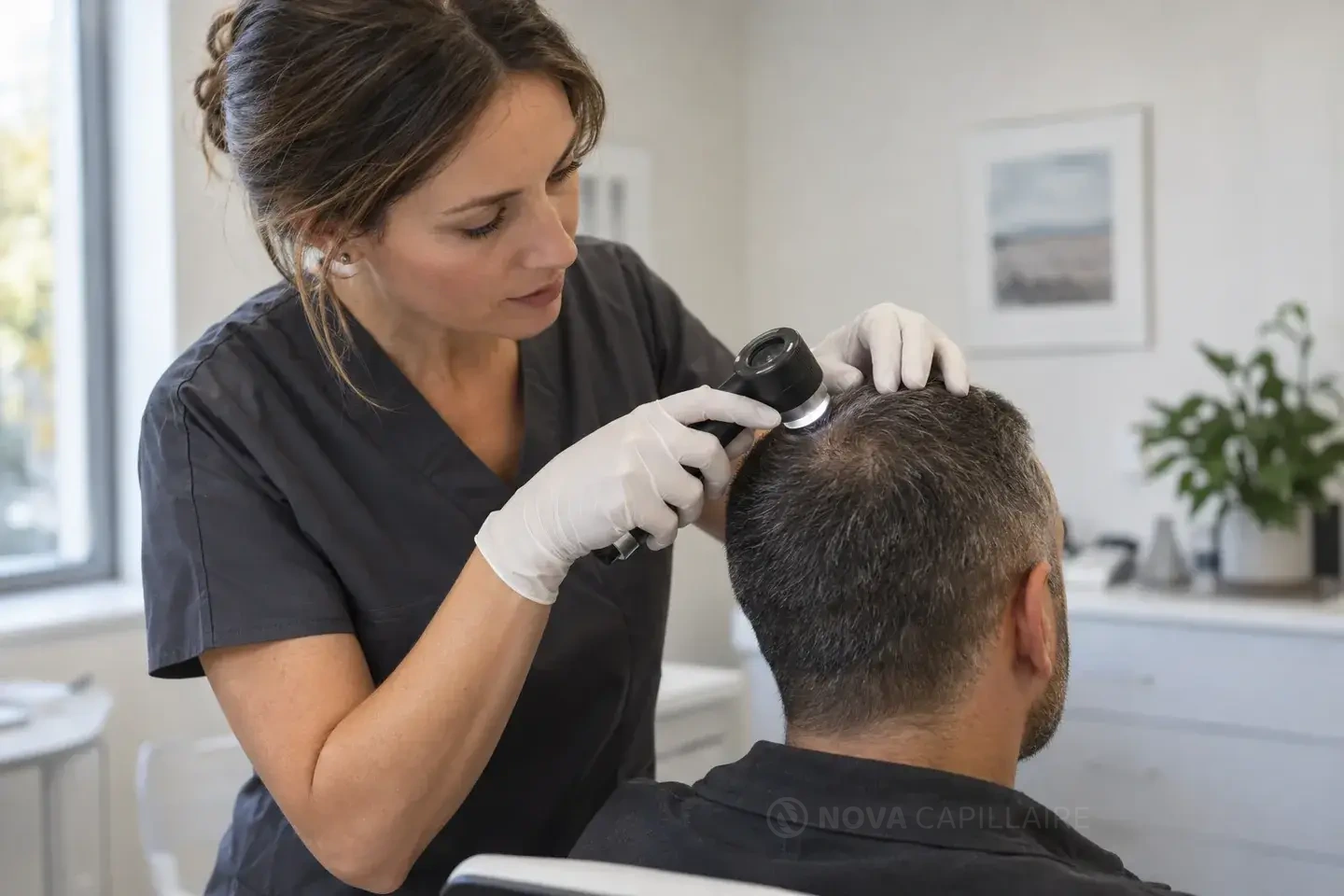
The dermatologist examines the scalp and may use magnification devices to observe follicles. Depending on the situation, a sample or biopsy helps specify diagnosis and exclude other diseases. Presence of crusts or pimples does not allow self-prescription of antibiotics.
The British Association of Dermatologists explains the exact cause remains uncertain. A reaction to Staphylococcus aureus is proposed; this does not mean any presence of this bacterium is folliculitis decalvans. The disease is generally not considered contagious. Read the patient information sheet.
If patches expand, become painful, or discharge, have them examined rather than immediately scheduling a transplant. Remote assessment of hair plans does not replace this dermatological evaluation.
Treating folliculitis: what is the goal?
Recommendations from the EADV working group, published in 2025, propose management adapted to disease activity and severity. See EADV publication.
The dermatologist may use anti-inflammatory treatments and, in some cases, antibiotics or other medications. Their selection and monitoring are individual. This article does not propose standard prescriptions, treatment durations, or medication cessation before surgery.
The term “treat” should not be understood as promise of definitive cure. Recurrences can occur even after improvement. Comfort care and shampoos should not replace follow-up for scarring alopecia.
Is a hair transplant possible?
Not based on observation of a hairless area alone. EADV indicates transplantation may be considered when disease is inactive. This remains a specialized decision, not automatic indication for every affected person.
Caution is important: the British Association of Dermatologists' information sheet mentions prolonged inactivity for several years without treatment before considering a transplant, due to the risk of recurrence that can affect transplanted hair. Treatment should not be stopped just to meet this criterion; the decision belongs to the doctors overseeing the follow-up.
It would therefore be misleading to promise that a fixed number of symptom-free months is sufficient. The dermatologist and surgeon must discuss stability, scar tissue, and the available supply in the donor area. A transplant moves follicles; it does not eliminate the disease.
A multicenter series published in 2025 includes only 11 transplanted patients. This small cohort reminds us that the data do not allow promising an individual result. See the reference for this clinical series.
Useful questions for your appointment
Bring your medical records, a list of treatments you’ve tried, and dated photos if you have them. Think about what you hope to achieve: covering a small patch and restoring substantial density call for different plans.
- Is the diagnosis confirmed and which area remains active?
- How will the disease stability be monitored?
- What benefits and what limits can be expected from treatments?
- Would a non-surgical solution be more appropriate?
- If a transplant becomes an option, what risks must be accepted and what follow-up should be planned?
Camouflage solutions can also be discussed. They are not intended to treat inflammation but can help to live with density loss without rushing into surgery.
Treatments, camouflage, and transplant: do not confuse them
| Approach | What it aims for | What it does not guarantee |
|---|---|---|
| Dermatological follow-up and treatments | Reduce inflammatory activity and limit new losses. | Regrowth of follicles destroyed by scarring, nor absence of recurrence. |
| Camouflage | Visually reduce the appearance of thinning areas without surgery. | Treatment of inflammation or stopping the disease. |
| Hair transplant | Consider restoration in certain inactive disease situations, after specialist advice. | Healing of folliculitis, automatic indication, or assured individual result. |
Summary of recommendations and limits presented in this article. Sources: EADV, BAD, and DermNet.
Frequently Asked Questions
Do pimples after a transplant mean folliculitis decalvans?
No, this diagnosis cannot be established based on this symptom alone. Report the lesions to the team who operated on you and have them examined. In case of significant pain or unexpected symptoms, do not delay in seeking advice. The NHS recalls situations requiring contact after a transplant.
Is it the same as seborrheic dermatitis?
No. Both names refer to different diseases, even if some manifestations may resemble each other. See our article on seborrheic dermatitis and transplant to understand why your scalp needs to be assessed before a procedure.
Can I discuss my hair restoration options now?
Yes, specifying the diagnosis and ongoing follow-up. You can contact NOVA Capillaire to prepare this exchange, without considering this step as validation for a transplant. Disease treatment and dermatologist advice remain priority.
Sources and guidelines
Written by NOVA Capillaire. Sources reviewed on September 14, 2026. Recommendations and patient series do not have the same level of evidence; the surgical possibilities described do not guarantee individual results.