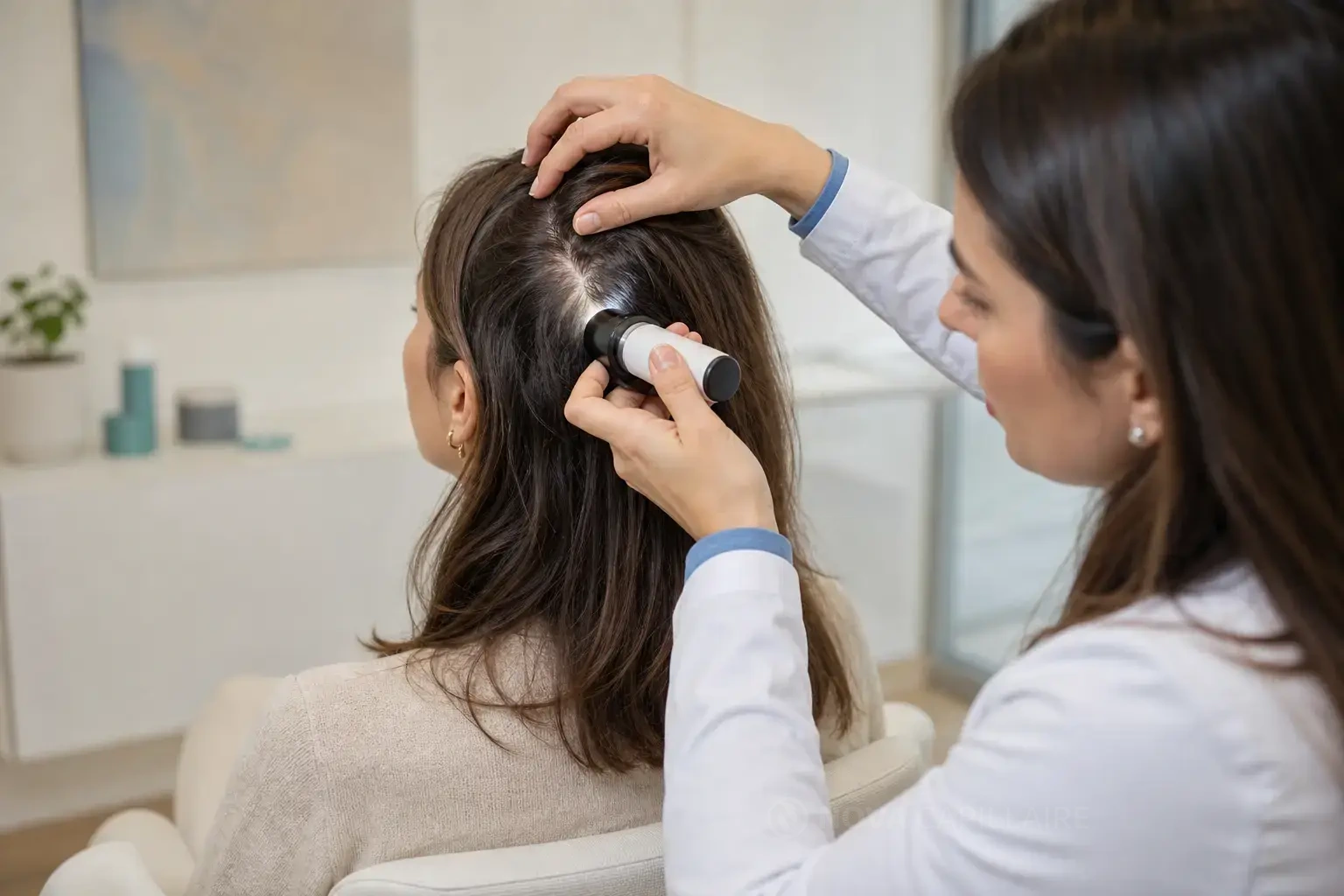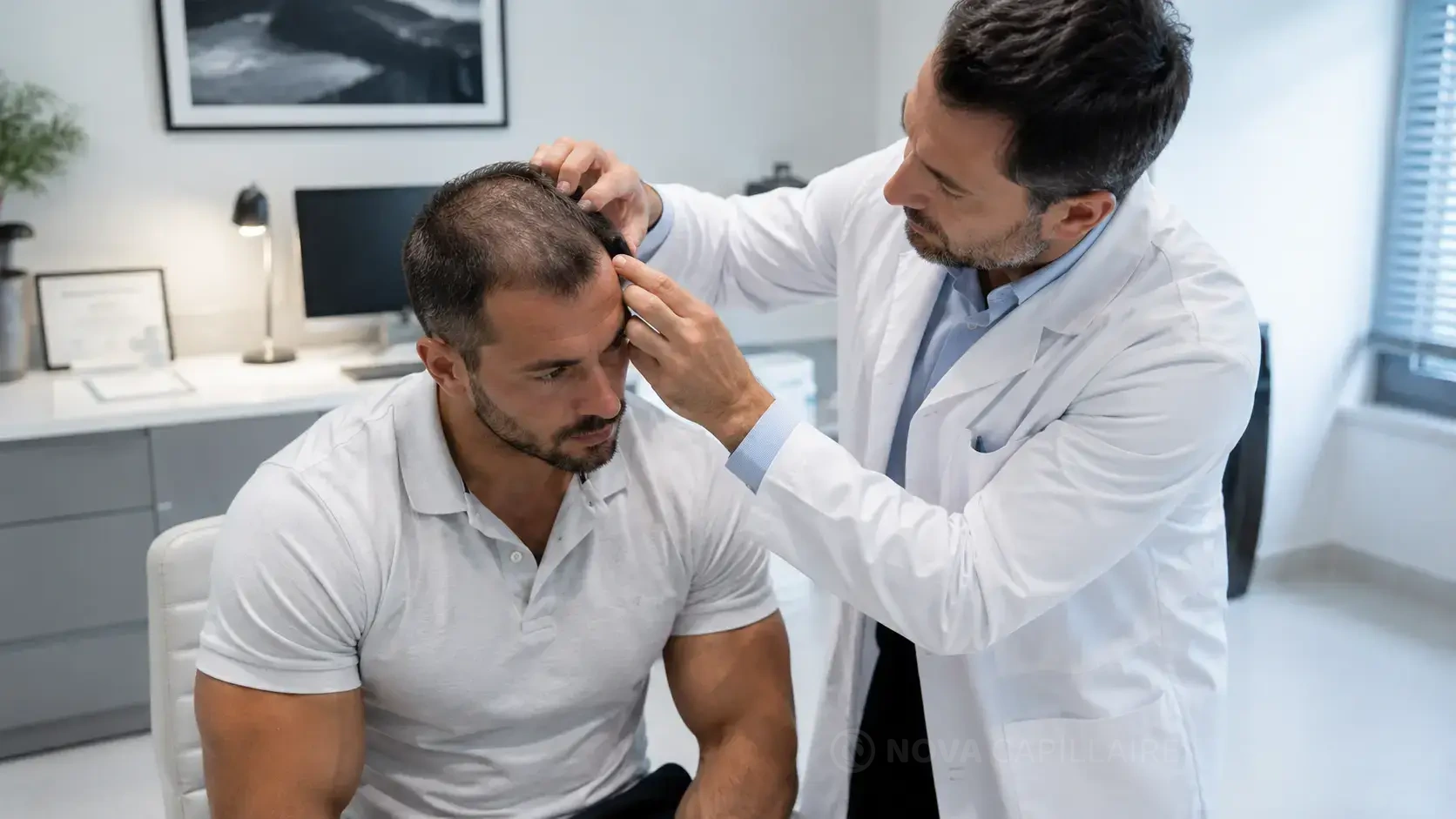
Have you lost weight and noticed more hair in the shower or on your brush? The two events may be connected, but that does not establish a diagnosis. Significant weight loss or a very restrictive diet can trigger telogen effluvium, a form of diffuse shedding involving the hair growth cycle. 1
Why can shedding start later?
Shedding does not necessarily begin during weight loss. With telogen effluvium, it may become noticeable several months after a trigger. This delay makes it useful to review recent changes, even if your weight is now stable. 2
Write down approximately when the weight loss and shedding began rather than trying to count every hair. A clear timeline can help you prepare for an appointment.
What does the research tell us?
A retrospective study published in 2024 examined patients with telogen effluvium associated with weight loss. It supports asking about weight changes when assessing diffuse shedding. It does not establish a universal amount of weight loss that causes shedding or predict what will happen to each individual. 3
The aim is not to assign you a risk based on the scale. It is to understand your circumstances, nutrition, health, and scalp findings.
Weight loss, a deficiency, or another cause?
Dietary changes are part of the assessment, not an automatic explanation. An examination and medical history may lead the physician to investigate other causes or request targeted tests. Iron, zinc, or vitamin deficiency should not be assumed without an assessment. 4
Bring a list of your medications and supplements, along with any test results you already have. Tell the physician if the weight loss was unintentional. Do not stop a prescribed medication because you suspect it is affecting your hair. 2
Three situations to explain to your physician
After a restrictive diet
Describe what changed: skipped meals, excluded food groups, how long you followed the diet, and the pace of weight loss. The purpose of the appointment is to discuss whether testing or nutritional support is appropriate, rather than choosing a supplement on your own.
After weight-loss surgery
Bring the instructions you received, details of your nutritional follow-up, and any completed tests. Ask your treating team how to address the shedding within your follow-up plan; this article does not replace its protocol.
During treatment for weight loss
Note the medication, when you started it, and the sequence of changes you noticed. Events occurring close together do not, by themselves, establish that the medication is responsible. Speak with the prescriber before making any changes.
Should you take supplements?
A “hair supplement” is not a routine answer. Too much of certain nutrients can contribute to hair loss, and taking several products can lead to overlapping doses. 5 Ask for advice before starting supplements, especially if you are already receiving treatment or following a nutrition program.
A varied diet is a starting point, but significant restrictions or difficulty eating deserve appropriate support. 6
Can the hair grow back?
Telogen effluvium may improve after the trigger has passed or been addressed. Restoring volume takes time, and persistent shedding needs reassessment. Other types of hair loss can occur at the same time, making an examination useful even when the connection with weight loss seems clear. 1
Our telogen effluvium guide explains the condition more broadly. This article focuses on the particular context of weight loss.
Where does a hair transplant fit in?
A request for surgery should not replace investigating the cause of shedding. Before discussing an intervention, ask for an explanation of the diagnosis and suitable options. Our hair transplant candidacy guide outlines questions to consider if surgery is subsequently discussed.
What should you prepare for your appointment?
A timeline of weight changes and shedding, dietary changes, treatments, other symptoms, and a few photographs taken under similar conditions. These details help explain the progression but do not replace an examination.
Should you wait before seeking advice?
You can seek advice whenever the shedding concerns you. Mention rapid changes, bald patches, pain, or scalp inflammation in particular so the physician can determine the appropriate assessment.
Sources and references
[1] British Association of Dermatologists — Telogen effluvium, updated October 2025
[2] American Academy of Dermatology — Hair loss or hair shedding?
[3] Telogen Effluvium Associated With Weight Loss: A Single Center Retrospective Study, 2024
[4] American Academy of Dermatology — Hair loss: Diagnosis and treatment
[5] American Academy of Dermatology — Hair loss: Tips for managing
[6] American Academy of Dermatology — Vitamins and supplements
This information does not replace personalized medical advice. Do not start, stop, or change any treatment based solely on this article.