YOUR RECOVERY, STEP BY STEP
After your transplant, focus on the right actions. This guide helps you know what to do, what to avoid, and when to call us.
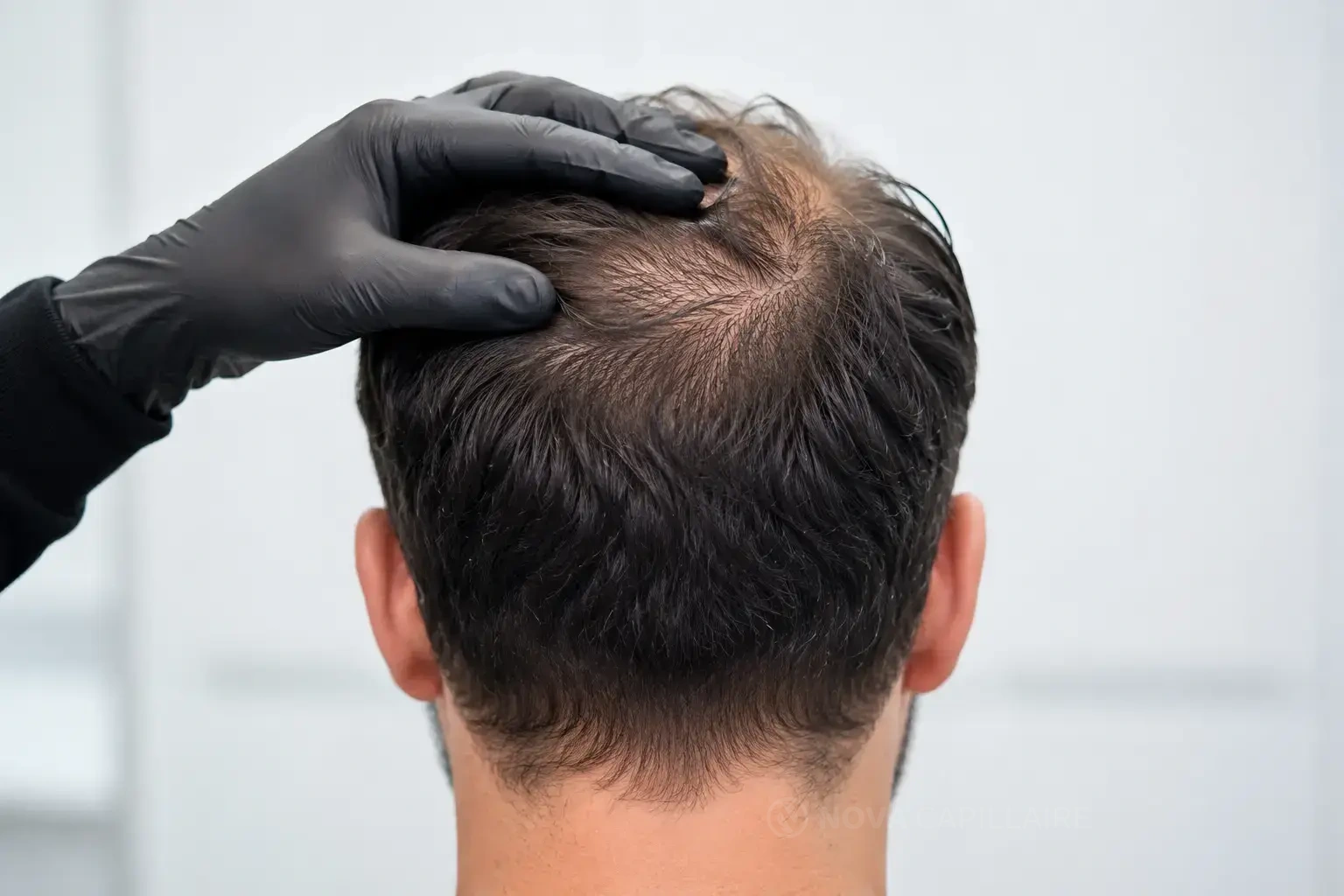
D+4 means four days after the procedure. The donor area is the back and sides of the head; the transplanted area is where hair was implanted.
See care for my periodClean hands. Do not touch your head.
The first reflex before all other care.
Even if it itches, do not touch.
- Except for prescribed care, do not touch either the transplanted areas or the back and sides of the head.
- Do not scratch, rub, or pick at scabs, even with clean hands.
- If itching bothers you, contact NOVA. Do not add products without advice.
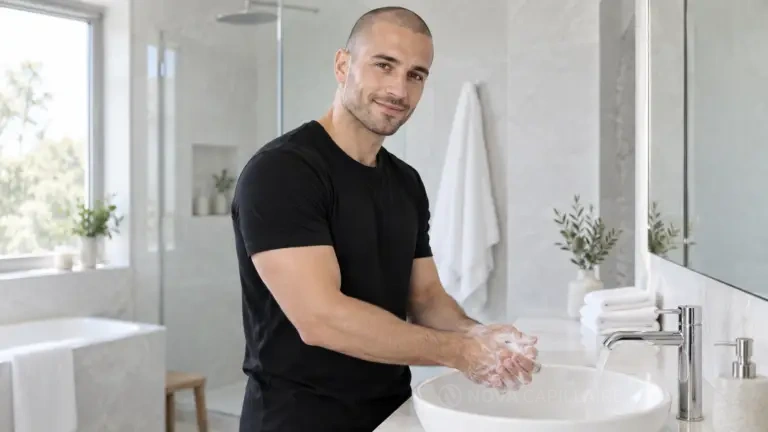
Before and after each care
- Wash your hands with soap and water for 20 seconds : palms, backs of hands, between fingers, and under nails.
- Dry with a clean cloth. Keep nails short and clean.
- Repeat if you touch your phone or a surface during care. Perform only actions shown by the team.
Why? Hands and nails can carry germs. Infection can slow healing and require additional care. These simple actions help reduce this risk.
Returning home
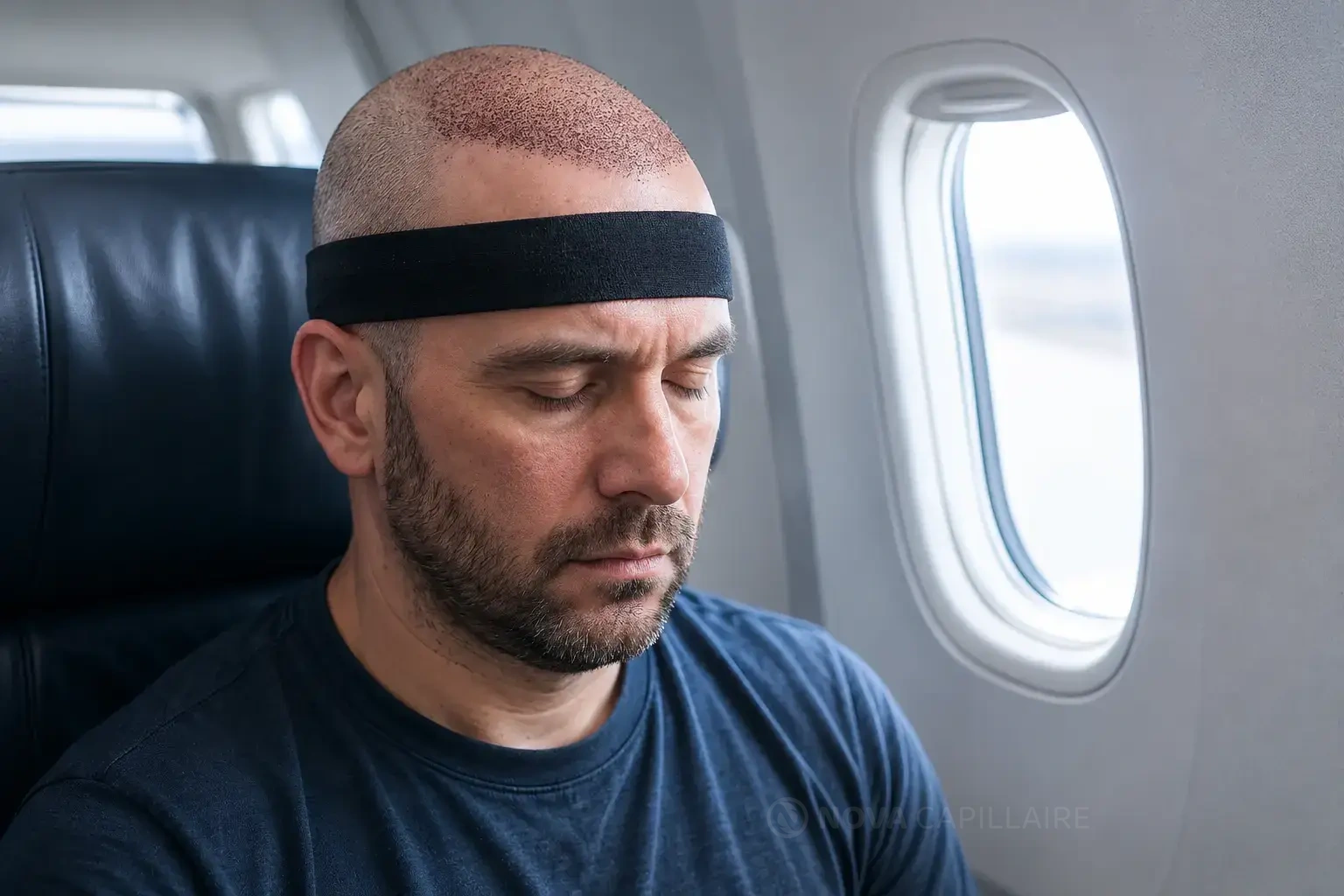
Rest and protect operated areas.
Do not drive when leaving the center.
Have someone take you home or take a taxi. Fatigue and local anesthesia can reduce your alertness.
Avoid movements that expose the head.
- The first three days: do not bend over, carry heavy loads, or eat very hard foods or chewing gum.
- The first seven days: avoid excessive sweating.
- Choose clothes that do not go over your head.
Body shower with head out of water.
The shower should be short and lukewarm. Do not place your head under the water jet. Avoid excessive heat and steam.
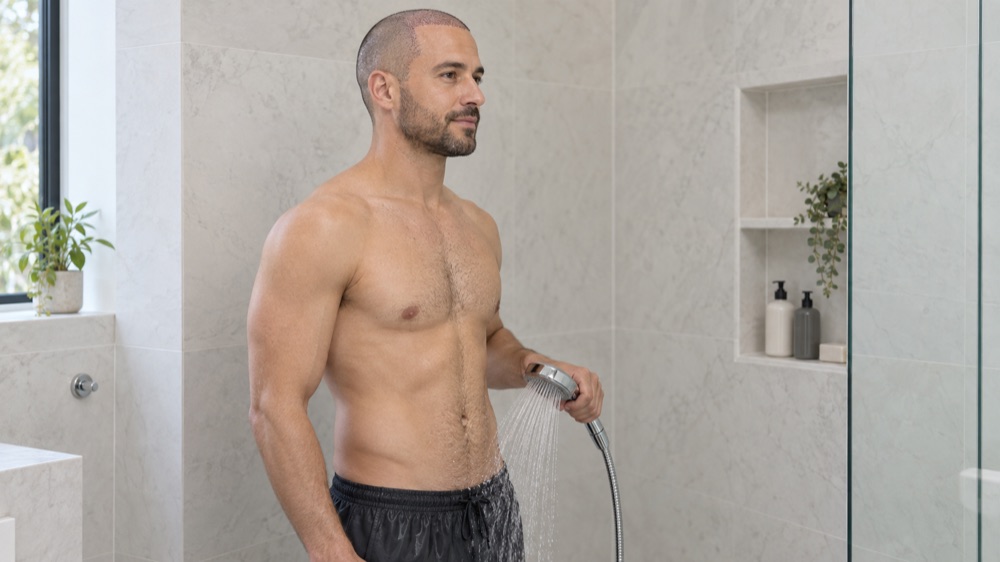
The showerhead remains directed below the shoulders, away from operated areas.
Getting well positioned for the night
During the first four nights, sleep on your back.
Raise your upper body without putting pressure on the grafts.
- Raise your upper body to about 30° using three stable pillows, as shown by the team’s setup.
- Use the U-shaped cervical pillow to help support your head.
- If you move a lot, place a rolled towel under each forearm. This helps limit turning over.
- No pillow, sheet, or clothing should press on the implanted area.
Swipe to see more photos.
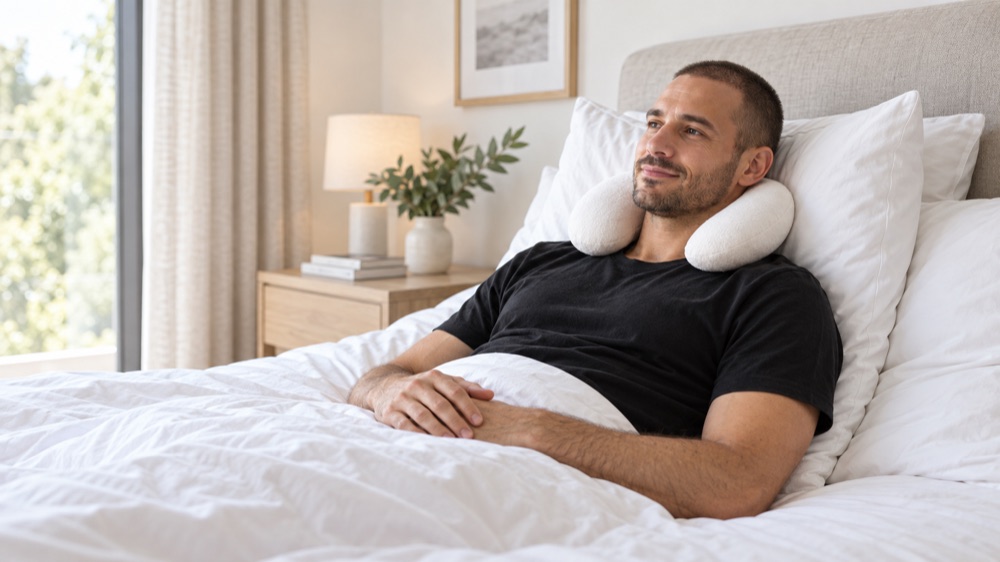
Position your torso and neck as directed by the team.
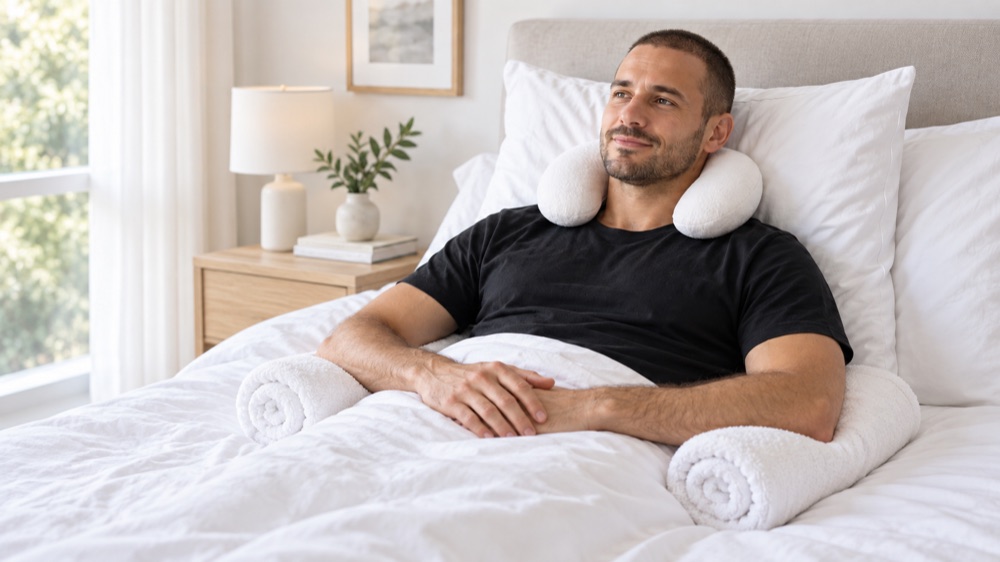
A rolled towel under each forearm can help you stay on your back.
For the first night
Having someone with you is preferable. If alone, keep your phone charged and close at hand.
Protect the pillow, not the head.
A slight oozing may occur the first night. Use the clean protection provided by the center, following received instructions.
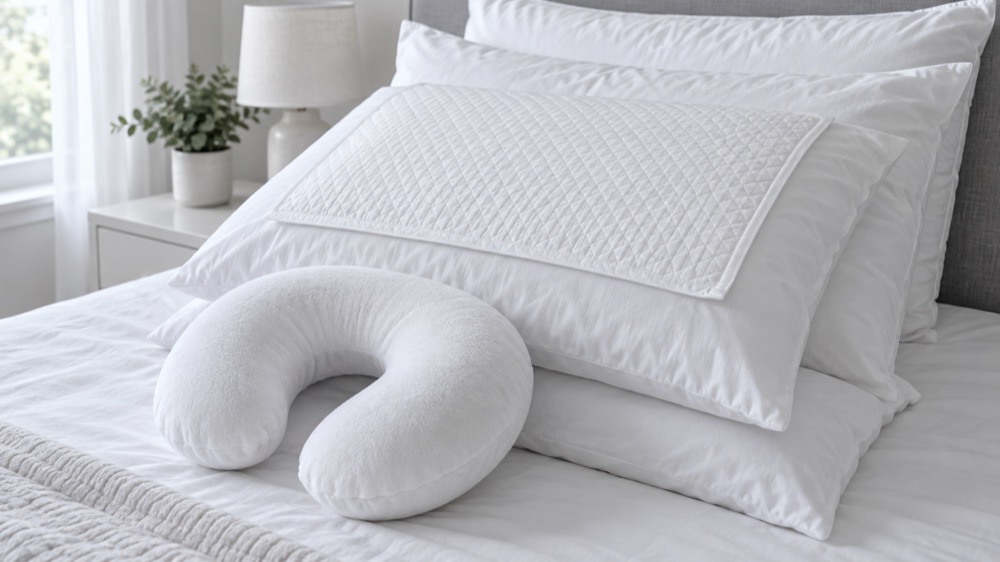
Do not wrap it around the head. If bleeding is heavy, contact the team promptly.
Shampoo without rubbing
Two zones, two care methods: do not confuse them.
Back and sides: from the evening after to D+7
- Gently remove the bandage as shown by the team.
- Wash with lukewarm water using the Lipikar Surgras included in your protocol.
- Dry by patting without rubbing.
- Apply the prescribed Cicaplast Gel on the donor area only : a thin layer morning and evening for the seven days indicated on the prescription, then air dry.
Grafted area: start at day 4
Two shampoos per day.
One shampoo per day if they come off easily.
Stop the intensive routine. Continue with the same prescribed shampoo, up to three times per week.
Use the prescribed Bioderma Nodé. For the first ten days: no massage, no strong jet.
The six shampoo steps
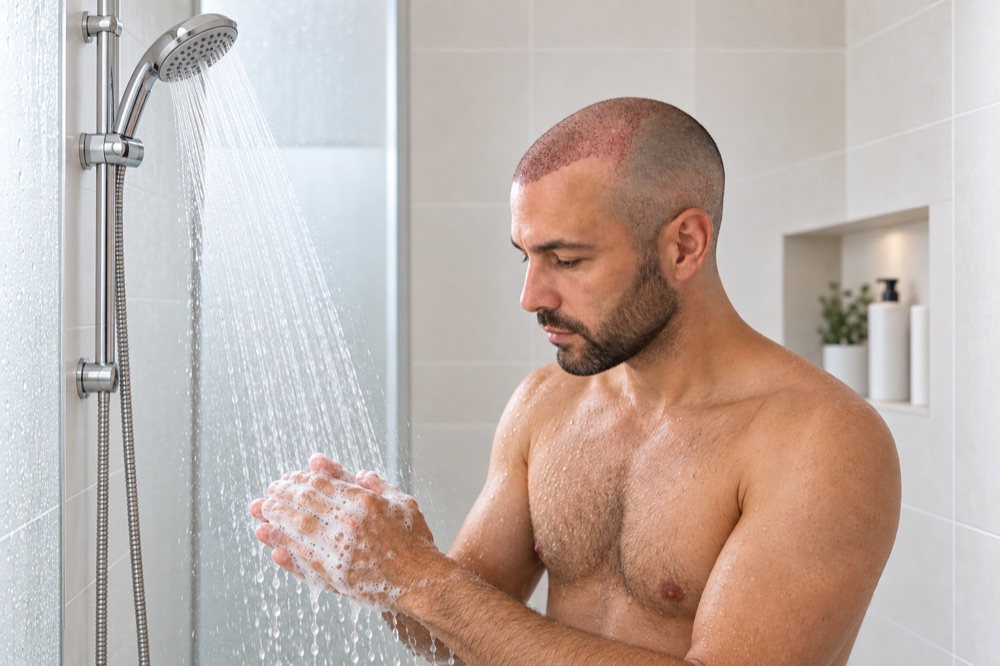
Wash your hands with soap for 20 seconds, including under the nails. Dry them with a clean towel.
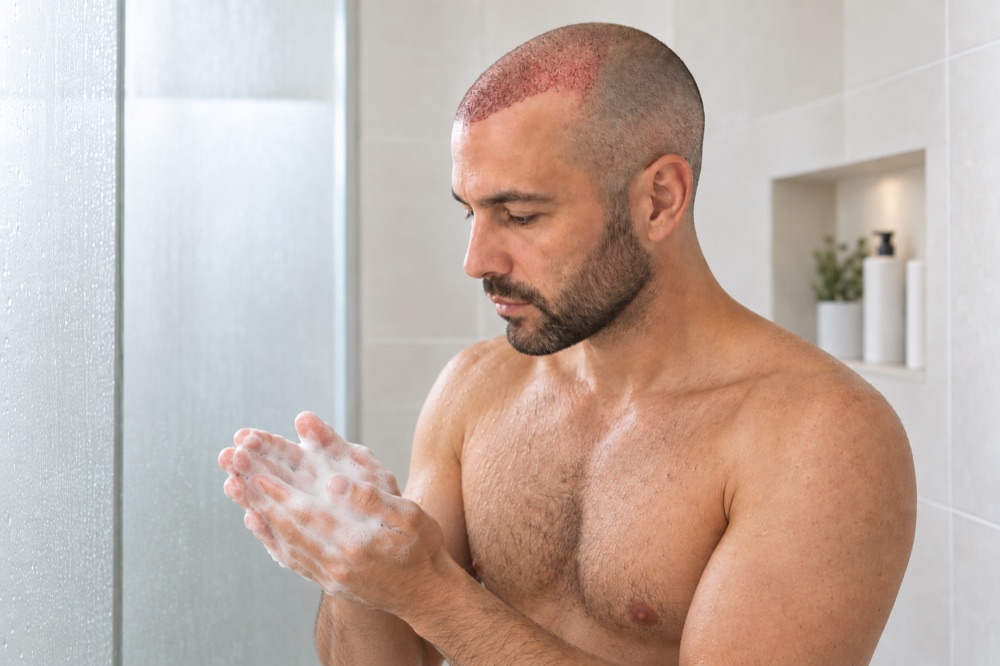
Lather the prescribed Bioderma Nodé between your clean hands.
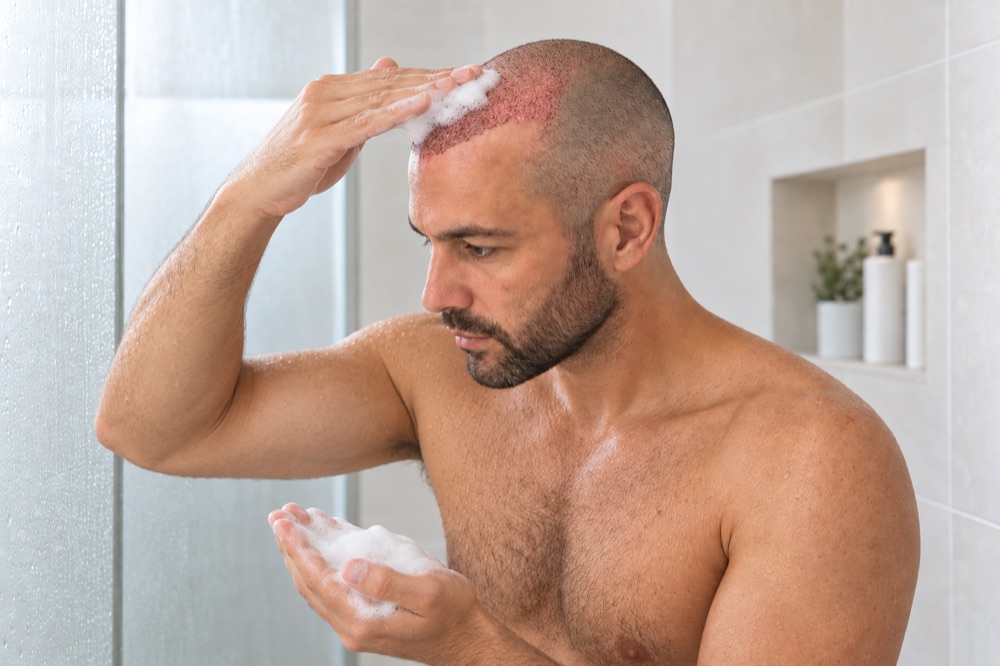
Place the foam on the grafted area. No nails, rubbing, or massage.
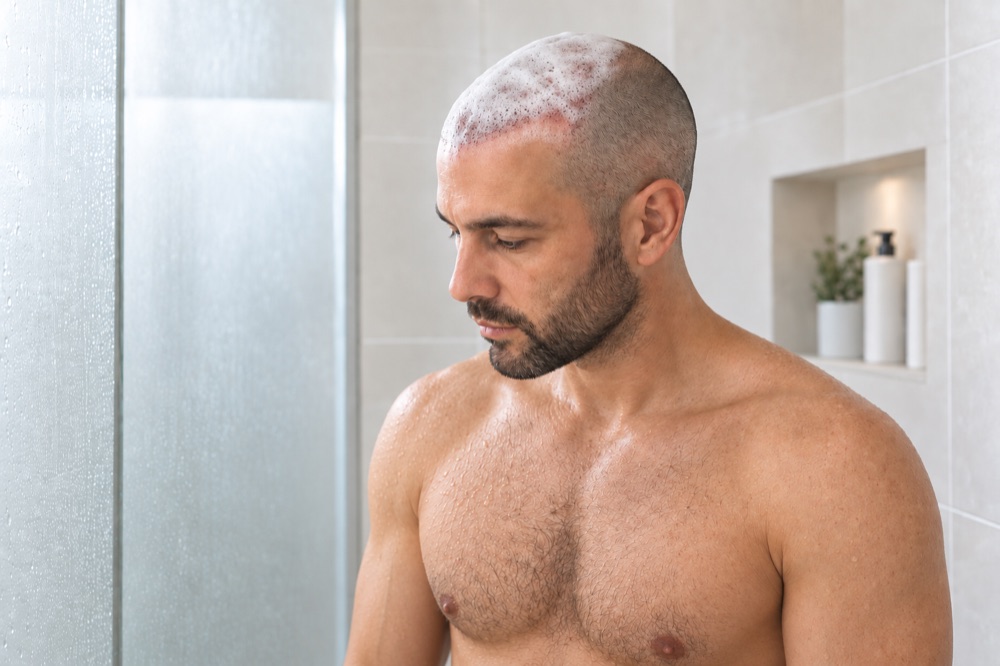
Allow the foam to act without touching the crusts.
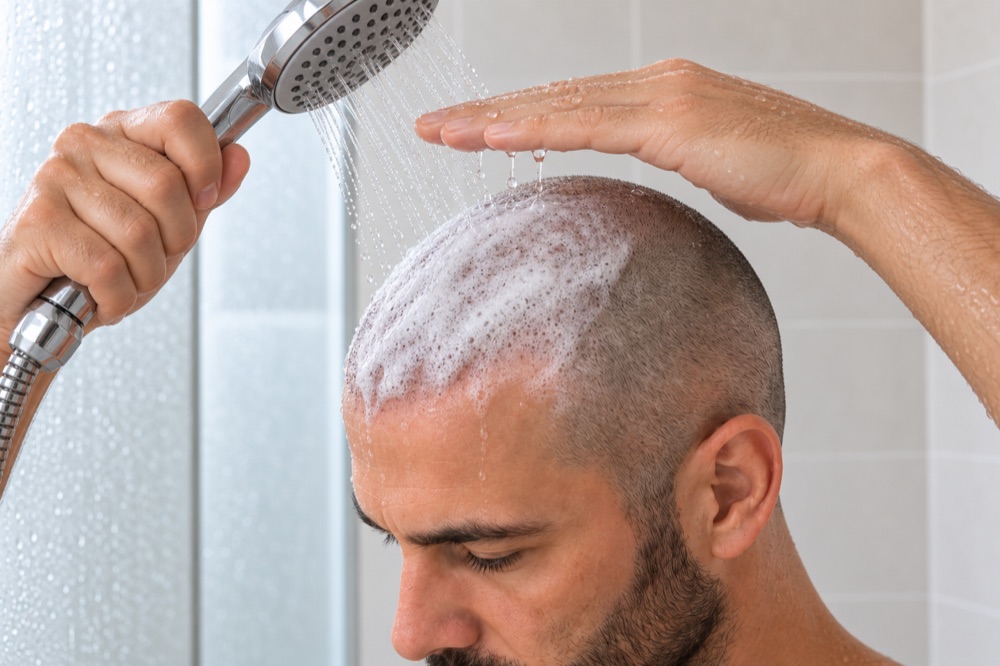
Use lukewarm water and a very gentle stream without pressure on the grafts.
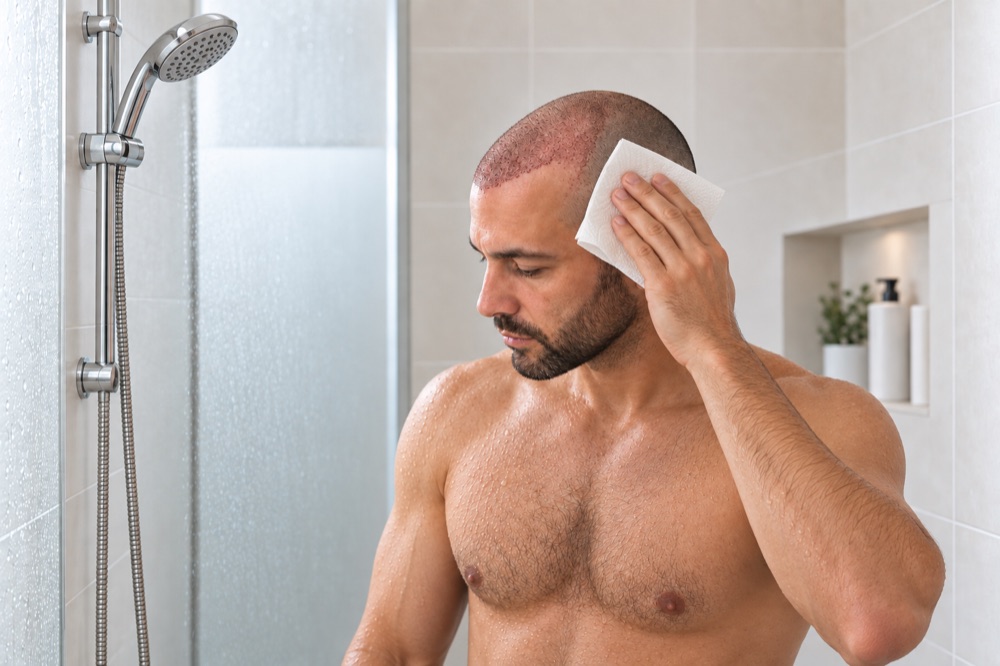
Pat with clean paper as shown by the team. Let dry completely in open air, then wash your hands.
Your products and your prescription
Do not add, modify, or stop any treatment on your own initiative.
The prescribed thermal water spray
- Keep the La Roche-Posay thermal water in the refrigerator..
- On the day of your procedure: spray the grafted area every hour until bedtime.
- The following six days: spray four to six times per day.
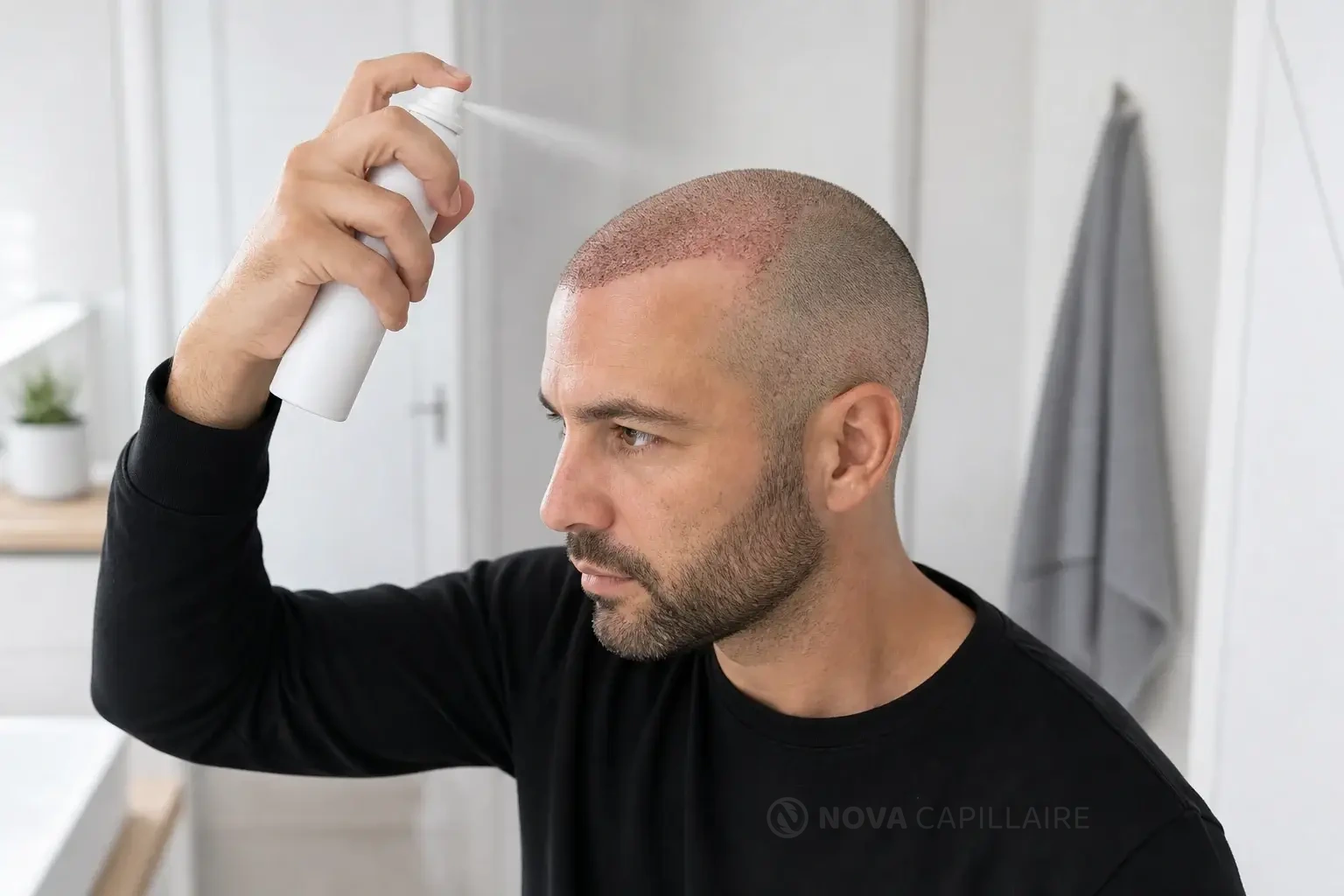
Follow the spraying method shown at the center.
Painkillers: follow the prescription only.
For Dafalgan or any other prescribed medication, respect the dose, interval between doses, and duration indicated.
- Do not combine multiple medications containing paracetamol.
- Take aspirin only on medical advice. Do not stop any prescribed treatment on your own.
- If in doubt, ask the pharmacist or prescriber.
No automatic additional cream.
A glycerol, vaseline, or paraffin cream should not be added alone. For persistent crusts, call at day 10, then at day 12 if necessary: the team will provide tailored instructions.
Crusts, itching, and swelling
Know what to monitor without handling the skin.
Crusts: do not pull them off.
They form during healing. The gentle shampoos prescribed by NOVA help soften and detach them around day 10.
A hair shaft falling with a crust does not alone mean its root is lost.
The forehead may swell in the first days.
Swelling can extend to the eyes, often between the second and fifth day, then decrease. It may be related to fluids injected during the procedure.
- Keep your head upright and torso elevated. Do not bend over during the first three days.
- Use the refrigerated gel only as instructed, on the forehead or around the eyes, never on the grafts.. Do not put it in the freezer.
- Drink water regularly.
To understand the procedure: the Sapphire FUE transplant.
Work, walking, and sports
Muscle training is stopped for one month, not two.
When to resume?
Short walks at a calm pace.
Sedentary work and social activities can be considered if you feel well. Physical work involving heat, lifting, or risk of impact requires center approval.
Longer walks if your recovery allows.
Walking remains the only physical activity. No muscle training. Day 15 does not mean sport can resume.
Gradually resume light exercises with NOVA’s approval. Confirm restart of muscle training and weights with the team.
No swimming, hot baths, or head immersion. Then ask the team for approval.
No sauna, hammam, or solarium. The end of this period assumes complete healing.
Everyday precautions
Simple guidelines without changing your treatments.
During the first fifteen days
According to NOVA protocol: no alcohol, coffee, or tea. Also wait fifteen days before sexual intercourse.
During the first month
Avoid smoking. For prescribed nicotine or cessation aids, seek advice before any change.
Eat a varied diet. No automatic supplements.
No supplement guarantees quicker regrowth. Deficiency or medical indication may justify a prescription.
Report supplements to your doctor and lab: high-dose biotin can affect certain blood tests.
Hair treatments: individualized follow-up.
For minoxidil, ask your team for an individual schedule. NOVA neither recommends nor prescribes finasteride; for this and any ongoing treatment, consult your dermatologist.
When to cut your hair?
Timing differs between grafted area and back of the head.
On grafted hair
- Up to 60 full days: no cutting.
- After 60 days, up to six months: scissors only, without pulling or pressing.
- After six months: clipper possible if skin has healed, with center's approval.
At the back and sides
- During the first ten days: no cutting.
- After ten full days, until day 30: scissors only, after team confirmation.
- After day 30: clipper with guard if skin is fully healed.
Itching or small bumps? Do not scratch or pierce. Learn more about the donor area.
Regrowth takes time
These guidelines are neither deadlines nor result guarantees.
The skin heals. Crusts and hair shaft shedding may appear.
First signs of regrowth may become visible.
Density and thickness may gradually evolve.
Your clinician reviews how your results are developing with you.
A falling hair is not necessarily a lost graft.
In weeks following transplant, especially between second week and second month, implanted shafts may temporarily fall out.
Neighboring hairs may also fall: this is called shock loss. This differs from the loss of implanted shafts.
The pace varies by person. The donor area also heals gradually: continue prescribed care and do not judge progress from a single photo.
For more information: hair transplant in men.
Your follow-up photos, in three views
Consistent angles at each submission make comparison easier.
Swipe to see more photos.
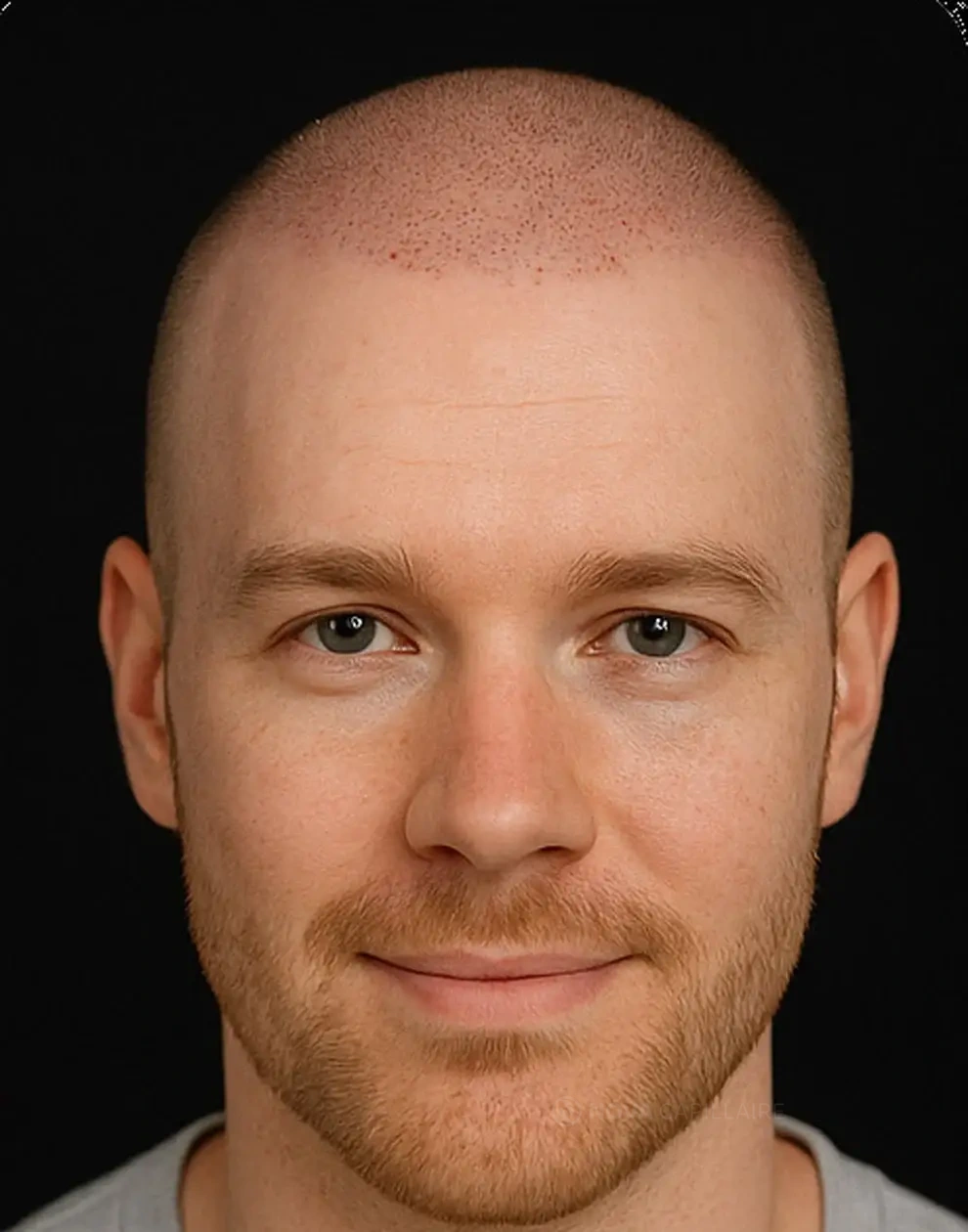
Head straight, face centered, and hairline visible.
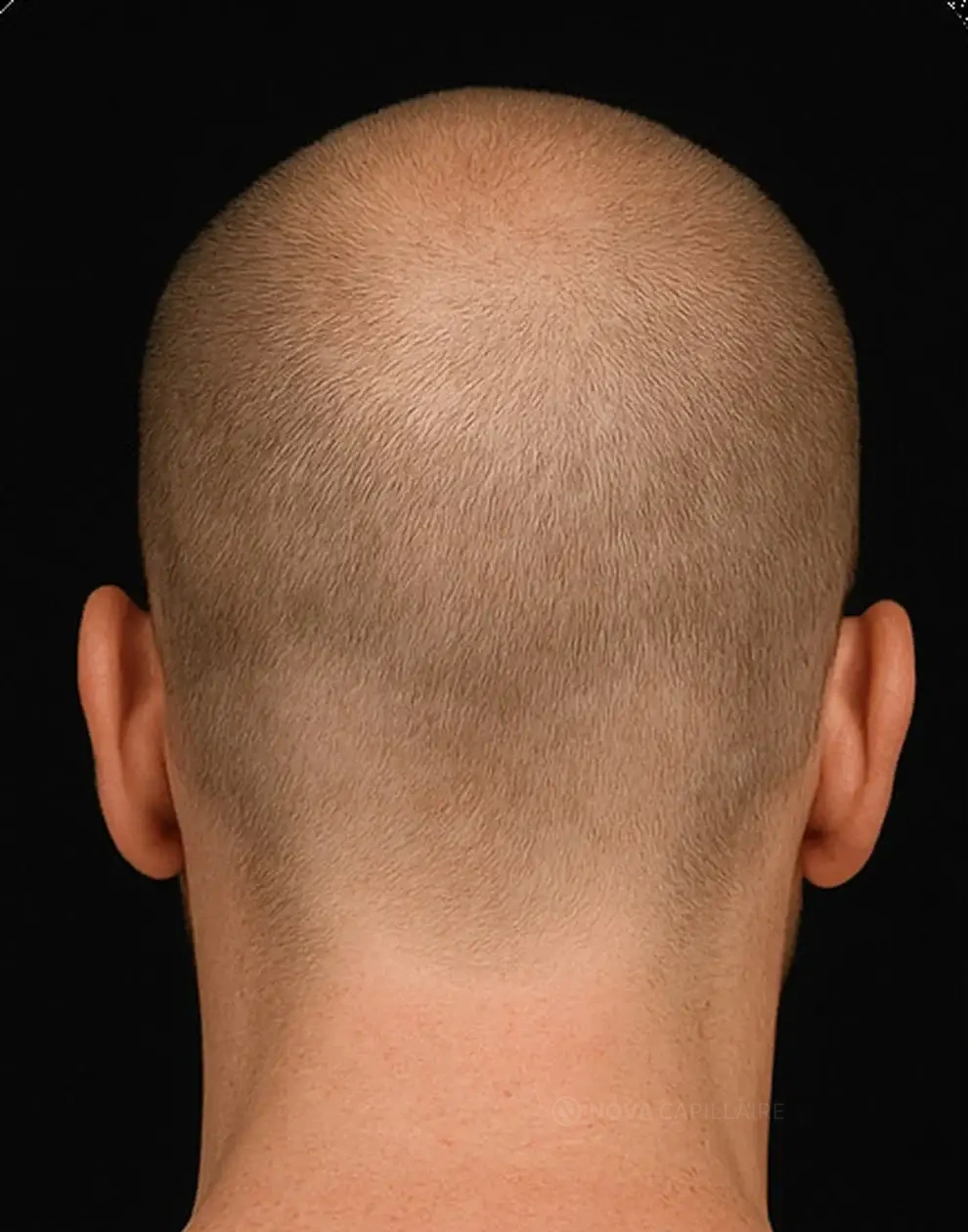
Show the entire back of the scalp and donor area.
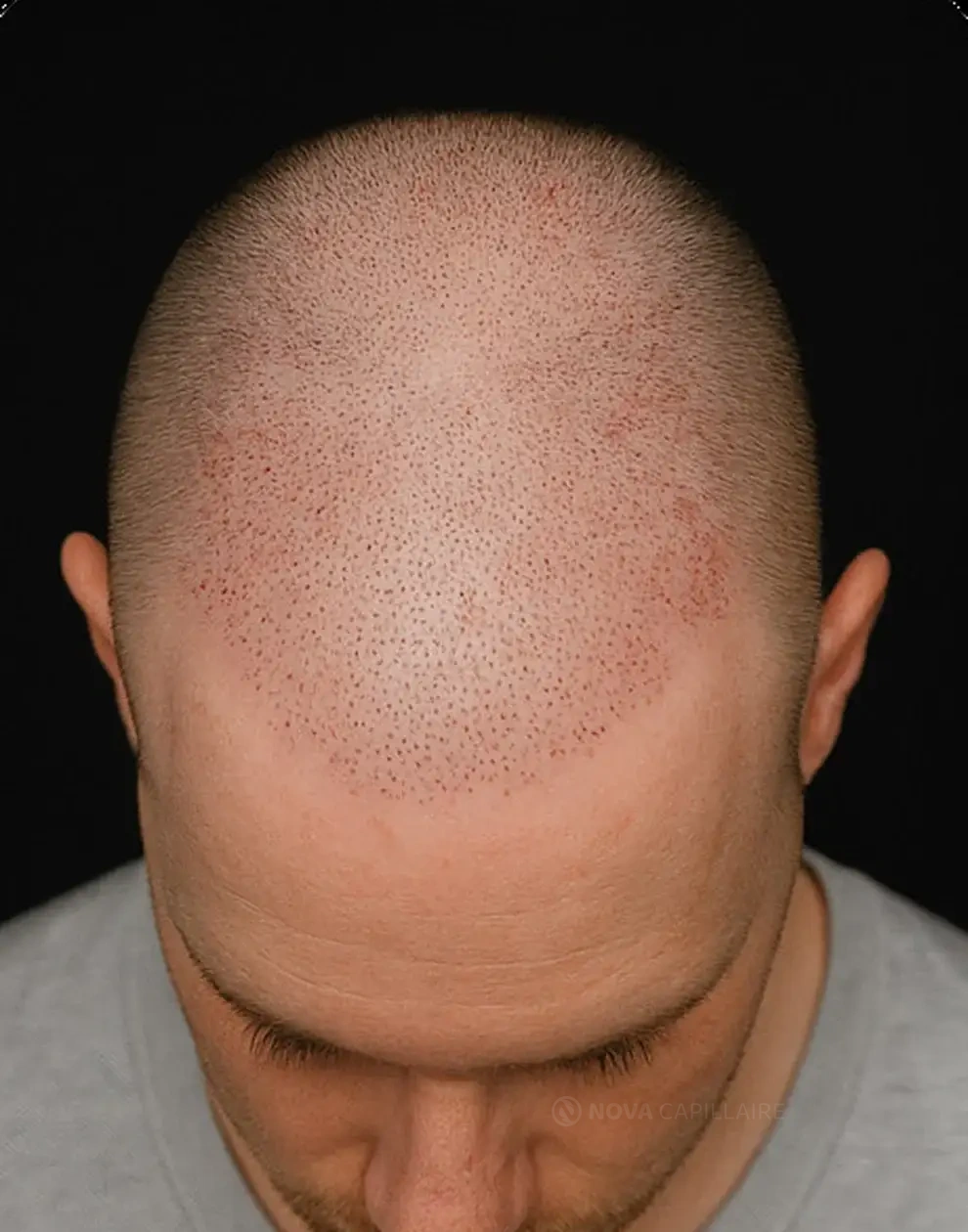
Tilt your head to show the entire grafted area.
Always prepare photos the same way.
- Dry hair, neutral background, no filter.
- Same lighting and similar distance for each submission.
- Frame all areas to be monitored.
When to send your photos?
Ten days after the procedure.
One, three, six, nine, and twelve months after.
Send the three views by e-mail to contact@novacapillaire.fr.
These photos may contain health data. Verify the address before sending. E-mail is not presented as a secure channel.
Have a doubt? Call us.
Do not wait for the next follow-up photo if a symptom worries you.
Contact NOVA promptly.
- Increasing pain, significant heat, or spreading redness.
- Discharge, fever, skin reaction, or significant bleeding.
- Worsening swelling or marked visual disturbance.
Frequently asked questions
Short answers with access to details.
When can I sleep normally?
Keep position on your back with torso elevated during first four nights. After that, position depends on your healing and center instructions. See instructions
When to wash the grafted area?
From day 4 per NOVA protocol. Frequency depends on crusts: twice a day, or once if very few remain and they detach well. After they disappear, maximum three shampoos per week. See instructions
Crusts remain: what to do?
Do not pull them off. Call at day 10, then at day 12 if necessary. After day 12, do not extend intensive care without advice. If worried by symptoms, call immediately. See instructions
When to resume work or muscle training?
Sedentary work may start from day 3 if well. No muscle training during first month. Confirm resumption and loads with NOVA after day 30. See instructions
Hair falls out: is it worrying?
Temporary shedding of implanted shafts can occur. It does not alone mean roots are lost. If in doubt or with symptoms, contact the team. See instructions
When to use a clipper?
At back and sides: after day 30, with guard and fully healed skin. On grafted area: after six months and with center approval. See instructions
Can I resume my hair treatment alone?
No. Ask for individual instructions for any treatment. NOVA neither recommends nor prescribes finasteride; contact your dermatologist. See instructions