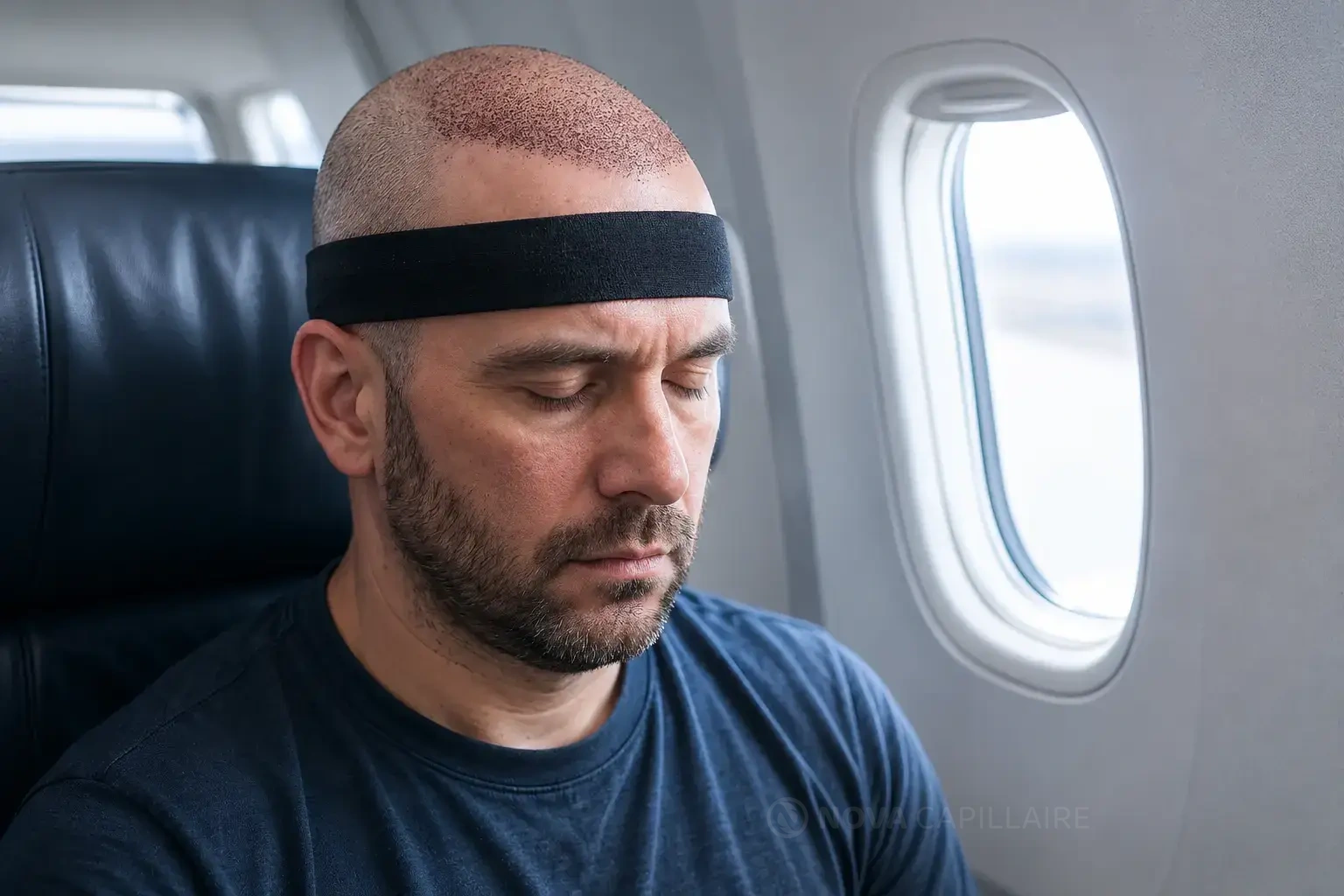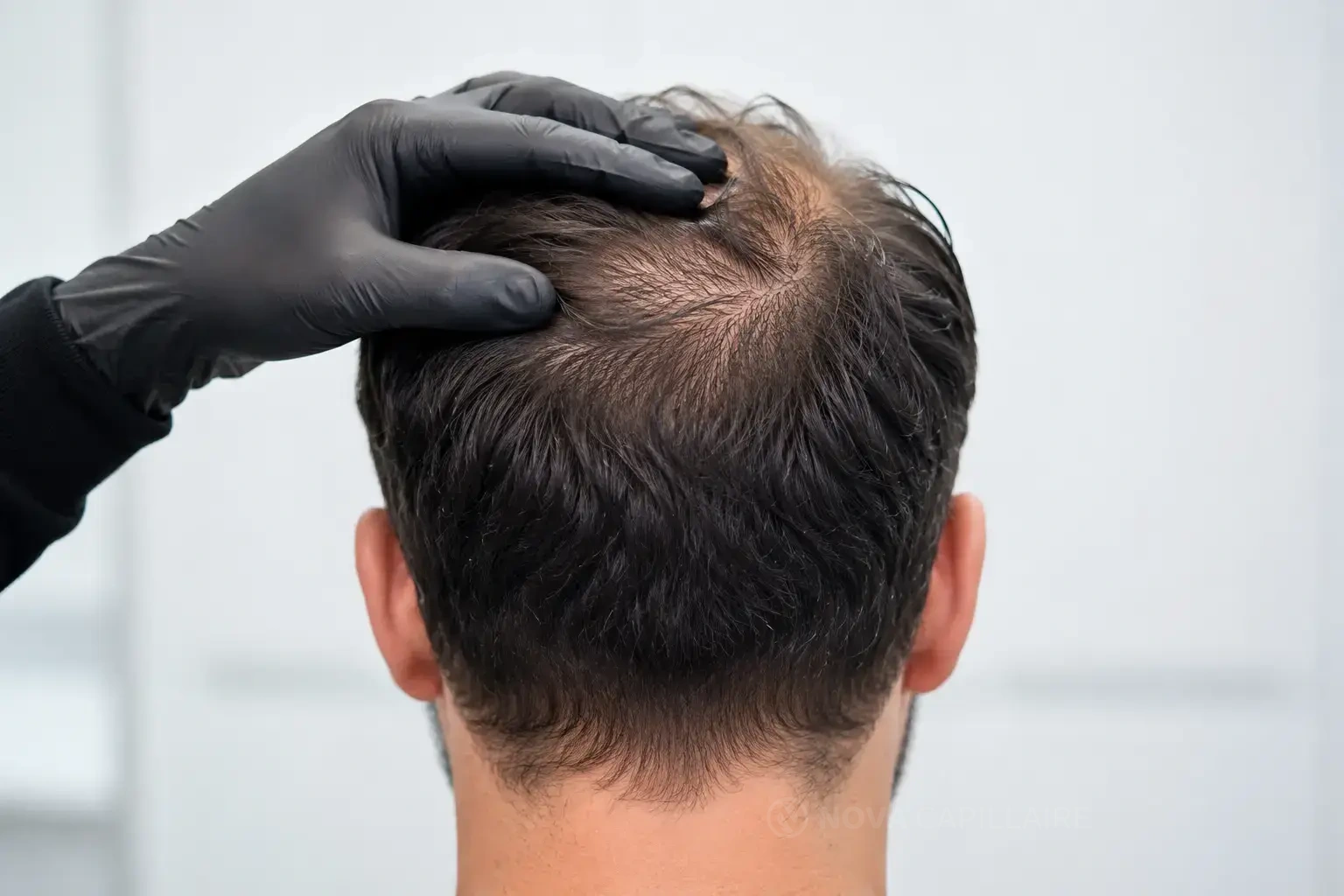
Thinning at the top of your head can become an everyday concern. A crown hair transplant may be an option in some situations, following an assessment of your hair loss and donor area. Planning needs to account for the natural whorl, remaining hair, and possible future hair loss.
Where is the vertex?
The vertex is the upper rear region of the scalp, where hair often forms a whorl. “Crown” and “vertex” refer to this same region, rather than two different procedures.
Hair changes direction around the whorl. Planning the direction and angle of implantation therefore matters alongside graft distribution. 1
Recreating the whorl for a natural-looking pattern
At NOVA Capillaire, we recreate the crown’s whorl: the circular pattern in which hair gradually changes direction around a central point. We adapt the direction and angle of graft placement to this whorl so that the transplanted hair follows a pattern consistent with your existing hair. This attention to detail helps create a more natural-looking crown.
Understand the hair loss first
A photograph of your crown cannot, on its own, establish whether surgery is suitable. An examination considers the cause of your hair loss, its progression, and the available donor hair. Further tests may be recommended depending on the findings. 2
| Planning point | What to prepare |
|---|---|
| Onset | When the thinning first concerned you. |
| Progression | Whether the area has expanded. |
| Previous steps | Any treatments you have tried. |
| Your expectations | What you would like to improve. |
Onset
- What to prepare
- When the thinning first concerned you.
Progression
- What to prepare
- Whether the area has expanded.
Previous steps
- What to prepare
- Any treatments you have tried.
Your expectations
- What to prepare
- What you would like to improve.
Our guide to hair transplant candidacy explains this first step.
How many grafts does the crown need?
There is no single number for every crown. A large area may require a substantial share of the available grafts. The decision needs to account for other areas requiring treatment and possible future hair loss, rather than aiming for the highest number. 3
| Planning point | What to clarify at your consultation |
|---|---|
| Selected area | The area to treat and other areas to consider. |
| Suggested graft count | The planned number of grafts and available donor hair. |
| Coverage goal | Graft distribution and expected limitations. |
| Future planning | What would need to be reconsidered if hair loss progresses. |
Selected area
- What to clarify at your consultation
- The area to treat and other areas to consider.
Suggested graft count
- What to clarify at your consultation
- The planned number of grafts and available donor hair.
Coverage goal
- What to clarify at your consultation
- Graft distribution and expected limitations.
Future planning
- What to clarify at your consultation
- What would need to be reconsidered if hair loss progresses.
Our guides to hair grafts and the donor area provide background for discussing the plan.
Crown or hairline: how are priorities decided?
When several regions are affected, the consultation should explain what can be addressed and what cannot be promised. Hair outside the transplant may continue to thin, so the design also needs to consider future changes. 4
Describe your priorities in practical terms: your front view, your crown, or your usual hairstyle. Ask for a diagram of the proposed treatment and an explanation of any stages. A clear proposal should help you understand where grafts would be placed and why.
What results and limitations should you discuss?
Changes after a transplant are assessed over several months. Temporary shedding of transplanted hair may precede regrowth; your individual timeline should be discussed during the consultation. 5 Our aftercare guide provides further context.
A transplant also carries risks, including bleeding, infection, visible scarring, or an unsatisfactory outcome. Discuss these with the treating physician before deciding. 4 A result photograph shows an individual case, not a guarantee of density for someone else.
Another crown journey
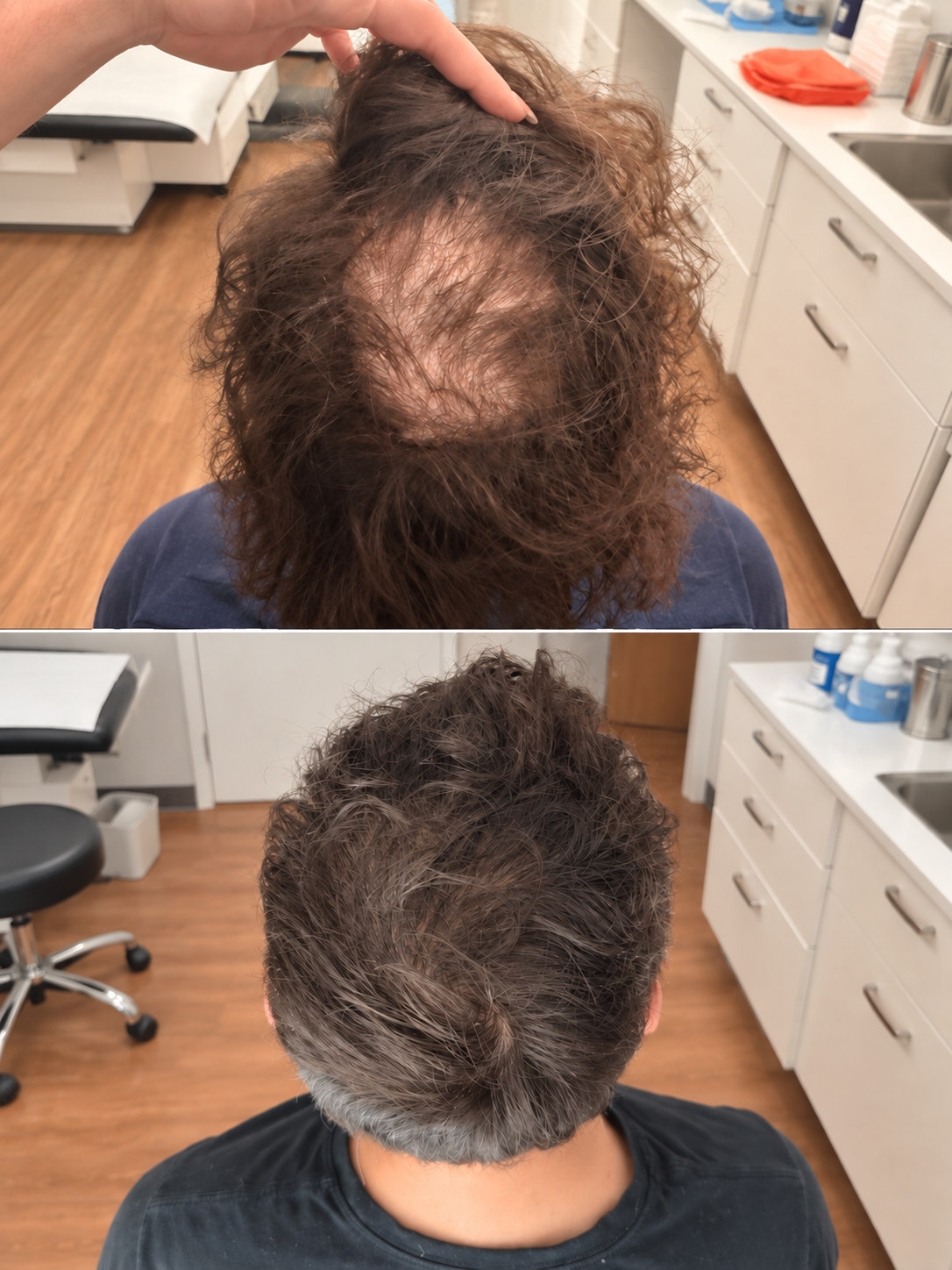
Individual case. Angles, hairstyle and lighting differ between these photographs and affect the perception of density. Results vary.
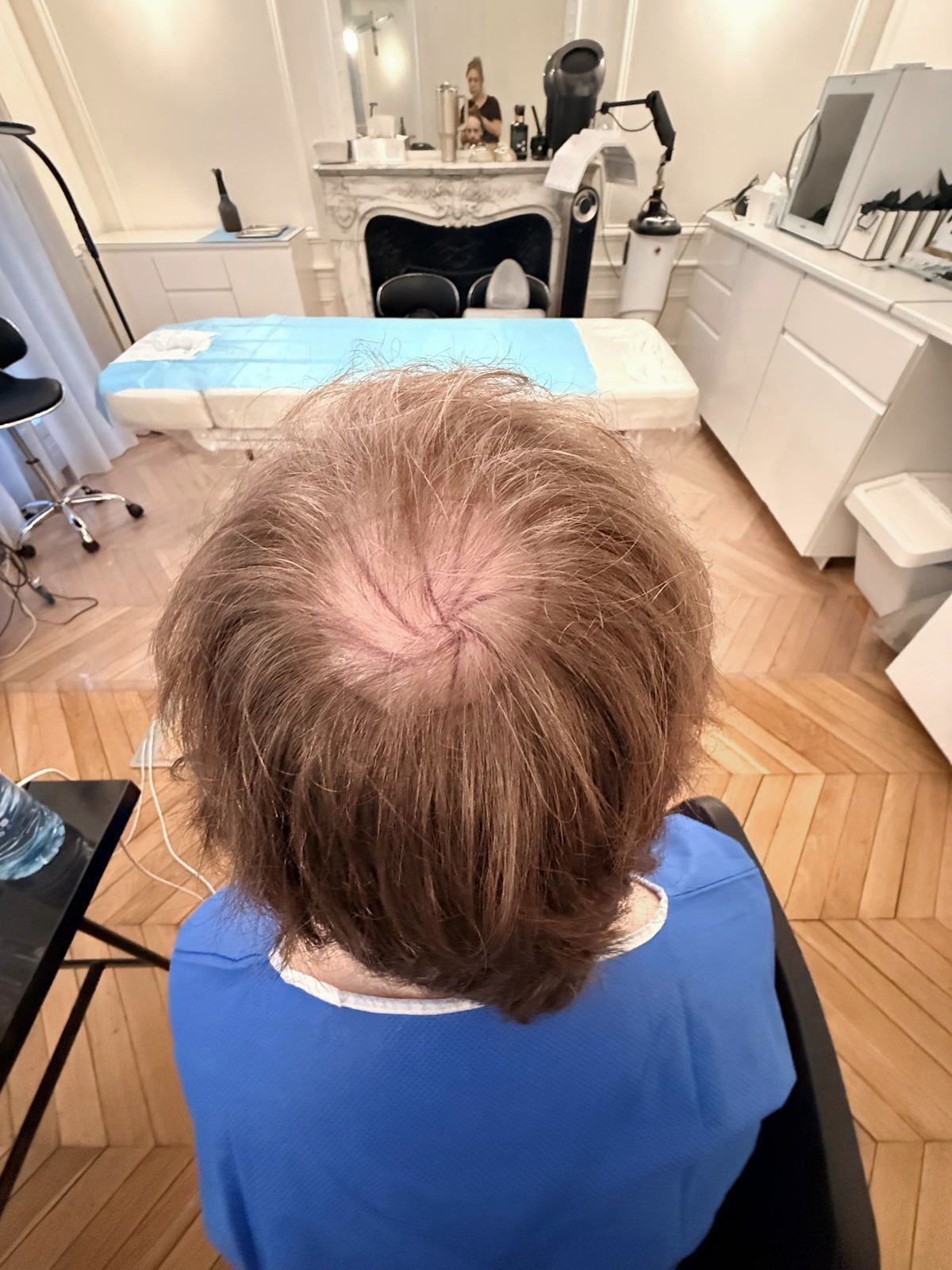
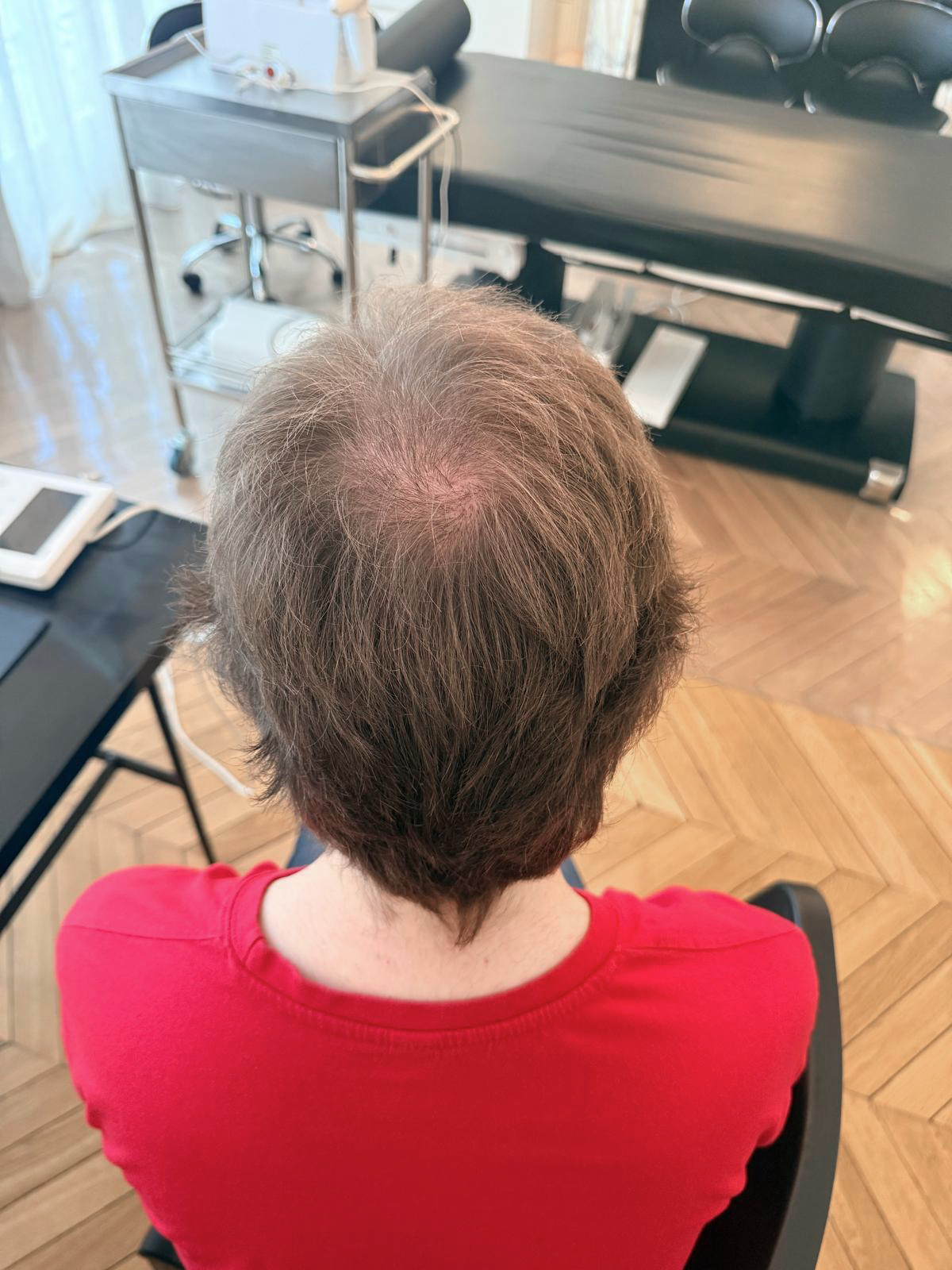
Individual case. Angles, hairstyle and lighting differ between these photographs and affect the perception of density. Results vary.
Preparing for a consultation in Paris
Before contacting NOVA, prepare questions about the treatment area, alternatives, harvesting, recovery, and cost. Our pricing information provides an initial reference; an individual plan still needs to be discussed in consultation.
Can only the crown be treated?
This needs to be assessed with the physician based on your situation. Ask why a crown-only approach is being proposed and how the rest of your hair is taken into account.
Does a graft count predict the result?
The number alone does not describe the plan. Ask about the area, distribution, and expected limitations rather than comparing two proposals only by their graft counts.
Sources and references
| Source | Reference and link |
|---|---|
| PubMed Central | [1] Evaluation Indicators of Aesthetic Effects on Hair Transplantation. |
| AAD | [2] American Academy of Dermatology — Hair loss: Diagnosis and treatment. |
| PubMed Central | [3] Hair Transplant Practice Guidelines — planning and vertex transplantation. |
| NHS | [4] NHS — Hair transplant. |
| AAD | [5] American Academy of Dermatology — Hair transplant. |