
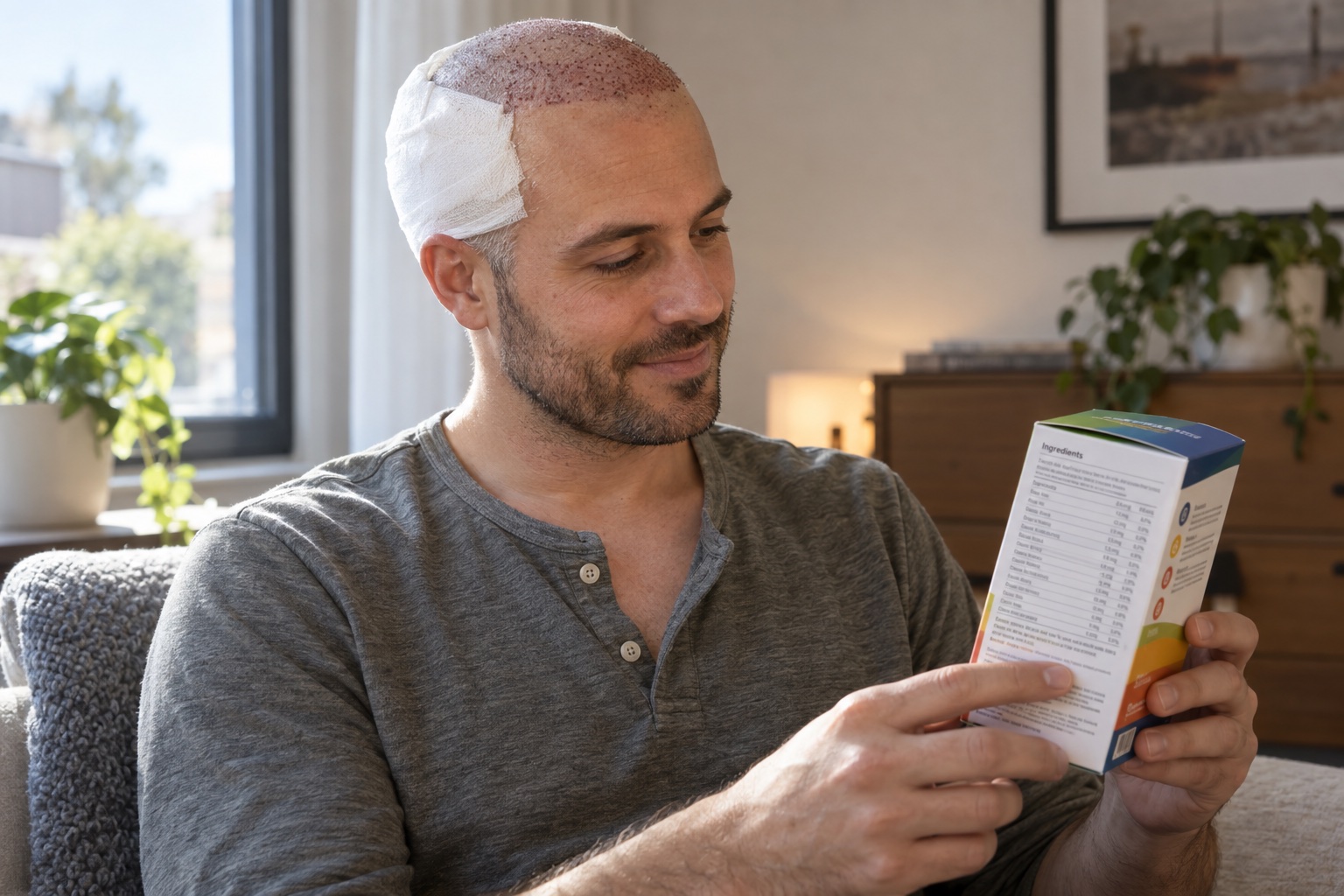
After a transplant, wanting to support the result is understandable. A bottle of vitamins may feel reassuring: a simple daily step to add to follow-up. Yet the useful question is not whether to take “something for hair,” but whether there is a specific need and how to address it without accumulating products.
A supplement does not replace aftercare
A transplant redistributes follicles; it does not automatically create a need for every hair supplement. Local care, the timing of handling, and communication with the team remain central to post-transplant follow-up.
Correcting an identified deficiency differs from taking a formula at random. Ingredients, dose, and your circumstances matter more than the word “hair” on the package. A supplement cannot guarantee graft survival or establish when the result will appear.
When nutrition deserves assessment
A very restrictive diet, substantial weight loss, difficulty eating, or a history of deficiency may be relevant. Discuss these with the professional following you and bring any existing test results.
This does not mean everyone needs the same laboratory panel. Our guide to shedding after weight loss explains why context matters. The article on telogen effluvium distinguishes diffuse shedding from changes limited to the transplanted area.
More products do not mean more benefit
Different formulas may contain the same vitamins or minerals. Combining a skin-and-nails product, a multivitamin, and a hair formula can unintentionally add up doses. Excesses of certain nutrients, including vitamin A and selenium, can be associated with hair loss. 1
Bring packaging or clear photographs of the labels. State the quantities actually taken, not just the recommended amount. The FDA notes that supplements can present risks, including interactions with other products or medications; being sold does not mean that every effectiveness claim has been validated. 2
Mention biotin before blood tests
Biotin is included in many hair formulas. It can interfere with some laboratory tests, including certain tests used in important medical situations. 3
Tell the clinician ordering the tests and the laboratory that you take it. Do not choose a stopping interval from an online post: instructions depend on the product, dose, and tests. In an emergency, tell the professionals what you take without delaying care.
Three useful questions for follow-up
Ask what need the product is intended to address, what evidence supports that need, and how the duration will be decided. These questions help distinguish a justified prescription from a routine continued without reassessment.
If a supplement is included in your instructions, do not change it on your own. If none is included, do not assume a step has been missed. The team can explain the decision. The number and role of hair grafts do not translate into a proportional quantity of vitamins to swallow.
Compare three approaches
The key is not to choose a “good” or “bad” vitamin. First identify the question: does your diet meet your needs? Is a deficiency suspected or confirmed? Does this box add anything useful to your personal aftercare instructions?
| Approach | What to know |
|---|---|
| Adequate, varied meals | A daily foundation, with regular meals and protein sources that fit your habits. Food alone may not always correct an established deficiency. Ask: is my intake adequate? |
| A targeted supplement after assessment | A specific need is discussed with a professional. The choice, duration, and any testing depend on the person. Ask: what need are we addressing, and how will it be reassessed? |
| An over-the-counter “hair” blend | Its label can prompt a question, but it does not establish a benefit for grafts. Several products may duplicate ingredients. Ask: does this overlap with anything I already take? |
A dietary supplement is not a medicine, but it can still cause side effects or interact with other products. There is no universal “transplant vitamin.” Your personal care instructions remain the priority after surgery.
Read the box before deciding
The front may advertise “hair,” “strength,” or “beauty.” Turn it over: the ingredients, amount per serving, and suggested frequency are more useful than the slogan. Compare every ingredient with your other supplements, including multivitamins, skin-and-nails products, and fortified drinks.
List any medicines and treatments you use, too. Your pharmacist or treating professional can check overlaps and interactions. “Natural” or available without a prescription does not automatically mean suitable immediately after a procedure. Do not stop a prescribed treatment to make room for a supplement.
If you notice diffuse shedding, unusual fatigue, or a newly restrictive diet, describe the context to a professional instead of choosing a dose yourself. A transplant and shedding of non-transplanted hair are separate issues: a supplement does not replace a diagnosis or careful preservation of the donor area.
Frequently asked questions
Do vitamins help grafts “take”?
No standard supplement guarantees graft survival. Your care instructions, the procedure, and your individual circumstances matter. Addressing a nutritional need may be appropriate when identified, without promising a result.
Should I start a supplement the next day?
No. It is not a routine step in NOVA’s protocol. If you received personal instructions for a product, follow them; otherwise, ask the team before adding one.
Does biotin make hair grow back faster?
Biotin is marketed for hair, but evidence of benefit in people without a deficiency is limited. It can distort certain blood test results: always tell the clinician and laboratory if you take it. 4
Should I take iron just in case?
No. A possible deficiency should be assessed in context. Iron is not a routine addition after transplantation.
What if I already take several products?
Gather the packaging, doses you actually take, and your medication list. Show them to your doctor or pharmacist before continuing the combination. Do not stop a prescribed treatment on your own.
What if I shed hair after the procedure?
Temporary shedding of transplanted hairs can be part of the expected course, while diffuse shedding can have other causes. Tell the team where, when, and how it occurs; a vitamin box cannot distinguish these situations.