Two proposals display “3,000”: one counts hairs, the other grafts. The figures look the same, but they describe different quantities.
The visible hair is only part of the picture
The shaft is the part of a hair that emerges above the skin. Below the surface, the follicle is the structure in which the hair forms. The bulb is its lower region; it is not another name for the entire follicle.
A photograph of a hair outside the scalp does not show every anatomical structure. Understanding these terms helps explain what is moved during a transplant.
One graft can contain several hairs
Scalp follicles naturally occur in small groups called follicular units. A unit usually contains one to four follicles, sometimes more. In follicular-unit transplantation, a graft is the small piece of tissue containing the unit and surrounding tissue.
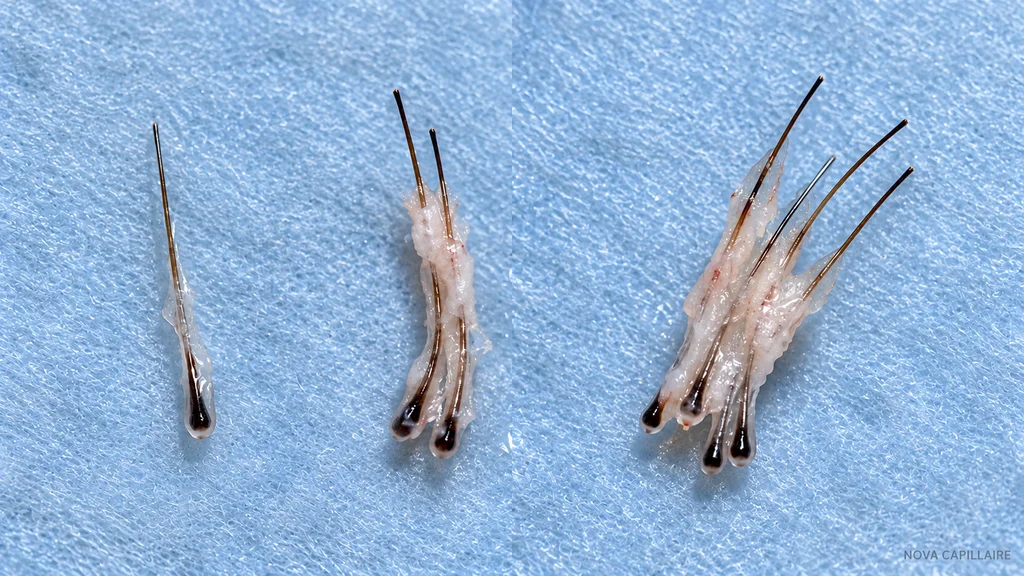
One hair
1 hair
One graft
2 hairs
One graft
4 hairs
One graft therefore does not necessarily mean one hair. Read our guide to hair grafts for more about their preparation and anatomy.
Four grafts, ten hairs: a simple example
Imagine four grafts carrying one, two, three and four hairs respectively. That gives four grafts and ten hairs in total.
This example explains the arithmetic. It is not a patient average or a prediction of growth. Graft composition varies, so applying one fixed multiplier to every person would be misleading.
What the number does not explain
A graft count alone does not describe the area to cover, the planned distribution or the characteristics of the hair. Assessment should connect the count to your priorities, available donor supply and the limits of the plan.
Our article about a 3,000-graft transplant explains why the same count does not mean identical coverage for everyone.
What your quote should make clear
Ask whether the number refers to hairs or grafts, which areas are planned and how the count will be documented after the procedure.
At NOVA, a graft range provides a pricing framework. The personalized quote specifies the exact number of grafts planned for the procedure. The planned and implanted counts remain separate figures; any difference should be explained. A count does not guarantee growth or density.
See our plans and prices for the financial framework, then discuss your situation during assessment.
Frequently asked questions
Do 3,000 grafts mean 3,000 hairs?
Not necessarily. A graft may carry more than one hair. Explaining the count requires knowing the composition of the harvested units.
Can every photograph be used to count follicles?
A picture can show an arrangement or a type of graft. A reliable count requires enough detail and the context of the team’s assessment. An image alone cannot verify every clinical detail.
Are more grafts always better?
The count needs to fit the project and donor area. It cannot replace planning, careful handling and follow-up.
Sources and references
| Source | Reference and link |
|---|---|
| ishrs.org | ISHRS — Glossary |
| ishrs-htforum.org | ISHRS — Follicular Unit Plain Speak |
Further reading
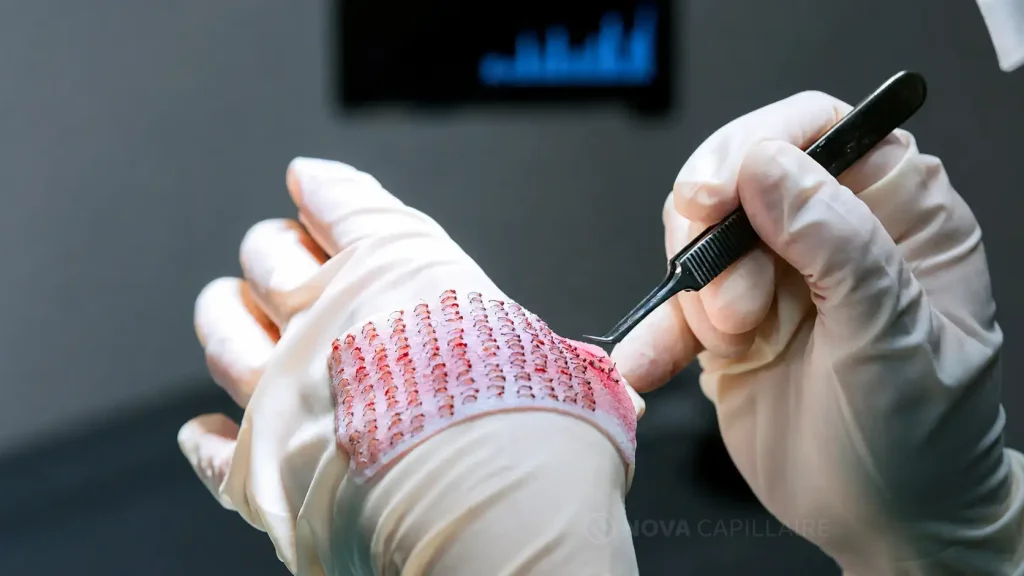
Everything you need to know about grafts in a hair transplant
The graft is the basic unit of hair transplantation. Its quality, conservation, and distribution directly influence density and appearance.
Read the article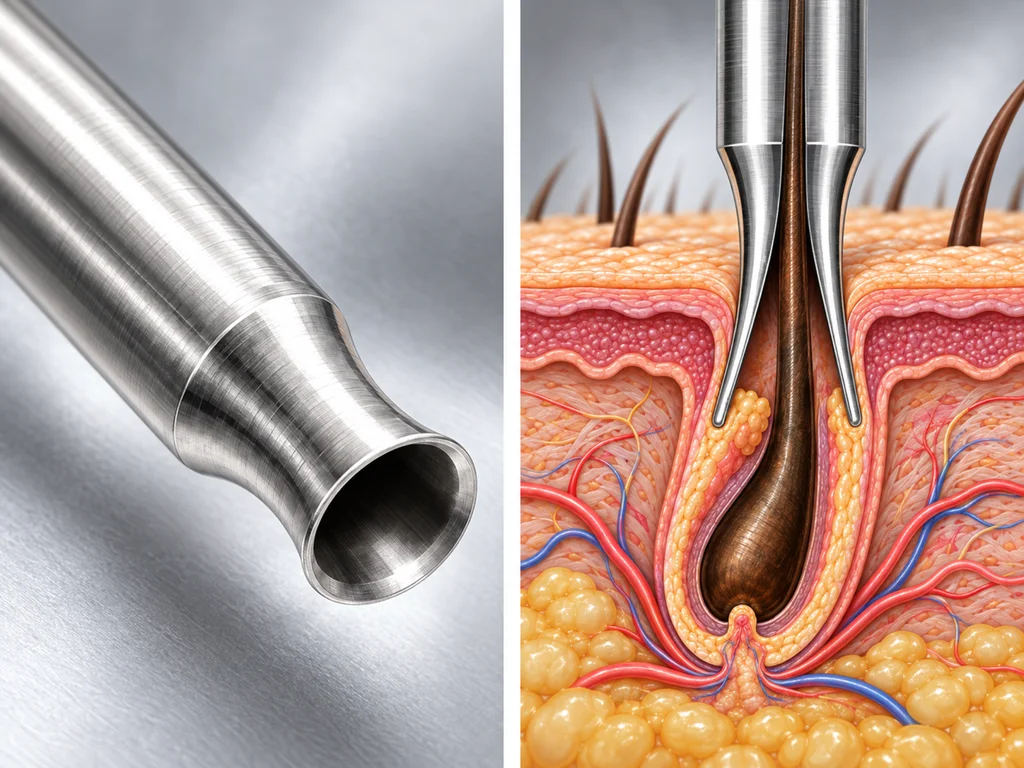
Punch Contour: protecting grafts during FUE harvesting
Punch geometry, graft checks, and donor-area planning: understand how FUE harvesting fits into a NOVA hair transplant.
Read the article
3,000-graft hair transplant: cost, coverage and limits
Understand 3,000 grafts, front-versus-crown priorities, donor preservation and NOVA fees.
Read the article
Choosing a Hair Transplant Center in Paris: Your Guide
Technique, donor area, a clear graft count, results, and follow-up: practical questions for choosing a hair transplant center in Paris.
Read the article