You may have received a quote for 3,000 grafts or seen that number beside a before-and-after photograph. The immediate question is whether it is enough to rebuild a hairline, fill the temples or cover the crown. Answering it means looking at where the grafts will go and how much hair remains today.
At NOVA, a 3,000-graft plan for straight or wavy hair falls within Signature, currently listed at €4,700 including tax. Afro-textured or tightly curled hair at that count is individually quoted. Before looking at the fee, it helps to understand what the proposal describes: a restoration plan with specific areas and priorities.
3,000 grafts do not always mean the same number of hairs
A quote counts grafts as units. Each unit contains one or more hairs. Two procedures described as 3,000 grafts can therefore involve different numbers of hairs.
The table below gives two fictional compositions to explain the calculation. They are not patient records or implantation targets.
| Composition | Example A | Example B |
|---|---|---|
| Single-hair grafts | 1,000 | 500 |
| Two-hair grafts | 1,000 | 1,000 |
| Three-hair grafts | 1,000 | 1,500 |
| Total grafts | 3,000 | 3,000 |
| Total hairs | 6,000 | 7,000 |
Single-hair grafts
- Example A
- 1,000
- Example B
- 500
Two-hair grafts
- Example A
- 1,000
- Example B
- 1,000
Three-hair grafts
- Example A
- 1,000
- Example B
- 1,500
Total grafts
- Example A
- 3,000
- Example B
- 3,000
Total hairs
- Example A
- 6,000
- Example B
- 7,000
NOVA plans use an illustrative average of 2.4 hairs per graft, giving approximately 7,200 hairs for 3,000 grafts. Your actual units may produce a different count. This average explains a plan range; it does not calculate your regrowth.
Further reading: Everything you need to know about grafts in a hair transplant.
The first decision: where should the 3,000 grafts go?
One person may want to restore the frame of their face: the hairline and receding temples. Another may be most concerned about the crown in photographs taken from above. Those requests lead to different designs, even with the same planned total.
Imagine two plans. The first concentrates the available grafts at the front. The second shares that supply between the front and crown. In the second plan, grafts allocated to the crown are no longer available to reinforce the front. The decision is also about your aesthetic priority: which area do you most want to change?
Area matters as well. Spreading the same count over twice the area mathematically halves the average graft count per unit of surface. This does not prescribe a surgical density; it explains why a promise of “complete coverage” must define the area involved.
A drawing on your scalp, with an explanation of the distribution, is a useful discussion tool. Ask where the treated area starts and ends, and which areas will be left for later. A promise of 3,000 grafts without that plan leaves the intended appearance unexplained.
Further reading: Crown hair transplant: planning for the vertex.
Why the same count can look different on two people
Hair quantity is one part of the explanation. Caliber and shape are another. Fine, straight hair does not create the same visual volume as thicker or wavy hair. Contrast matters too: a light scalp can remain more visible between very dark hairs.
Existing hair in the treatment area changes the starting point. Reinforcing a thinning area is different from rebuilding an area without hair. Another person’s photograph cannot, by itself, tell you what 3,000 grafts will achieve for you.
Graft selection and placement also help build the appearance. The edge of the hairline and the area behind it serve different aesthetic purposes. A multiple-hair unit contributes more hairs, but that alone does not make it suitable everywhere. ISHRS describes adapting graft configuration to different scalp regions.
What if donor supply cannot support the requested plan?
Harvested follicles are transferred. They are not left behind as a second copy in the donor area. Planning must consider how that area will look afterward and what may need to be preserved for the future.
Assessment may lead to revising a 3,000-graft plan: reducing the treated area, focusing on one priority or delaying surgery. That decision cannot be made from the number alone. Donor quality, ongoing loss and scalp condition need examination.
If your hairline is receding and the crown is beginning to thin, ask how the proposed design will fit possible future changes. A transplant moves hair; it does not automatically treat the cause of loss in hair that has not been transplanted. That question belongs in the original plan.
Further reading: Donor area in hair transplant: everything you need to know.
In this photograph of one of our patients after a 3,000-graft transplant, the hair is parted to show the donor area. Its appearance after harvesting is part of assessing the outcome, alongside regrowth in the recipient area.
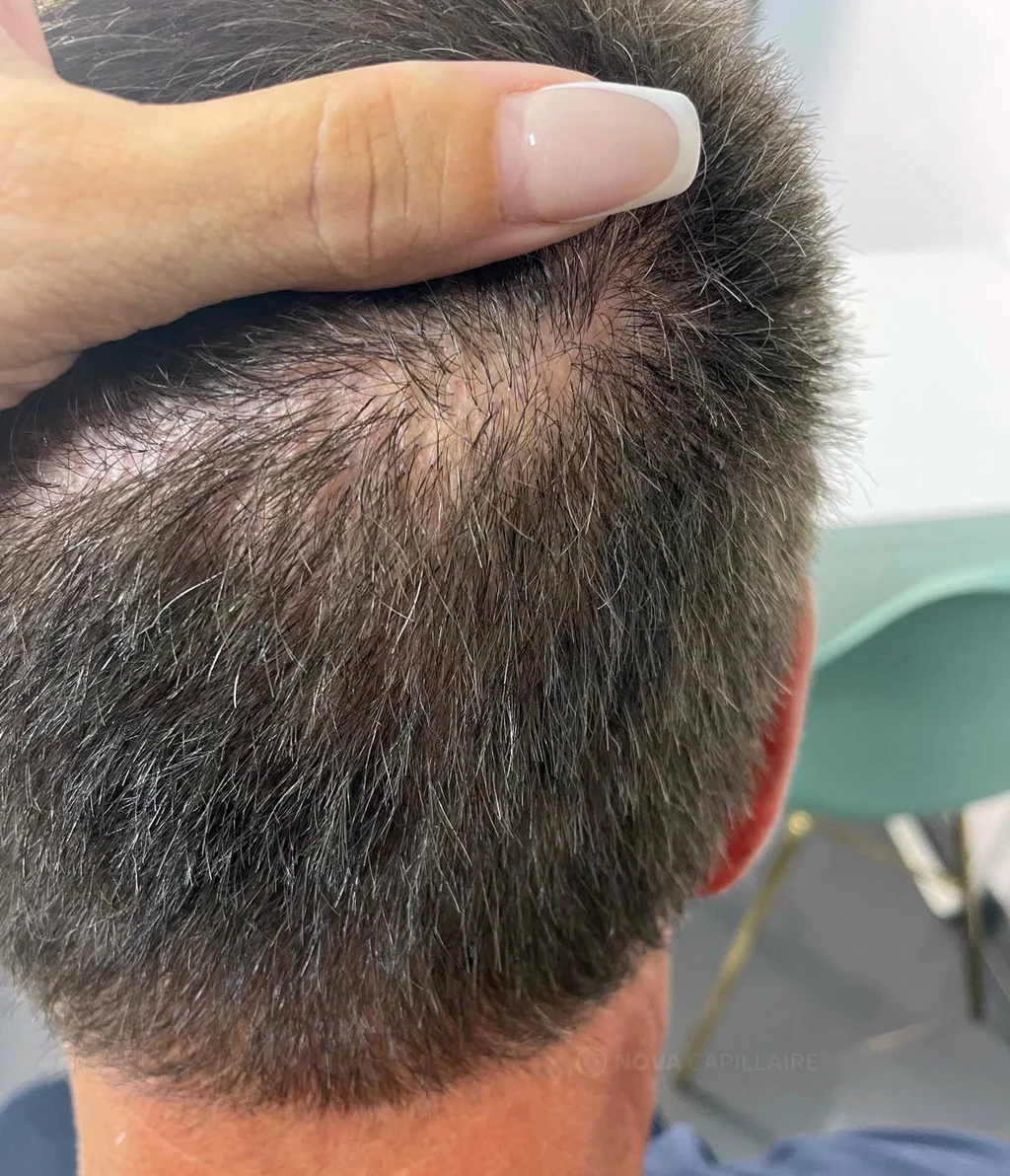
Donor area after a 3,000-graft transplant — NOVA patient. Close-up with hair parted. Individual outcome.
What does a 3,000-graft transplant cost at NOVA?
For straight and wavy hair, Signature covers 2,000–3,000 grafts for €4,700 including tax. For Afro-textured and tightly curled hair, Signature stops at 2,000 grafts; a 3,000-graft plan falls within Bespoke, with an individual quote.
Organization guidelines differ too. NOVA provides one day up to 3,000 grafts for straight or wavy hair. Above 2,000 grafts for Afro-textured or tightly curled hair, the guide is two days. The precise arrangements are confirmed in consultation.
| Hair | Plan for 3,000 grafts | Fee including tax | Organization guide |
|---|---|---|---|
| Straight and wavy | Signature | €4,700 | One day |
| Afro-textured and tightly curled | Bespoke | Individual quote | Two days |
Straight and wavy
- Plan for 3,000 grafts
- Signature
- Fee including tax
- €4,700
- Organization guide
- One day
Afro-textured and tightly curled
- Plan for 3,000 grafts
- Bespoke
- Fee including tax
- Individual quote
- Organization guide
- Two days
The published Signature care package includes Sapphire FUE HD, one mesotherapy session, one phototherapy session, 12 months of follow-up, and meals and refreshments during your time at the center. Bespoke includes two mesotherapy and phototherapy sessions. The practitioner explains their indications; inclusion in a plan does not guarantee an outcome.
Check the current plans for the fee and included care before comparing your quote.
What your quote should explain beyond the price
For a plan of 3,000 grafts, the NOVA quote states 3,000 grafts. The “2,000–3,000” range describes the commercial plan, not your individual planned count. Keep the planned count distinct from the number actually performed.
The NOVA quote amount is final for the planned procedure. If additional grafts are considered necessary during that procedure, the center covers them without an extra patient charge. This does not include a separate future procedure automatically: it is assessed independently and, if charged, receives a separate quote.
When comparing two quotes for 3,000 grafts, compare their plans. Do they treat the same areas? Allow the same number of days? Include the same follow-up? Who performs each step? That gives you concrete proposals to compare, rather than two prices beside the same number.
Further reading: Choosing a Hair Transplant Center in Paris: Your Guide.
Why the team’s work matters behind the total
A 3,000-graft procedure is not simply 3,000 identical gestures. Harvesting, preparation, preservation and implantation are organized around the chosen plan. Units must be distinguished, counted and allocated to the different areas.
Preparation and sorting contribute to that organization: grafts need to be available at the appropriate stage for implantation. Design and recipient sites determine their positions and directions. The final total describes only part of the work.
For you, practical preparation means understanding the planned days, instructions and whom to contact afterward. The postoperative guide complements the individual instructions provided by the team.
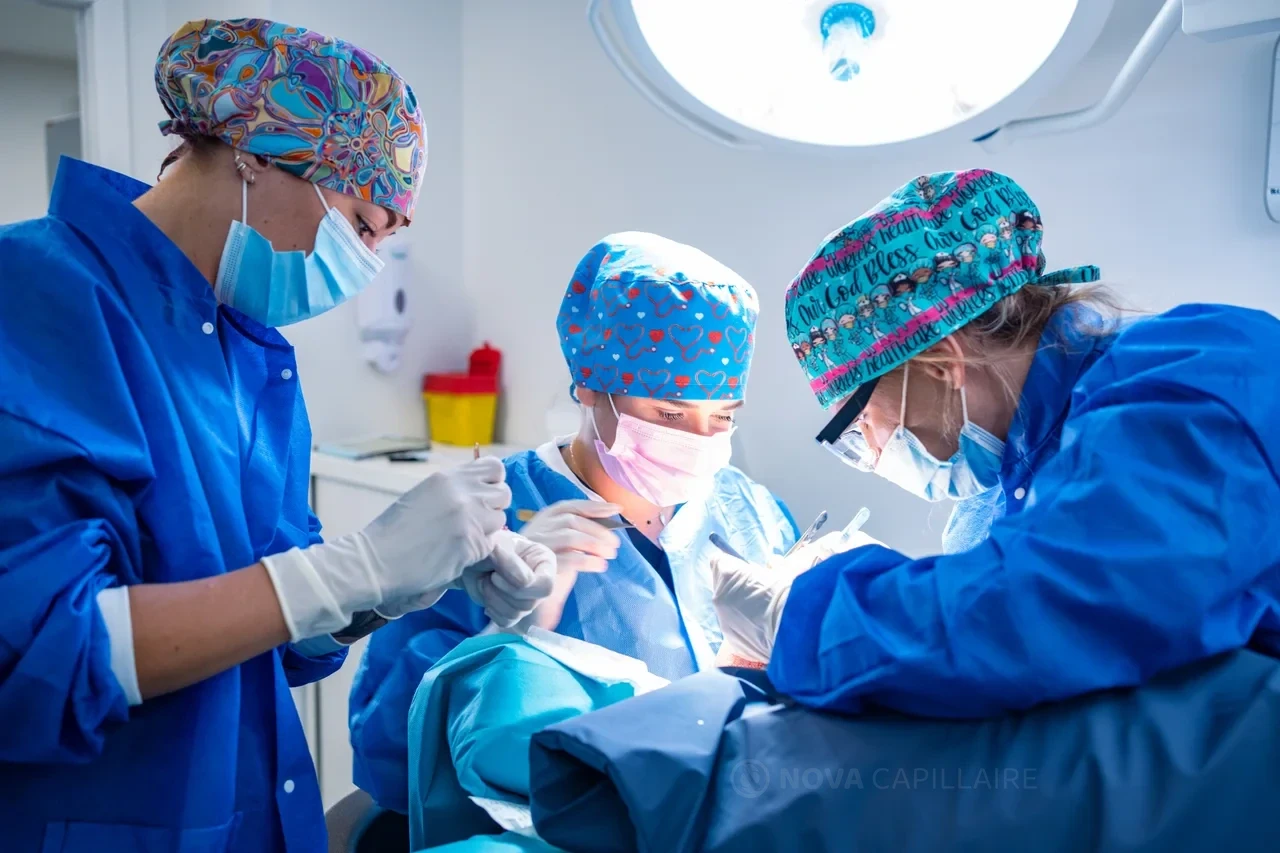
The NOVA team at work during a procedure. This photograph illustrates teamwork; no graft count or individual outcome is attributed to this case.
Further reading: Hair transplant aftercare: a complete recovery guide.
Photographs show an evolution, not an automatic equivalence
An early photograph mainly shows the implanted area. You can see the design and distribution, not final regrowth density. Assessing progress requires knowing the time since surgery and comparing views taken under similar conditions.
Hairstyle, hair length, light and camera angle change what you see. A front view helps assess the frame of the face; an overhead view is more informative for the crown. Look for views that match your own goal.
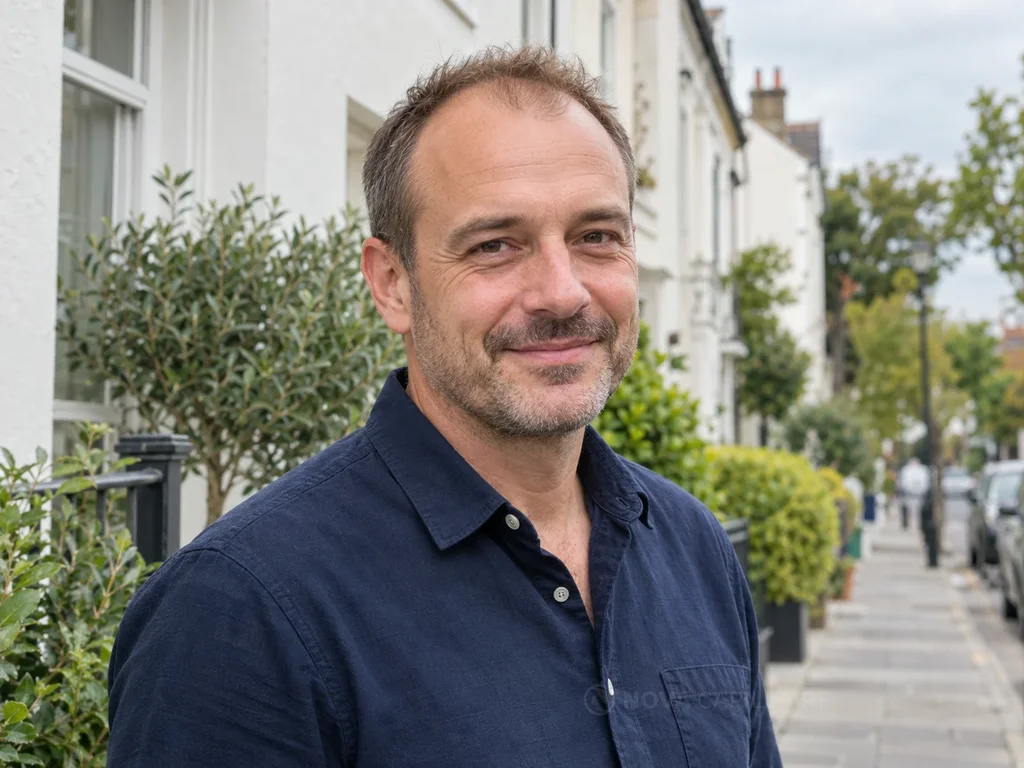
Also ask whether the stated count is documented for that case. The team photograph here illustrates their work and is not presented as a 3,000-graft result. The hero portrait is a generated illustration, not a patient or a clinical outcome.
Frequently asked questions
Can 3,000 grafts cover the front and crown?
That depends on area, remaining hair and donor supply. Ask how the grafts will be distributed. Sharing the same total between two areas leaves fewer available for each.
Why might two clinics propose different counts?
They may be aiming for different designs or treatment areas. Ask them to explain the hairline, recipient-area boundaries and priorities before comparing the plans and included care.
Do 3,000 grafts always mean 7,200 hairs?
No. The 7,200 figure uses NOVA’s illustrative average of 2.4 hairs per graft. Actual unit composition may differ.
What fee should I expect at NOVA?
For straight or wavy hair, Signature is listed at €4,700 including tax for 2,000–3,000 grafts. A 3,000-graft Afro-textured hair plan is individually quoted.
Sources and references
References checked October 12, 2026. The ISHRS publications describe planning and placement principles and have older original publication dates. They are not trials demonstrating a NOVA outcome or Sapphire FUE superiority. The counting examples are educational calculations.
| Source | Reference |
|---|---|
| NOVA | Current plans, care and fees |
| ISHRS | Graft configuration, preparation and placement |
| ISHRS | Hair caliber, texture and contrast |
| ISHRS | Harvesting plan |
| AAD | Candidacy and result progression |
Further reading
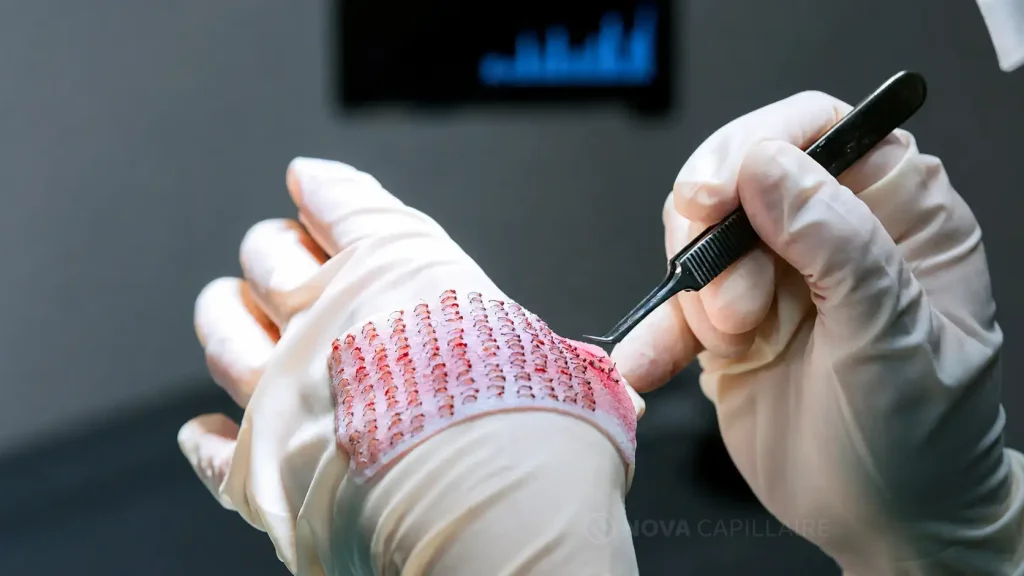
Everything you need to know about grafts in a hair transplant
The graft is the basic unit of hair transplantation. Its quality, conservation, and distribution directly influence density and appearance.
Read the article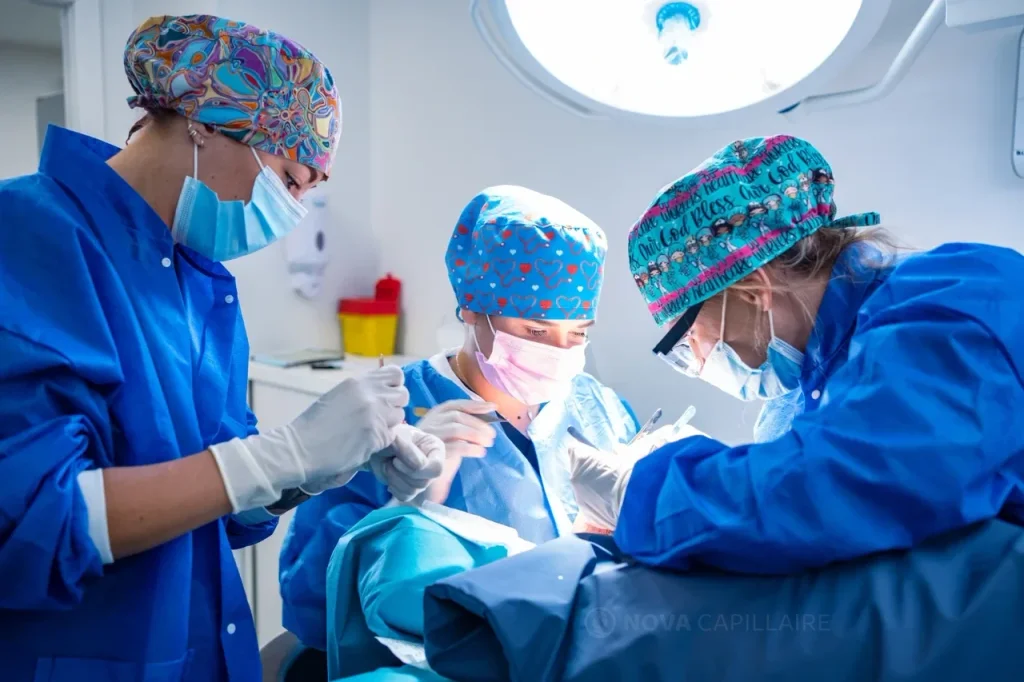
Choosing a Hair Transplant Center in Paris: Your Guide
Technique, donor area, a clear graft count, results, and follow-up: practical questions for choosing a hair transplant center in Paris.
Read the article
Crown hair transplant: planning for the vertex
Thinning at the top of your head can become an everyday concern. A crown hair transplant may be an option in some situations, following an assessment of your hair loss…
Read the article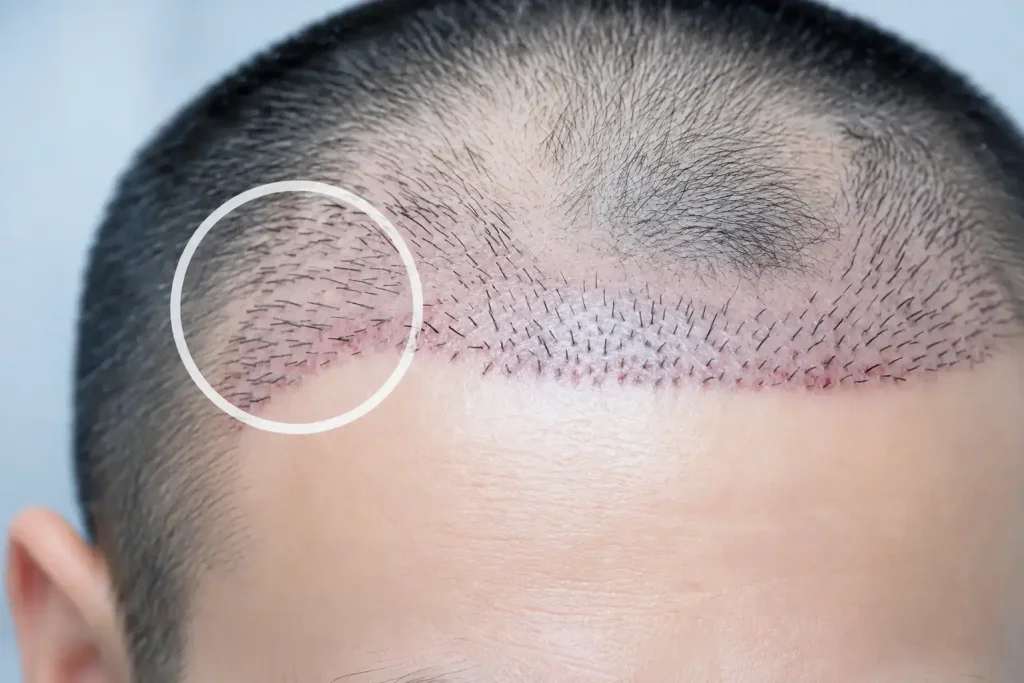
Failed hair transplant: causes, signs, and solutions
How to recognize a failed hair transplant? Discover causes, signs to watch, possible solutions and how to avoid mistakes.
Read the article