8 POINTS / ONE PERSONAL DECISION
Choosing a center means choosing a care journey.
A technique name or a starting price does not tell the whole story. Understand the proposal as a whole: why it is being suggested, what it includes, and how you will be supported.
This guide is provided by Centre NOVA Capillaire. It explains selection criteria and our approach; it is not an independent ranking of providers.
01 / Your starting point
Before comparing centers,
consider your own goals.
What would you like to change: your hairline, temples, or a thinning area? Gather your questions and information about your hair loss. A personalized proposal should help you understand the possibilities, limitations, and alternatives to discuss during a consultation.
A helpful proposal also explains what it cannot promise.
A clinical assessment before a sales proposal
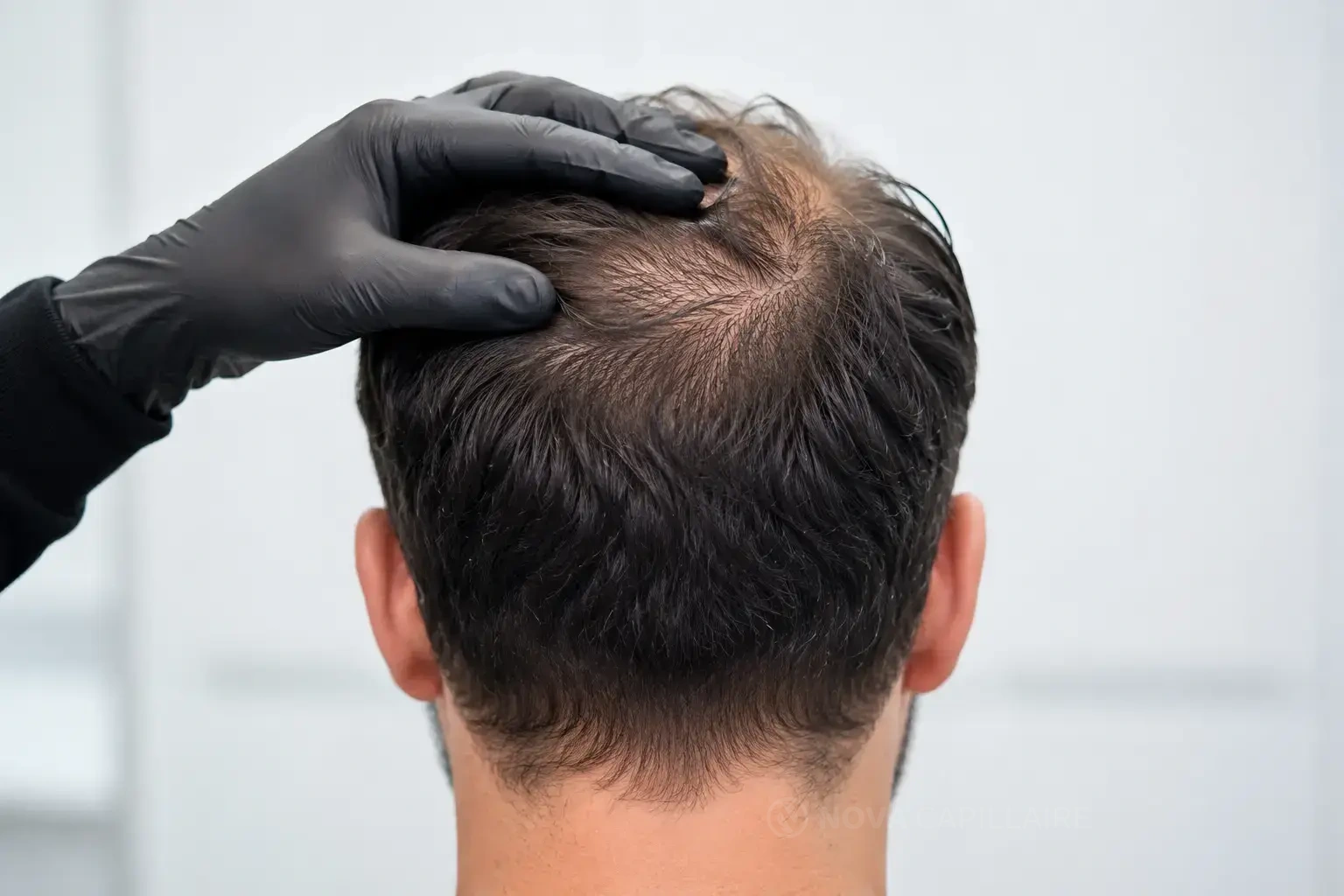
Two people with receding temples do not necessarily need the same plan. The pattern and progression of hair loss, medical history, treatments, scalp condition, and expectations should be discussed. A consultation helps establish whether a transplant is appropriate now or later, and which alternatives deserve consideration.
Bring recent photographs and explain what actually bothers you. A low hairline, high density, and a large area to cover can compete for the same donor resources. These goals need to be prioritized rather than promising to address everything in one session.
The donor area: looking beyond the first procedure
The supply of grafts is finite. Assessment considers density, hair thickness, distribution, and previous harvesting. A clear proposal explains what can be taken while preserving a balanced appearance at the back and sides. It also considers possible future loss in areas that have not been transplanted.
For fine, curly, or tightly coiled hair, ask for an explanation specific to your situation. The same number of grafts does not automatically create the same visual coverage for every patient.
02 / Questions to ask
Three questions.
Specific answers.
Why is this approach being suggested for my situation?
How will my donor area be preserved for the years ahead?
What limitations and alternatives should I understand?
Ask how the planned harvesting fits into a long-term approach: which areas will be used, how their appearance will be preserved, and what reserve will remain if your hair loss progresses. The proposed graft count should be explained in relation to your donor area and needs, rather than selected solely from a pricing package.
Understand how the work is organized
Look beyond the premises and reassuring language. Ask about equipment traceability, hygiene procedures, and how grafts are handled between harvesting and placement. Single-use and reusable equipment follow different processes: ask for an explanation rather than assuming an attractive room guarantees careful work.
A specific answer can be simple: who counts the grafts, how they are identified and stored, how the plan is confirmed on the day. If an essential point remains unclear, ask for it in writing before deciding.
03 / Understanding the technique
A technique name alone
does not make the decision.
Ask for a clear explanation of the proposed steps and their relevance to your situation. At NOVA, our approach uses Sapphire FUE. Consider the overall plan, how care is organized, and the quality of communication as well.
Understand our approachFUE, sapphire, and Choi: three terms, two stages
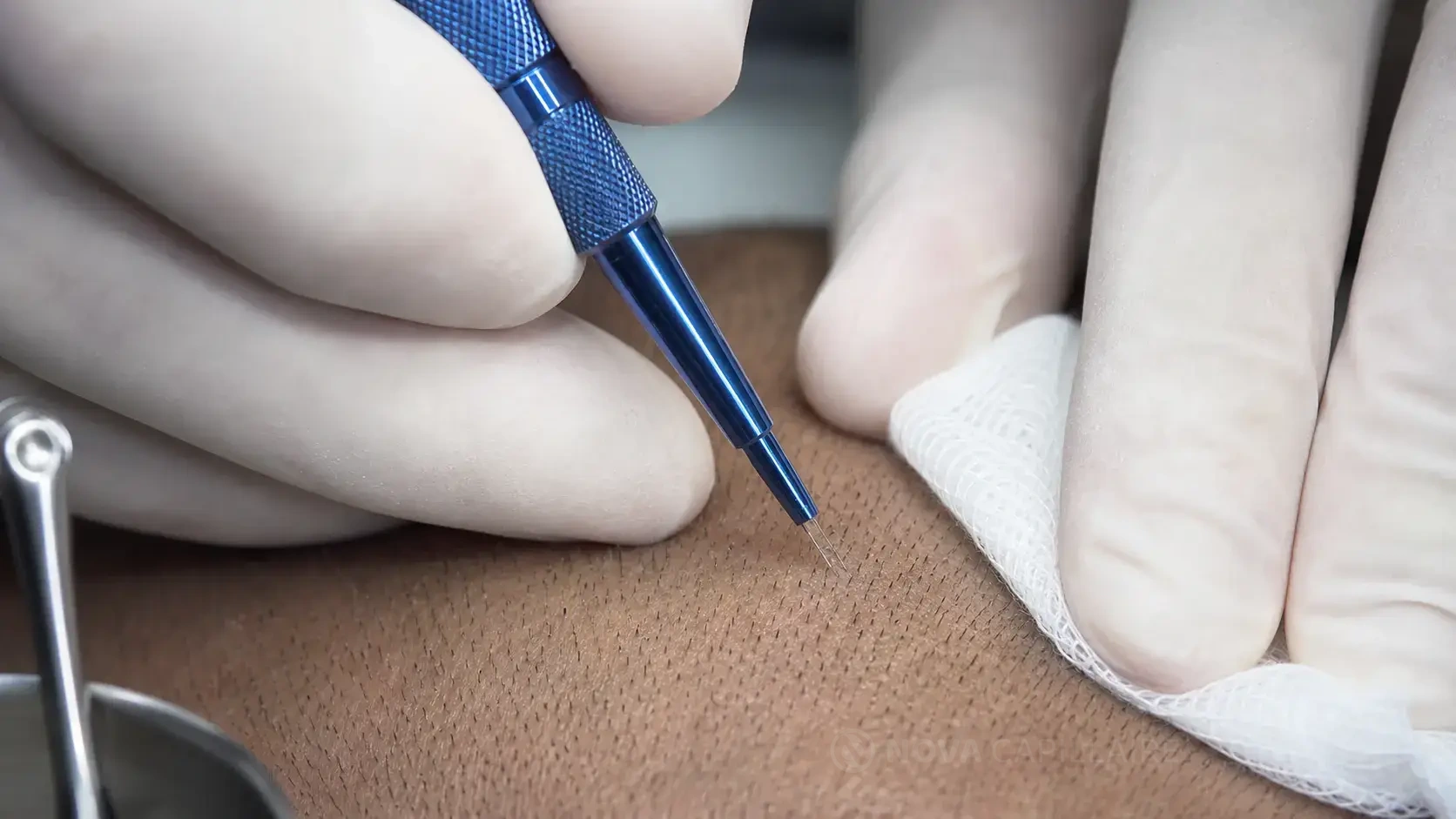
FUE describes the individual harvesting of follicular units. Sapphire refers here to the instrument used to prepare recipient sites. A Choi is an implanter into which a graft is loaded before placement. These terms do not all describe the same stage: Choi implantation can also follow FUE harvesting.
Protect each unit
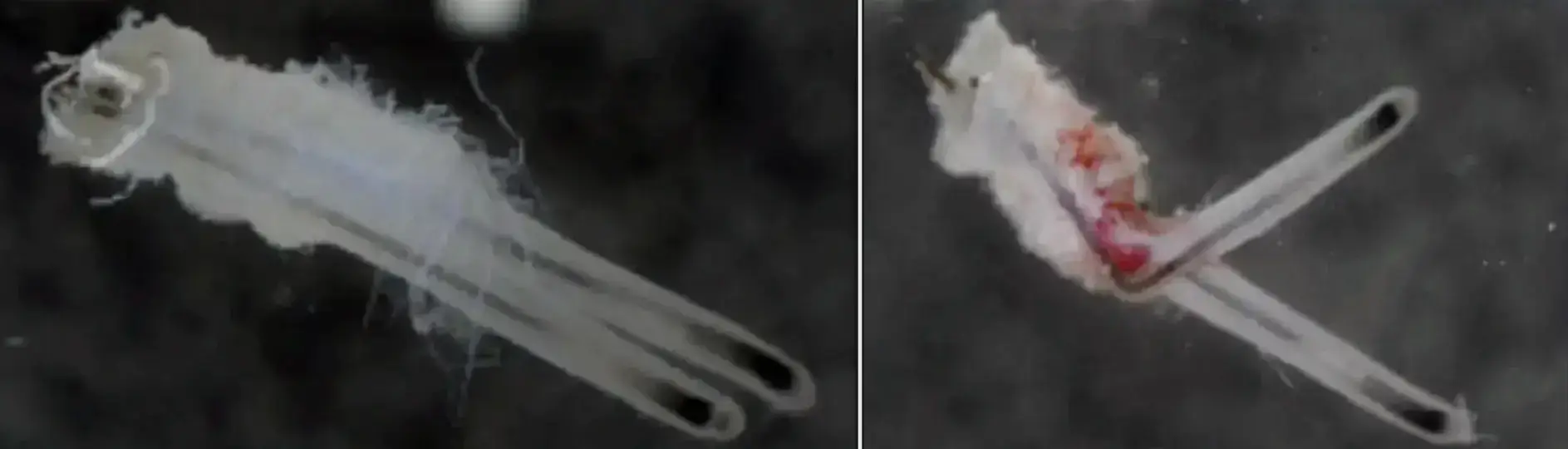
Harvesting should respect the follicle and distribute extractions across the donor area. Transection is an injury to the follicle during the procedure; it is different from a hair’s natural resting phase.
Plan the appearance
Distribution, direction, angle, and depth of recipient sites contribute to the result. Graft selection, especially at the hairline, matters as much as the commercial name of a method.
Why NOVA prefers Sapphire FUE
In our experience, preparing recipient sites with sapphire blades supports precise planning of the design, directions, and distribution before graft placement. This is the approach our center prefers. We do not recommend Choi in our own practice, where we favor this workflow and control over recipient-site preparation.
This preference reflects NOVA’s experience. It does not mean every Choi result is inferior, or that a sapphire blade alone guarantees a successful transplant. Assessment, execution, and follow-up remain essential.
What to understand about Choi
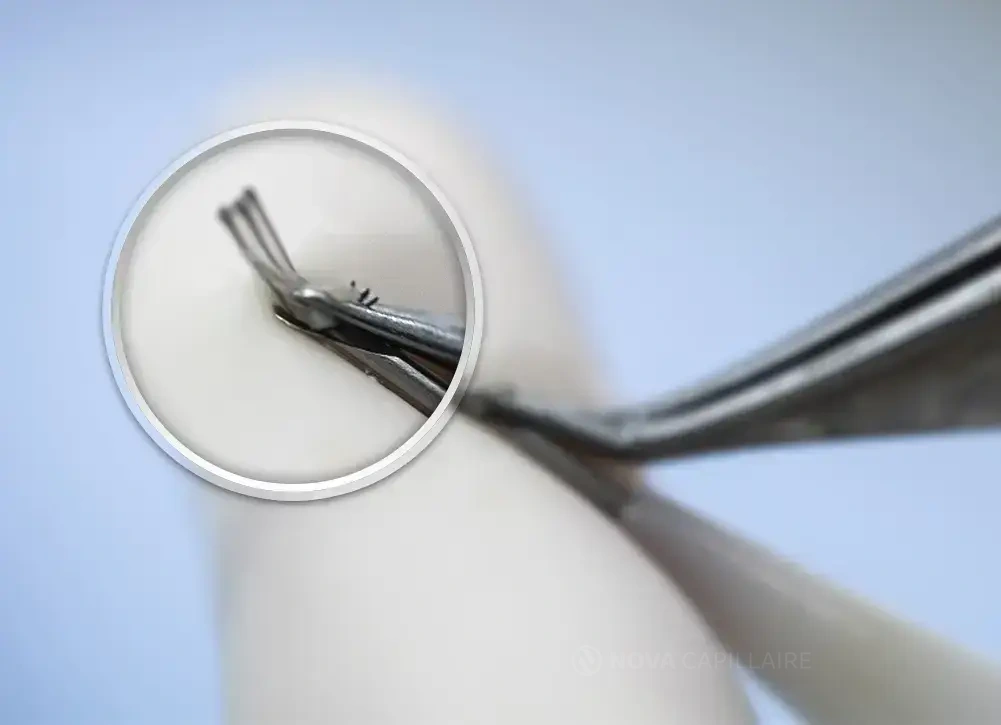
A sharp implanter can create a recipient opening and place a graft in one action. That does not mean “incision-free.” Graft loading, instrument diameter, and control of the technique deserve specific questions. Some protocols also use premade sites: ask what is actually proposed rather than relying on a label.
Handling risks do not establish universal inferiority. A 2017 technical study in Hair Transplant Forum International found few additional injuries in the implanter series examined. It was not a trial demonstrating superiority of Choi or sapphire. Read the study.
Useful questions about technique
- How are the hairline and hair directions planned?
- How are grafts handled and protected from drying?
- How is instrument size matched to grafts?
- How are harvested and implanted grafts counted?
- Which compromises apply to my situation?
04 / Comparing a proposal
Compare what is included.
A practical guide for your conversations. Select a topic to explore the questions to ask.
An explained plan, not just a number.
What goals have been agreed upon? How was the proposed graft count established? What limitations have been discussed?
A clear price, in context.
Which services are included? Are follow-up appointments covered? At NOVA, the quoted price is final for the planned procedure. If additional grafts are needed during that procedure, the center covers their cost, at no extra charge to you.
Know whom to contact afterward, too.
Who should you contact after the procedure? How are appointments and communication organized? What should you do if a concern arises?
A package range does not replace the precise count on the quote. At NOVA, every quote specifies the exact graft count planned for that patient. This example explains the distinction; it is not a quote or an additional commercial package.
A precise count, not a promise of density
A graft is a follicular unit that may contain several hairs. Comparing “3,000 hairs” with “3,000 grafts” without that distinction means comparing different quantities. A quote should clearly identify the unit, treatment areas, and planned number.
At NOVA, the package provides a pricing framework; the quote personalizes the plan. If the agreed plan calls for 3,000 grafts, that exact number appears on the quote, even when the package covers 2,000–3,000 grafts. The planned and actually implanted counts are distinct: any difference should be explained and documented.
Also compare consultations, follow-up, and included products or care. A high price does not guarantee quality, and a low price alone does not prove poor practice. However, an offer that cannot be explained in detail prevents an informed comparison.
05 / Reading before-and-after photos
Look at the result.
Understand its context.
Look for the information accompanying before-and-after photos: the starting situation, treated area, graft count, and when the photos were taken. A case similar to yours can help guide a conversation; it does not promise an identical outcome.
Look at how photographs were taken
Lighting, angle, hair length, and styling can substantially change the impression of coverage. Look for comparable views, a clear timeline, and donor-area photographs when they help explain the case. A photograph alone cannot establish the graft count.
Public reviews offer another perspective: communication, organization, and availability after the procedure. Check their dates and how long after surgery they were written. A review posted a few days afterward describes the experience, not final regrowth. An overall rating does not replace consideration of individual situations.
06 / Planning follow-up care
Follow-up is part of the decision.
Ask as much about support as about the procedure itself. Understand the planned instructions, points of contact, and follow-up arrangements.
Explore the aftercare guidePlan daily life and know whom to contact
Ask for written guidance on care, washing, activities, and appointments. Advice should match your protocol; a general guide does not replace personalized instructions. Find out how to reach the team if a question arises between appointments.
The appearance during the first few weeks cannot establish the final result. The NHS generally places full-result assessment between 10 and 18 months. Significant pain or unexpected symptoms still warrant prompt contact with the team: do not wait for regrowth before reporting a concern.
If a result is disappointing, the first step is a documented assessment: comparable photographs, a timeline, and the procedure record. Revision is not always possible; it depends in part on the remaining donor supply and tissue condition.
Support after your procedure
If an incident or difficulty arises during recovery, contact the team to discuss it. If another procedure is needed, it will be assessed separately. Where a charge applies, a separate quote will be explained to you in advance.
07 / WHAT TO WATCH FOR
What deserves an explanation.
Before you commit.
Our article on disappointing transplants highlights issues to consider when choosing a center. The purpose is to turn broad promises into useful questions, so you can make a better-informed decision.
“As many grafts as possible” is not a plan
Excessive or uneven harvesting can compromise the donor area’s appearance. A large session is not automatically poor practice, but its size should be justified by your donor supply and goals. The objective is not a record number: it is a plan consistent with your options.
Quality also depends on what happens between stages
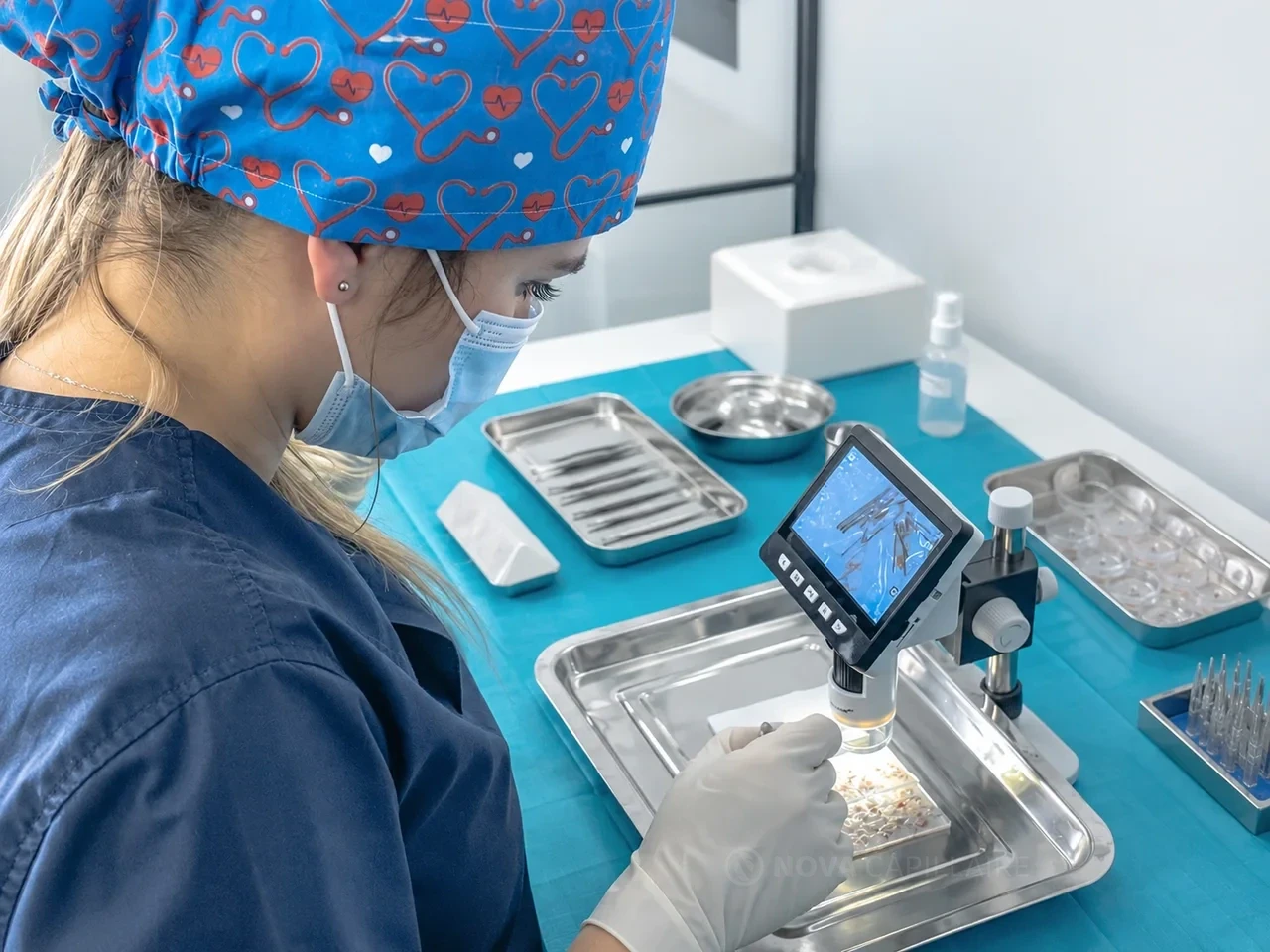
Grafts require careful handling and storage. Ask how preparation fits the pace of the procedure and how the team limits exposure to drying. Communication focused solely on a tool leaves out this important part of the work.
Recognize promises that are too absolute
Guaranteed density, an unlimited donor supply, or claims that revision is always possible deserve closer examination. A complication does not automatically establish wrongdoing, nor should it automatically be blamed on the patient. What matters is access to an assessment and appropriate guidance.
Understand disappointing transplant results08 / Your checklist
Questions to take with you.
Check off the points you have clarified. This list helps you prepare for a consultation; it does not assess your suitability for a transplant.
Downloads a text file with your checklist and questions. You can open or copy it into Notes. Nothing is sent to NOVA.
FAQ
A few more questions
Should price be the only deciding factor?
Price matters. To compare meaningfully, consider the proposed plan, included services, and follow-up arrangements alongside it. A figure alone does not explain an offer.
How should I use before-and-after photos?
Look at the starting situation and the time indicated. Use documented cases to prepare questions, while remembering that every outcome is individual.
Can I take time to compare?
Use this guide and checklist to prepare for different conversations. Note the answers and revisit anything unclear before making your decision.
Are Sapphire FUE and Choi different harvesting methods?
No. FUE concerns harvesting. Sapphire and Choi describe tools or protocols used at recipient sites. Ask for a complete explanation of both stages and how the work is organized.
Why does NOVA prefer sapphire?
Our preference reflects our experience with recipient-site preparation and planning directions, angles, and distribution. It is the center’s practice position, not a guarantee of results or proof that all other protocols are inferior.
Is a 2,000–3,000 graft package enough detail on a quote?
At NOVA, no: the range describes pricing, while your quote specifies the exact planned count. A plan for 3,000 grafts is recorded as such. The actual implanted count should then be distinguished from the planned count.
Should I always choose the largest graft count?
No. The count should fit the area, priorities, and donor resources. More grafts do not automatically mean a better plan, especially if harvesting compromises future options.
Can a disappointing transplant always be corrected?
No. Revision requires assessment of the result, tissue condition, and remaining donor resources. It may be limited or unsuitable. This is another reason to discuss donor preservation before the first procedure.
Will I have to shave my entire head?
Options depend on your situation and the protocol. Ask before booking which areas will be affected. Partial shaving must remain compatible with the conditions needed for the team’s work.
Can a decision be made from photographs alone?
Photographs help prepare a discussion, but they do not provide everything an examination can establish. A proposal may need confirmation or adjustment after assessment. Photographs do not replace a medical consultation.
Sources and references
| Source | Reference and link |
|---|---|
| NHS | NHS · Hair transplant |
| Hair Transplant Forum International | Hair Transplant Forum International · 2017 · 27(3), 96 |
This guide helps prepare a discussion with the team; it does not replace a medical consultation.