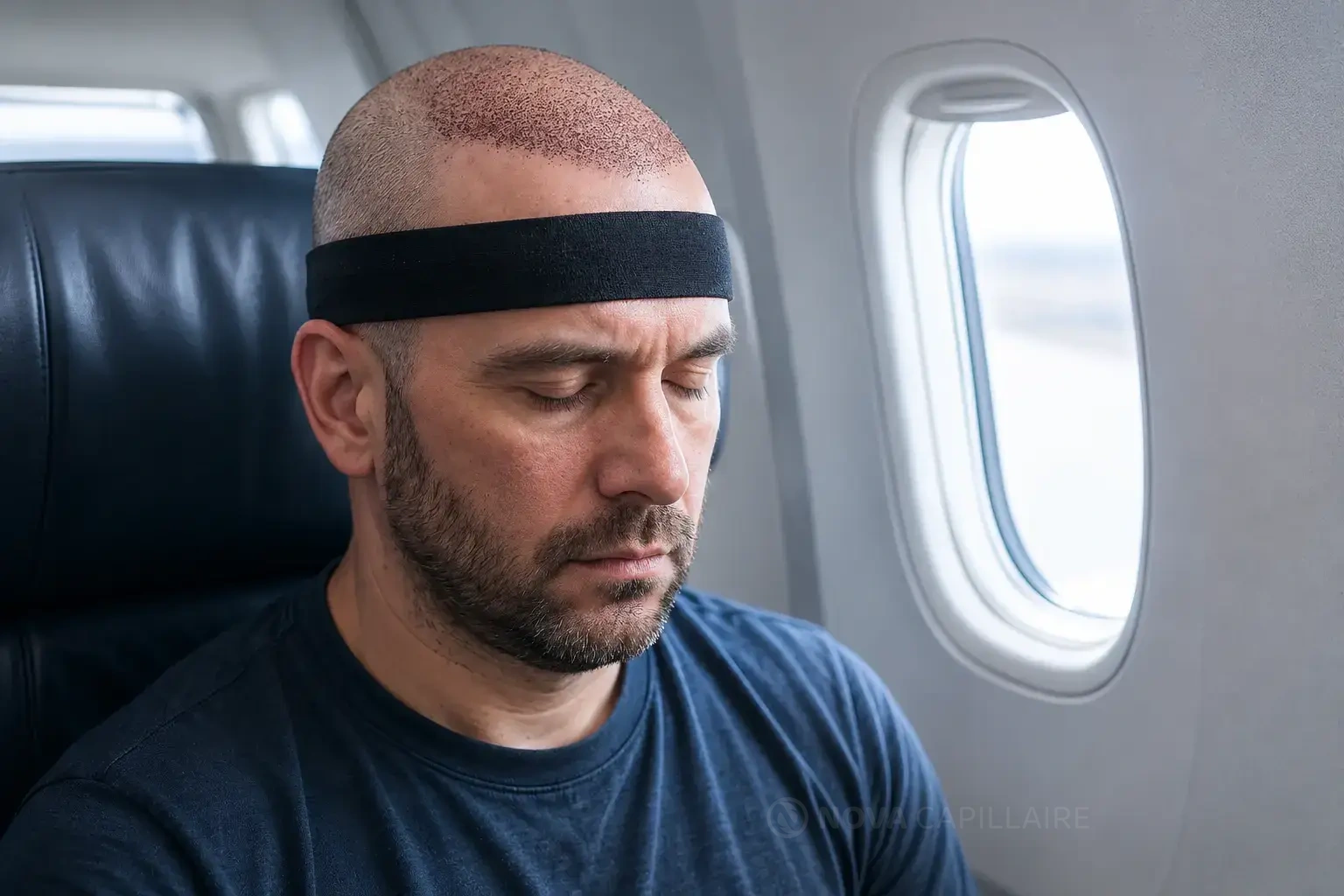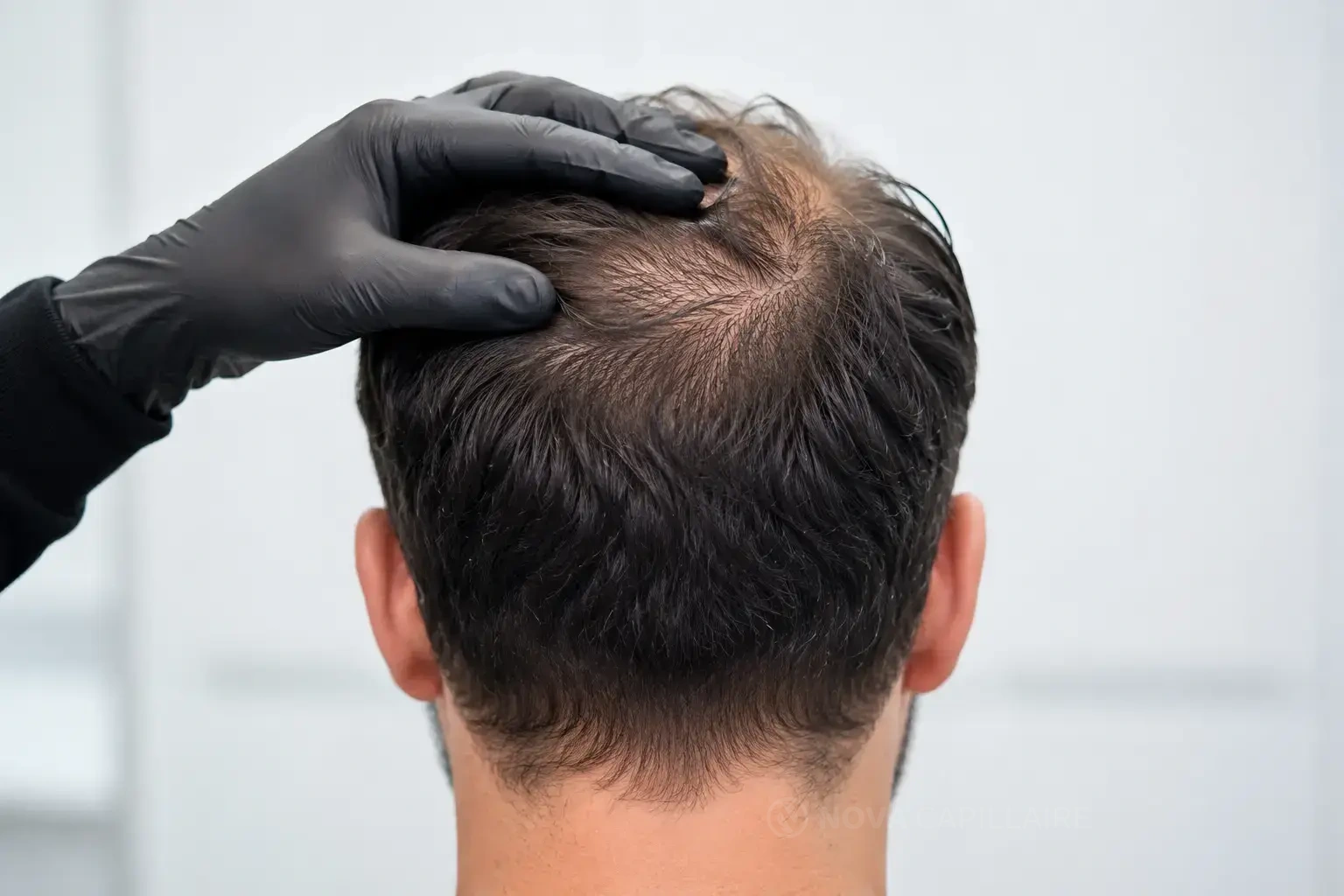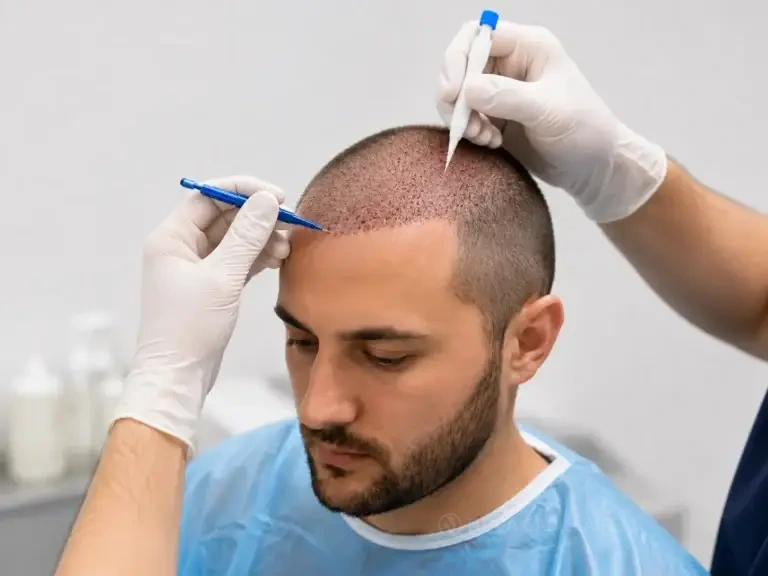
When considering a hair transplant, the implantation technique plays a crucial role in the final result. The Sapphire FUE and Choi methods are often compared because both rely on graft harvesting before implantation.
The difference mainly lies in placing grafts into the scalp. The Choi method is more common because it is easier to learn and standardize. Sapphire FUE requires more experience but offers much finer control.
At NOVA Capillaire, after several years observing and practicing both approaches, Sapphire FUE remains preferred to achieve a hairline natural hairline, good density, and better graft control.
Understanding differences between Sapphire FUE and CHOI
Both techniques start similarly: grafts are harvested from the donor area, using a manual, motorized, or technology-assisted method. The real difference comes afterward, during implantation.
With Sapphire FUE, the practitioner first prepares micro-channels. With the Choi method, the graft is loaded into an implanter pen and pushed into the scalp.
This detail changes everything: Sapphire FUE allows more control over angle, depth, direction, and graft distribution.
| Technique | Principle | Advantages | Limits |
|---|---|---|---|
| Sapphire FUE | FUE extraction followed by micro-incisions using sapphire blades | NOVA’s preferred method: precision, density, natural hairline, and artistic control of the result | Requires extensive experience. Not easy to master |
| CHOI Pen | FUE extraction followed by graft loading into a needle before implantation | More common technique, easier to learn and standardize | Excessive graft manipulation risks compression, shock, hooking, or transection |
Sapphire FUE: precision and control
Sapphire FUE uses a sapphire blade to create micro-incisions before implantation. This step precisely prepares the site before placing each graft.
Main benefits:
- precise control of angle, depth, and direction;
- better density organization;
- more natural hairline;
- fine incisions, usually resulting in less visible scarring.
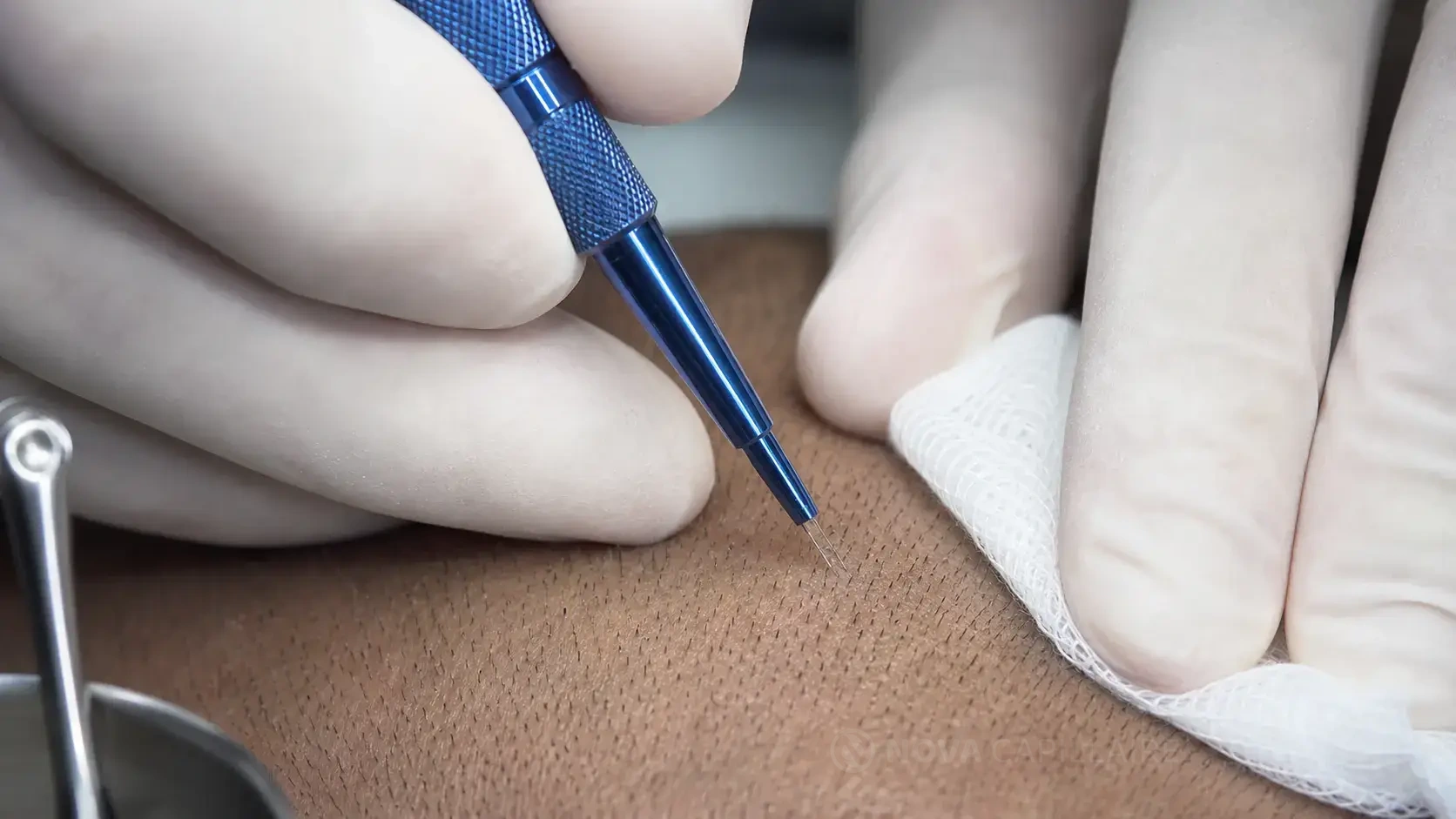
Sapphire FUE’s difficulty lies in its precision. It is not automatic but depends on the practitioner’s skill, eye, and experience.
Why CHOI is more common
Choi: a direct but limited method
The Choi method uses an implanter pen. The graft is loaded into a needle, then directly inserted into the scalp.
This technique is easier to learn and reproduce. That explains its popularity. But easier does not mean better.
Limitations we observe:
- more graft manipulation;
- risk of compression inside the needle;
- more limited control over angle and depth;
- reduced visibility of the graft once loaded into the implanter.
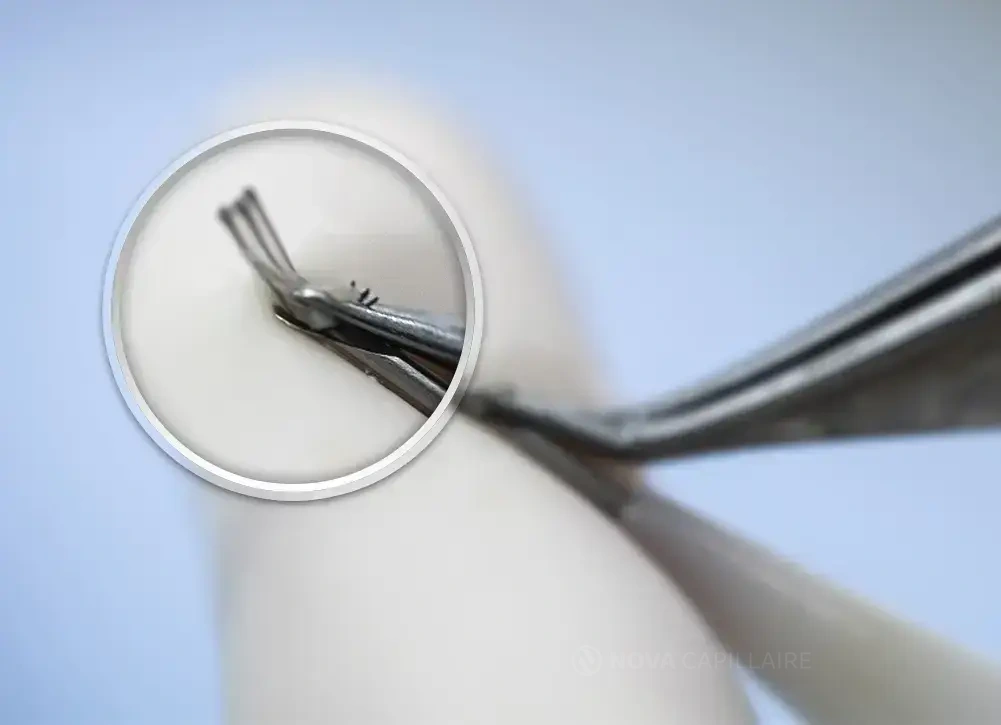
Graft too large for the needle
The graft visible in this image contains several hairs and appears too wide to be inserted without constraint into the needle. Forcing its passage increases the risk of trauma or transection.
The limitations of the Choi method
The Choi method may seem convenient, but it imposes several technical constraints.
The central point is always the same: the graft is handled more before implantation. A graft is a fragile structure. The more it is handled, the greater the risk of damaging, compressing, or reducing its viability.
A - Risks of graft compression
Loading grafts into the Choi Pen can create compression, especially with grafts containing several hairs.
A graft with three or four hairs, for example, may be too large for the implanter's needle. Forcing it into too narrow a space increases the risk of injury or transection.
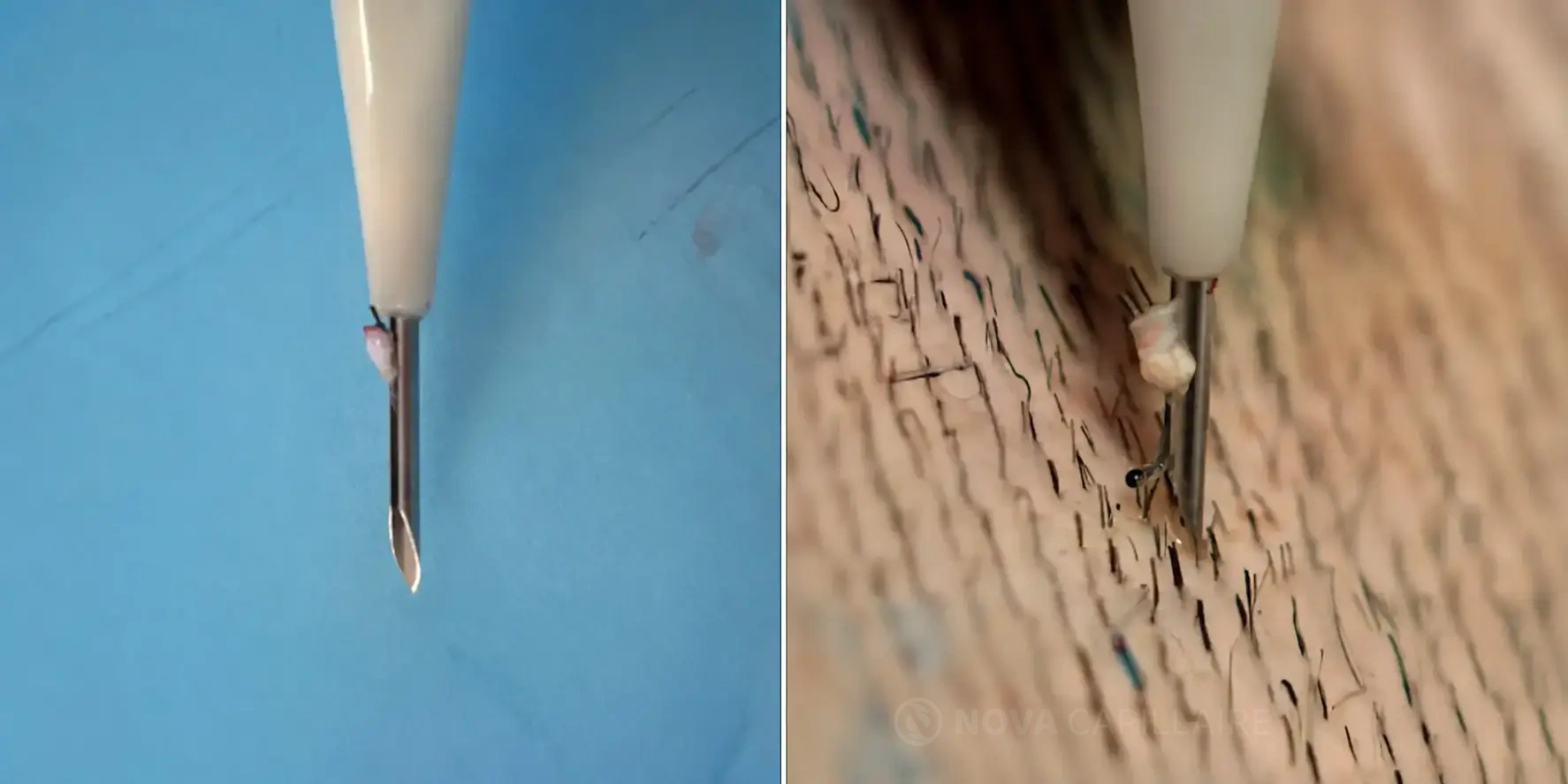
- The CHOI method uses a cylindrical needle that mechanically pushes grafts into the scalp.
- This process significantly increases the risk of graft transection, especially when lower quality injectors are used.
- These economical injectors, often used by some clinics, cause significant loss of non-viable grafts.
B - Lack of precision in hair orientation
With the Choi method, once the graft is loaded into the pen, it becomes less visible and harder to adjust.
This limitation can reduce control over hair orientation. However, angle and direction are essential to avoid an artificial result.
On a hairline, a few misplacements are enough to make the transplant visible. It is precisely in this type of area that Sapphire FUE offers a significant advantage.
C - Uneven distribution of grafts
The Choi method also limits control over the distribution of grafts according to their composition.
For a natural hairline, single-hair grafts must be placed in the first line. Grafts of two or three hairs should be placed further back to increase density without creating an artificial effect.
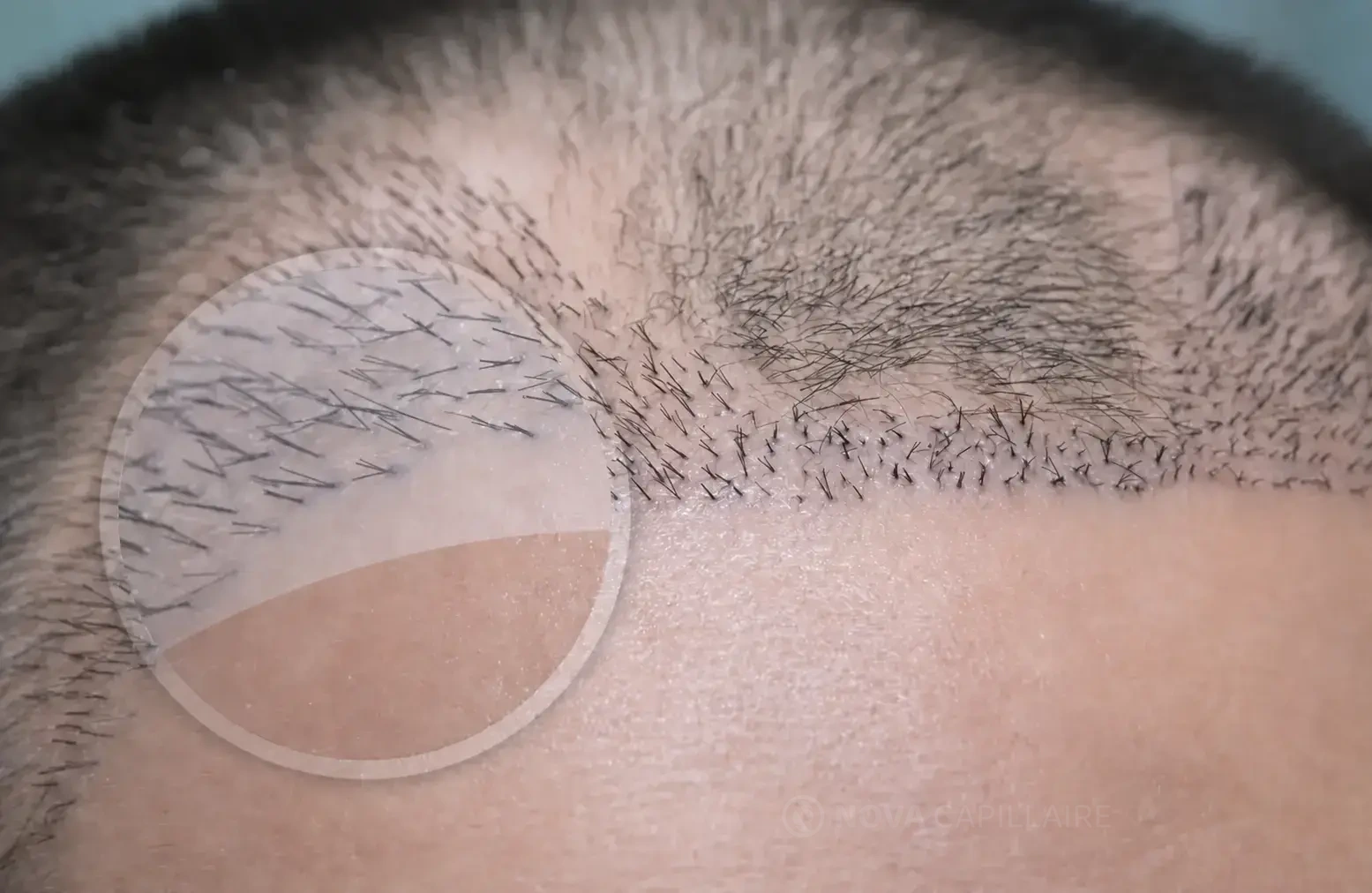
When the graft is already loaded in the implanter, this evaluation becomes less precise. The risk is placing grafts that are too thick in an area that requires much finesse instead.
D - Snagging and risk of transection
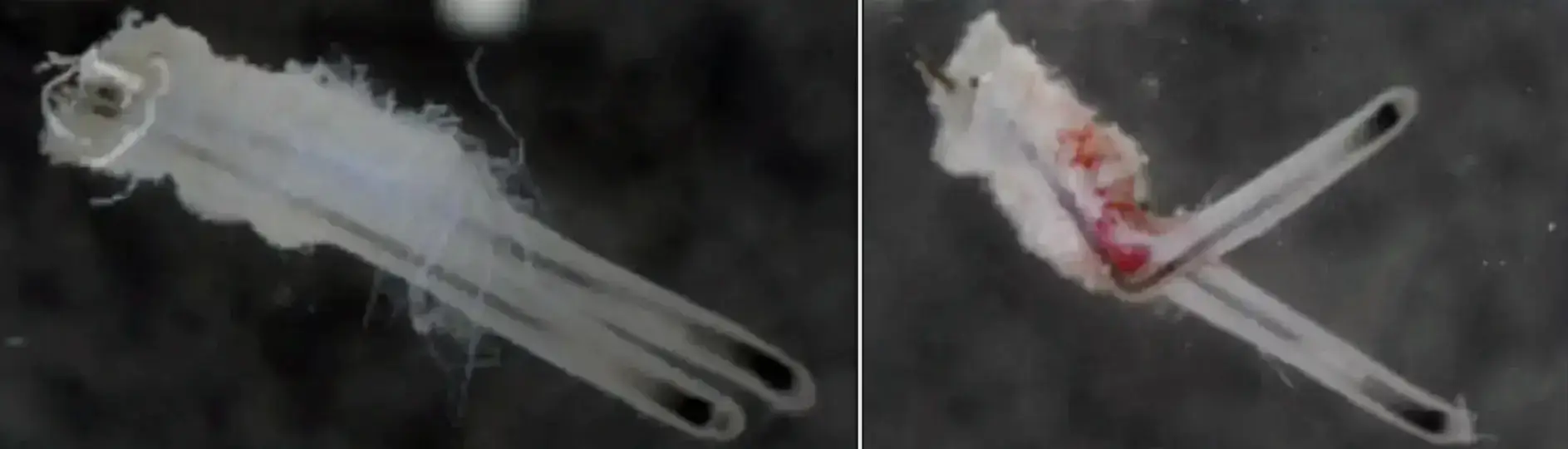
The Choi injector also presents a snag risk. During insertion, part of the graft can protrude from the needle groove and catch on the skin. This can alter the bulb's position, create traction, or cause graft injury. At this stage, the problem is not only aesthetic: it may also affect follicle survival.
ISHRS technical publications describe this type of mechanical limitation, especially when the graft is not perfectly aligned in the needle.
Why Sapphire FUE is superior
Sapphire FUE is not simply a variation of FUE. It is a method that requires true mastery of implantation.
Each micro-incision is prepared according to the area, the natural hair orientation, and the desired result. This level of control is essential to obtain a dense, regular, and natural transplant.
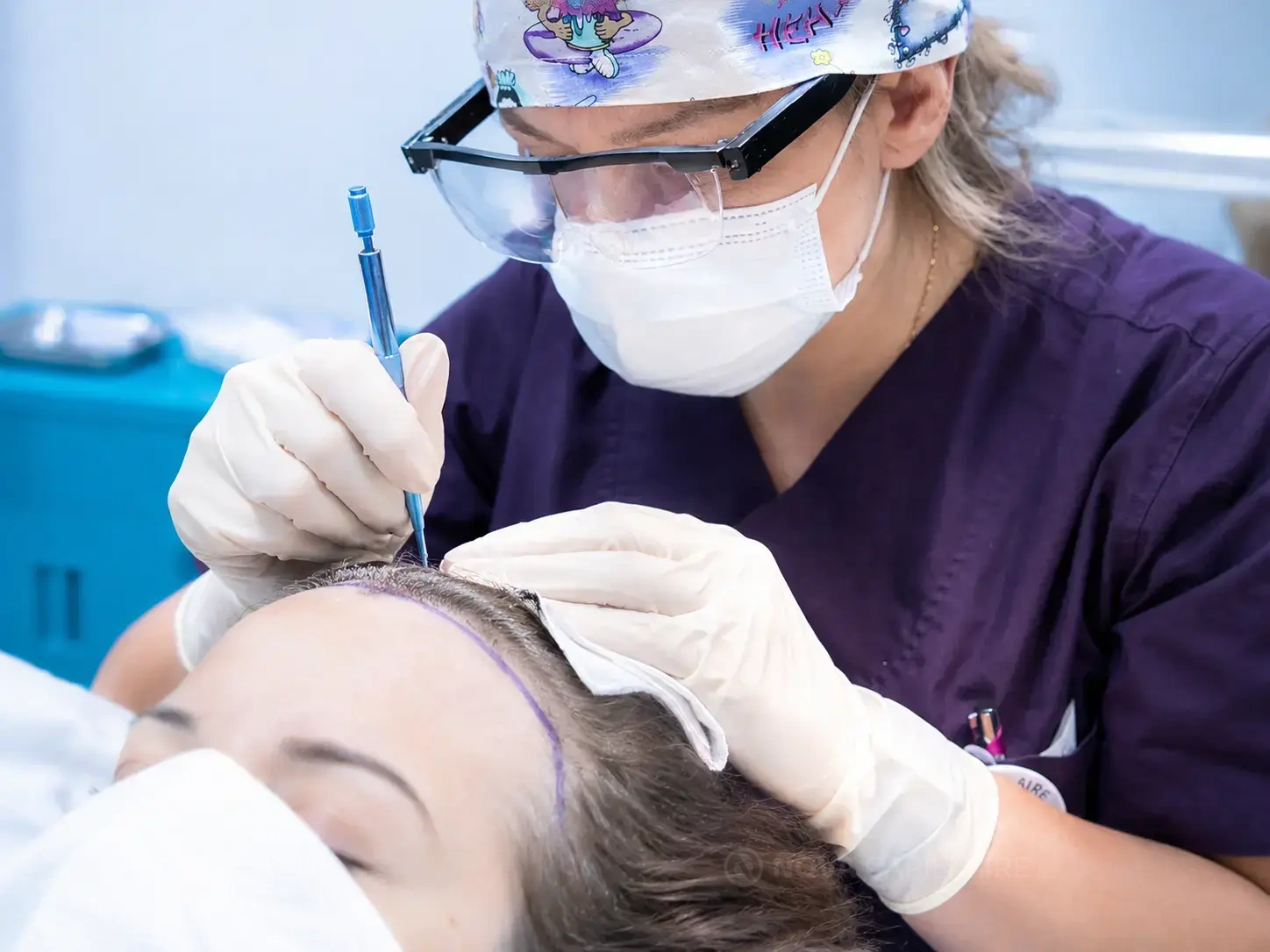
A - Total control and natural results
Sapphire FUE allows respecting the natural angle of the hair. This is crucial, especially on the hairline. A good hairline must not only be dense. It must be naturally irregular, progressive, and adapted to the face.
Sapphire FUE allows this precision work because channels are prepared before implantation. The practitioner thus maintains better control of direction and depth.
B - Adaptability to all hair types
Sapphire FUE can adapt to fine, thick, curly, or coiled hair,, provided it is performed by an experienced team.
Each hair type requires a different strategy. Angle, density, and graft distribution must be adjusted case by case.
This technique can also be useful to correct certain previous transplants when the donor area permits.
C - Minimizing graft damage
With Sapphire FUE, the graft does not need to be forced into a needle before implantation. Micro-incisions are prepared in advance, limiting mechanical stress on the follicle. The graft can be placed with more control and less pressure.
This aspect is essential: a well-extracted graft but poorly handled can lose part of its potential.
Avoid misleading marketing strategies
Some clinics present the Choi method as more modern or advanced. In reality, it is mainly easier to teach and standardize.
Sapphire FUE requires more time, experience, and precision. That is precisely what makes it harder to master, but also more interesting for achieving a natural result.
The choice should therefore not be based on the technique's name, but on the quality of the action, graft management, and the ability to create a coherent hairline.
Before-and-after results with Sapphire FUE
The before-and-after results allow concrete assessment of transplant quality. What to observe: the hairline, density, hair orientation, and overall harmony.
Sapphire FUE enables natural results when grafts are well selected, well distributed, and implanted precisely.
Individual results. See all before/after.
Conclusion: Sapphire FUE, the choice of precision
Between Sapphire FUE and the Choi method, the difference is not just the tool used. It lies in mastery of the gesture.
The Choi method is easier to learn but involves significant graft handling. Sapphire FUE requires more experience but allows better control of angle, depth, density, and the hairline.
Before choosing a technique, ask two simple questions:
- Do you use a Choi Pen or micro-incisions prepared with precision?
- How do you protect the grafts during extraction, preparation, and implantation?
For a natural, lasting transplant coherent with the face, precision remains the most important point.
Sources and references
Does the use of implanters affect the quality of FUE grafts? — Hair Transplant Forum International, 2017, volume 27, pages 96–99.
Permanent link to this publication (DOI)
Photo source:
ISHRS Hair Transplant Forum International, official publication of the International Society of Hair Restoration Surgery.