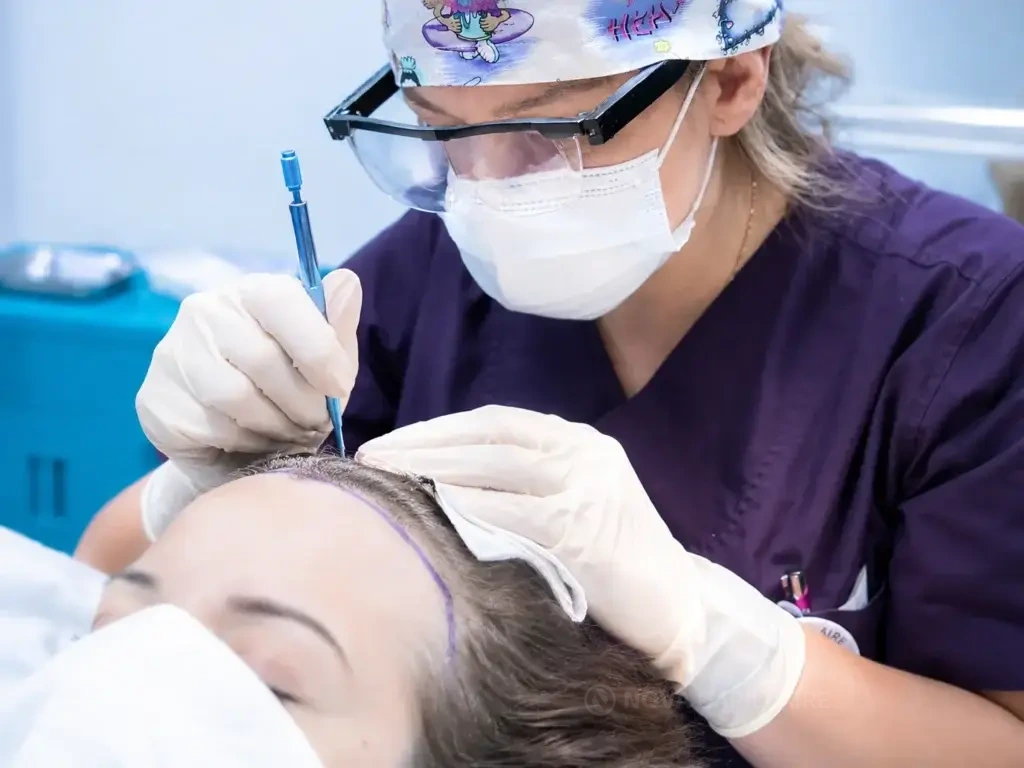
When your hair no longer feels like your own
You move your part to hide a lighter patch. Your ponytail needs another turn of the elastic. A photo taken from above shows more scalp than you expected. Those changes matter, even when someone tells you they cannot see a difference.
The first question is not how many grafts you might need. It is whether more hair is shedding, individual hairs are gradually becoming finer, or the lengths are breaking. These can overlap, but they call for different approaches. [6]
This guide helps you prepare the right questions: what has changed, what you can adjust now, and when a hair transplant for women may be worth considering.
What causes hair loss in women?
Alopecia means hair loss; it does not identify a single cause. The pattern and history help guide the assessment. These four situations are worth distinguishing.
| What you notice | One possibility to explore | A useful first step |
|---|---|---|
| More hair shedding across the scalp | Telogen effluvium, sometimes appearing months after illness, childbirth, or a very restrictive diet.[2] | Look back over the preceding months, rather than only this week. |
| A widening part and less coverage on top | Female pattern hair loss can gradually make individual hairs finer.[1] | Have your scalp examined and review how it has changed. |
| Thinning temples or edges under tension | Repeated pulling from tight styles or extensions.[4] | Reduce tension now and have the thinning areas assessed. |
| One or more distinct bald patches | Alopecia areata is one possibility; this is different from a simple loss of volume.[5] | Seek a dermatology assessment rather than simply covering the patches. |
More hair shedding across the scalp
- One possibility to explore
- Telogen effluvium, sometimes appearing months after illness, childbirth, or a very restrictive diet.[2]
- A useful first step
- Look back over the preceding months, rather than only this week.
A widening part and less coverage on top
- One possibility to explore
- Female pattern hair loss can gradually make individual hairs finer.[1]
- A useful first step
- Have your scalp examined and review how it has changed.
Thinning temples or edges under tension
- One possibility to explore
- Repeated pulling from tight styles or extensions.[4]
- A useful first step
- Reduce tension now and have the thinning areas assessed.
One or more distinct bald patches
- One possibility to explore
- Alopecia areata is one possibility; this is different from a simple loss of volume.[5]
- A useful first step
- Seek a dermatology assessment rather than simply covering the patches.
Changes around menopause deserve an assessment too. Inherited susceptibility and hormonal changes can overlap; thinning does not automatically mean you lack a hormone or need hormone treatment. [1]
After childbirth, shedding can become very noticeable while the follicles remain in place. Hair usually returns to its normal cycle. If fullness does not recover, another cause needs to be considered. [3]
What a useful hair assessment should establish
Your history comes first: when the loss started, whether it is recent or ongoing, what happened in the preceding months, and which medicines you take. Bring the names of supplements you have already tried. [6]
The examination looks at your scalp, the distribution of thinning, and the hairs themselves. Depending on the findings, your clinician may request targeted blood tests, for example to look for iron deficiency or a thyroid condition. More tests are not automatically better. [2]
Sudden shedding, patches, pain, or scalp inflammation deserve medical attention before making a transplant decision. If hair loss is affecting your daily life, that alone is a valid reason to seek help. [11]
Practical ways to protect the hair you still have
Start with what your hair experiences each day. A pulling bun, heavy extensions, or a painful style should not be the price of hiding a thinning area. Loosen attachments and change where tension is placed. [4]
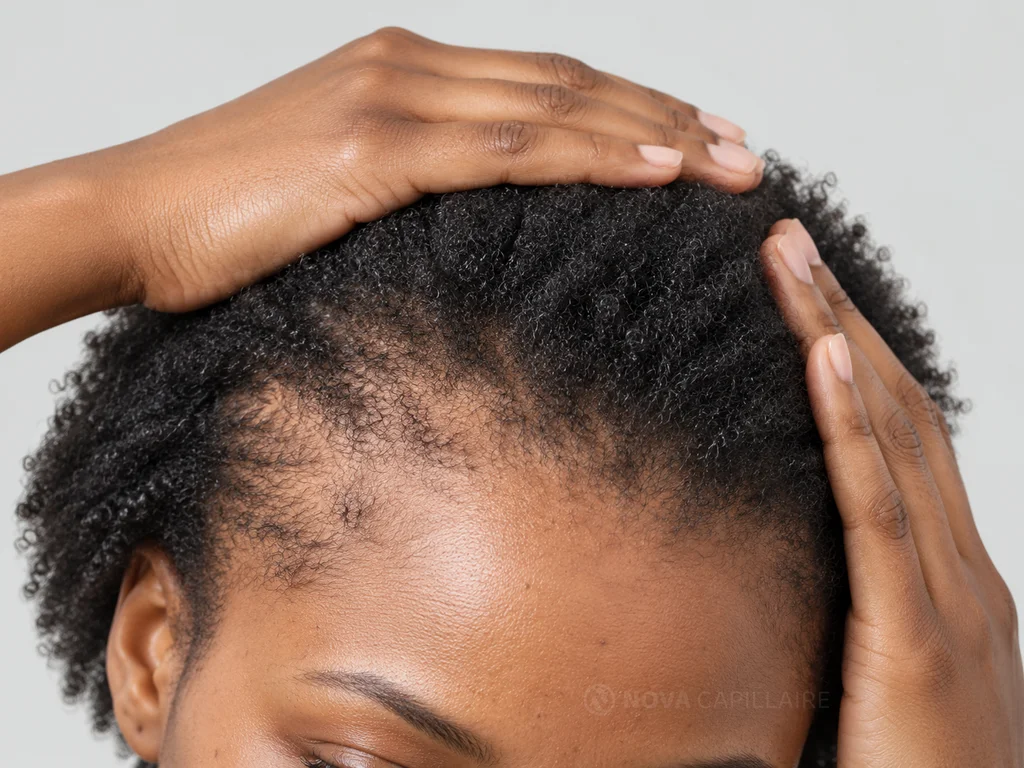
Repeated pulling from tight hairstyles can affect the temples and hairline. Loosen attachments at the first signs of tension.
- Detangle gently. Limit repeated heat styling and harsh chemical treatments on fragile hair.
- Keep meals regular and varied. Buying a supplement at random is not a substitute for investigating a deficiency.
- Take occasional comparable photos of your part and temples in the same lighting. They provide a more useful record than checking the mirror repeatedly each day.
Iron, zinc, and biotin supplements are not something everyone with hair loss needs. Excess amounts of some nutrients can worsen shedding, and biotin can interfere with certain laboratory results. Tell your clinician what you take. [7][13]
If tight hairstyles have affected your edges, our traction alopecia guide explains the habits worth changing.
Which treatments can help before considering surgery?
Treatment follows the cause. With reactive shedding, the priority is to identify and address a trigger where one exists. With progressive thinning, a clinician may suggest treatment to maintain or improve the thickness of existing hair. [8]
Minoxidil: understand how it fits your situation
Topical minoxidil is an established treatment for female pattern hair loss. Results are assessed over months, and continued use is needed to maintain benefits when it works. Irritation and a temporary increase in shedding can occur. Tell your clinician if you are pregnant, planning pregnancy, or breastfeeding before choosing treatment. [8][9]
What can shampoos and “natural” products do?
A shampoo may improve scalp comfort or the appearance of hair without treating the underlying cause of thinning.
Try not to start several products at once. It becomes difficult to tell what helps, what irritates your scalp, and what is simply costing money. Ask instead about the goal, the trial period, and when to review progress.
PRP and French regulations
In France, platelet-rich plasma (PRP) injections for aesthetic purposes are prohibited. The French National Council of the Order of Physicians also reports that the national professional council for dermatology does not recommend this method for treating alopecia. [17]
Can the hair grow back?
The answer depends on what is happening to the follicle. With telogen effluvium, considerable shedding can occur without the follicles being lost. Recovering volume takes time, even after shedding has begun to settle. [14]
Female pattern hair loss is different: hairs progressively become finer. Treatment targets the existing hair, whereas a transplant redistributes follicles. Those are distinct goals, and both may have a place in the same care plan. [15][16]
When can a hair transplant help a woman?
A transplant can address a persistently thin area: rebuilding temples, refining a hairline, or improving coverage in a selected region. It becomes a more relevant option when the cause is understood, the condition is sufficiently stable, and donor hair is suitable. [10]
The donor area supplies the follicles used for transplantation. If that area is also markedly thin, the size of the area you want to cover is not enough to decide on surgery. The examination must match your goals to the resources available. [12]
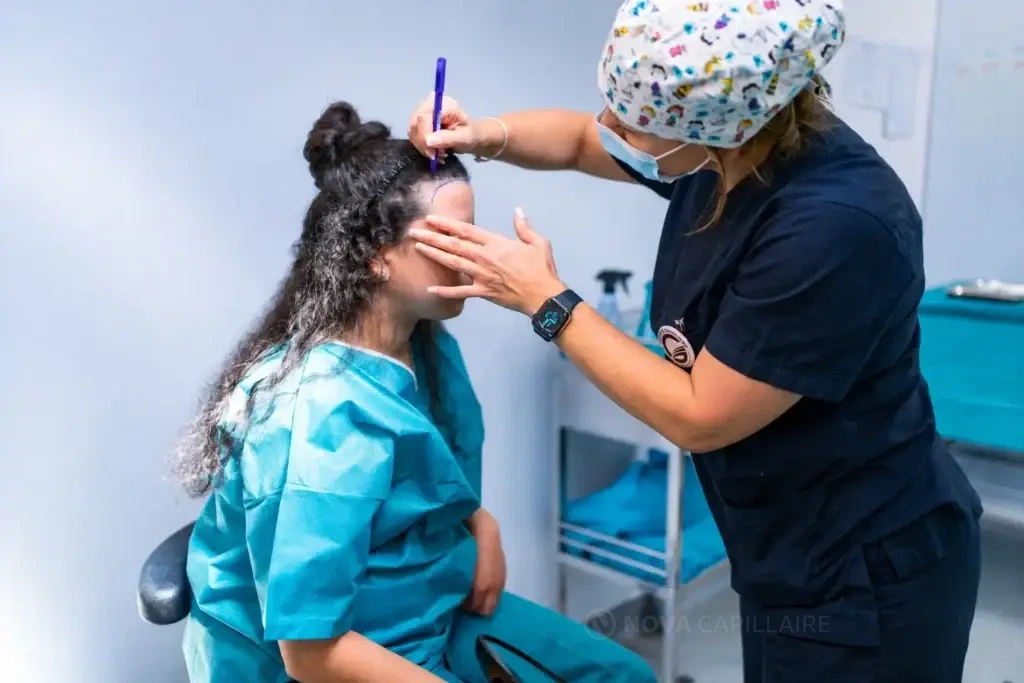
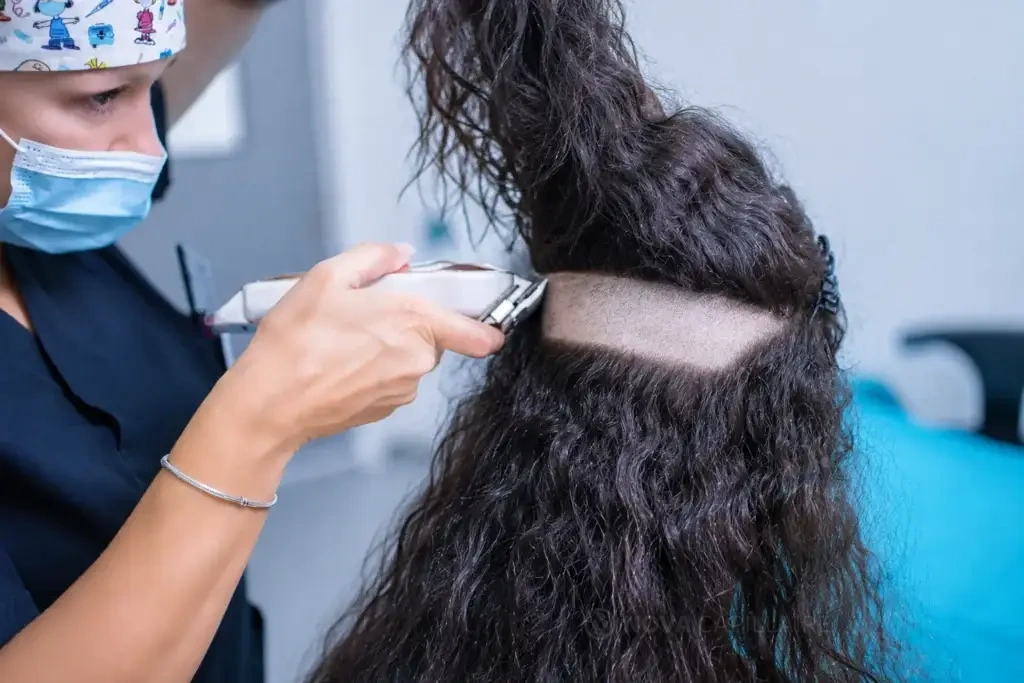
Partial shaving, step by step
The final clip shows the surrounding hair brought back over the prepared area. How well it is covered depends on the length and density of that hair.
Longstanding traction with permanent loss can also be considered for transplantation after assessment, once the pulling has stopped. Temporary shedding or an active scalp condition instead calls for attention to its cause first. [16]
Planning matters as much as the total: where should grafts go, how should they be distributed, and how will transplanted hairs blend with your existing hair? A female hairline should be designed around your features and hairstyle rather than a standard template. [12]
Preparing your consultation at NOVA
Our hair transplant for women in Paris page explains care, partial shaving, and 12 months of follow-up. Sapphire FUE HD is part of the NOVA protocol; planning still begins with an assessment of your hair and donor area.
- Bring older photos showing your part and hairline, together with any previous test results.
- Explain your routine: wearing your hair up, keeping bangs, or concealing an area may shape your priorities.
- Ask which areas come first, how harvesting is prepared, and what you can expect to style during recovery.
Your quote specifies the graft count planned for your procedure. Our plans and prices provide a starting point; they do not replace individual planning. The online assessment lets you share your concerns and photos before your consultation.
For questions about shaving, density, and the areas that can be restored, see our hair transplant FAQ for women.
Frequently asked questions
Does a widening part mean I need a transplant?
Not automatically. A widening part needs a diagnosis first. Depending on the cause, treatment for existing hair, monitoring, or a targeted transplant may be appropriate.
Should I wait until I have lost a lot of hair?
No. Seeking advice when you first notice a change helps establish what is happening and which options make sense. A consultation does not commit you to surgery.
Does a woman need to shave her whole head?
Shaving is planned around the procedure. NOVA’s women’s hair transplant page explains partial donor-area shaving; how visible it is depends on the length and density of the surrounding hair.
Does a transplant replace hair-loss treatment?
A transplant redistributes follicles; it does not treat every cause of shedding. If treatment remains useful for non-transplanted hair, its role should be discussed with your clinician.
Medical sources and further reading
Further reading

Androgenetic Alopecia: Causes, Signs and Options to Discuss
Androgenetic alopecia: understand common patterns, prepare for an assessment, and compare options without self-diagnosing.
Read the article
Traction alopecia in Black women: protect your edges, restore your hair
Practical styling advice, signs to watch for and when a hair transplant can restore a permanently thinning hairline.
Read the article
Do helmets cause hair loss? Myths and facts
Discover whether helmet use really causes hair loss. Analysis of factors, myths and practical advice to protect your scalp.
Read the article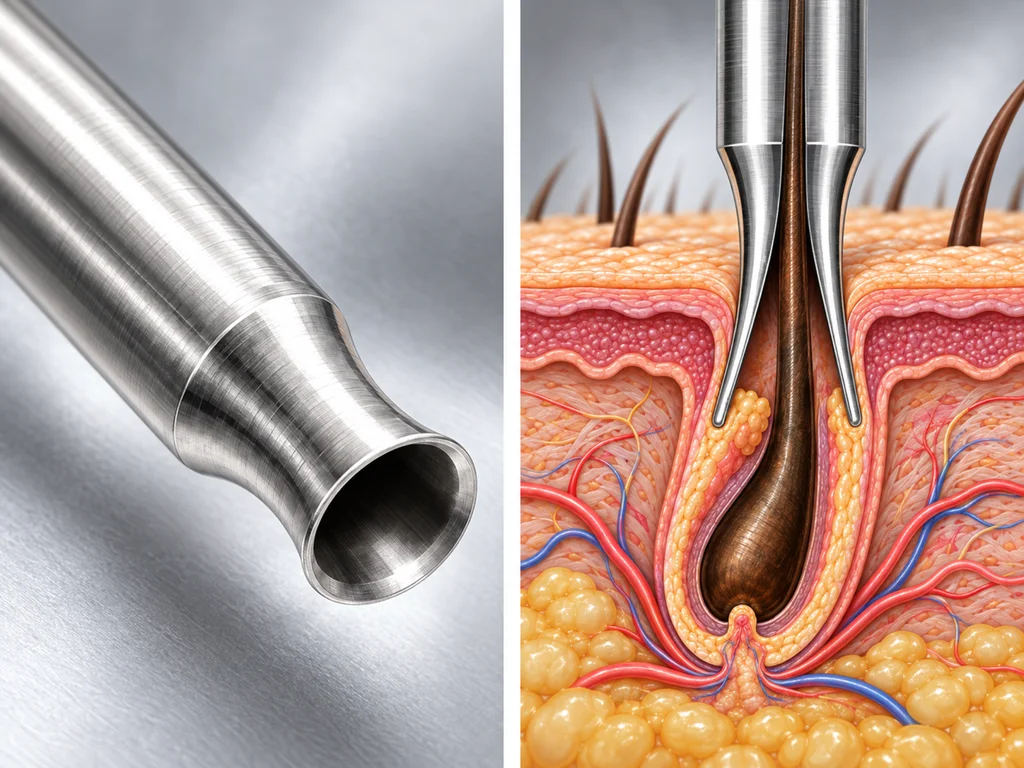
Punch Contour: protecting grafts during FUE harvesting
Punch geometry, graft checks, and donor-area planning: understand how FUE harvesting fits into a NOVA hair transplant.
Read the article