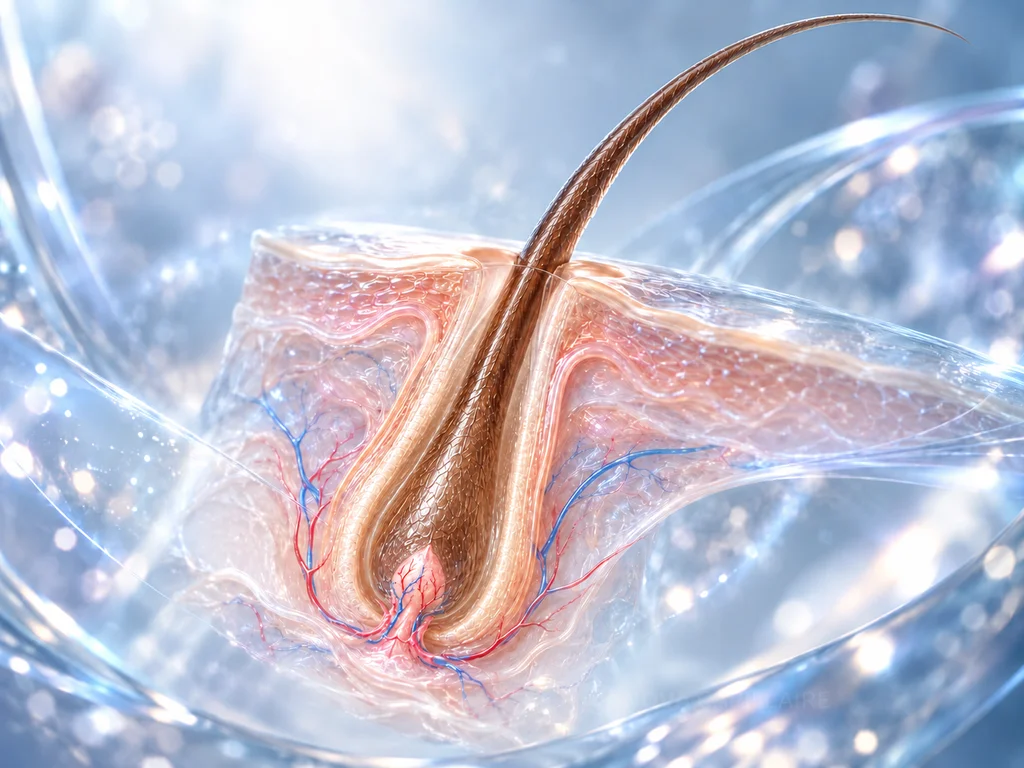
Hair is falling out: has the transplant failed?
Finding hairs in the sink a few weeks after a transplant can be unsettling. You have just had a procedure to improve density, yet your hair seems to be moving backward. Before drawing a conclusion, identify which hairs are shedding and when it began.
People often use “shock loss” to describe several kinds of shedding after surgery. For your follow-up, it helps to separate shedding of transplanted hair shafts from a reactive loss of the native hairs already growing near the treated area.
Transplanted shafts and native hairs
Shedding of transplanted hair shafts
Transplanted hairs may shed in the weeks after surgery. Losing the visible shaft does not, by itself, mean the graft has been lost. The American Academy of Dermatology describes this phase between two and eight weeks after the procedure. [1]
Shock loss of existing hairs
Surgery may also disturb the growth cycle of nearby hairs that were not transplanted. This reactive shedding is called shock loss. It can affect the recipient area and, less often, the donor area. ISHRS describes it as usually temporary; very miniaturized hairs need particular consideration. [2, 3]
During follow-up, explain where you notice reduced density. A picture of the hairline and a picture of the donor area provide different information.
What stays in the skin when a hair sheds?
The visible hair shaft is made of keratin. The follicle is the living structure in the skin that produces the hair. A shed hair may have a small club-shaped end; this is not the entire follicle. The follicle can continue its cycle and produce another shaft. [4]
These are different mechanisms. A shaft being released during the hair cycle is different from a follicle cut by an instrument. A picture of transection would illustrate mechanical injury rather than ordinary postoperative shedding.
UNDERSTAND / SHOCK LOSS
What sheds. What stays.
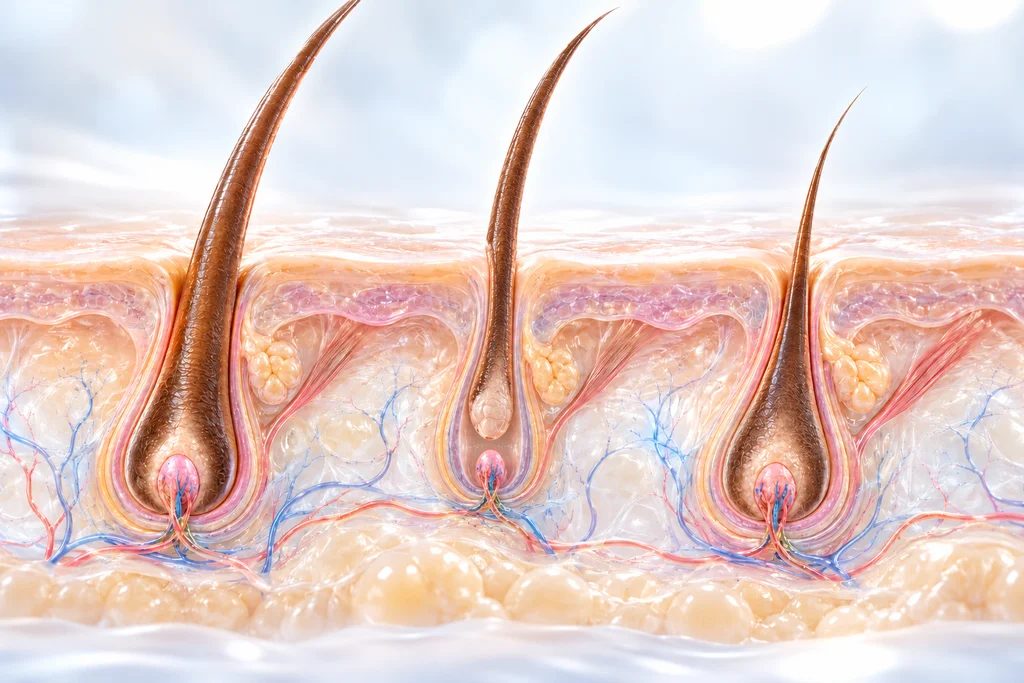
Follow the hair through three stages to understand the shaft and the follicle.
01 / 03
A visible shaft, a follicle beneath the skin
The shaft passes through the skin. The follicle that produces it lies beneath the surface.
The structure that produces hair remains beneath the skin.
02 / 03
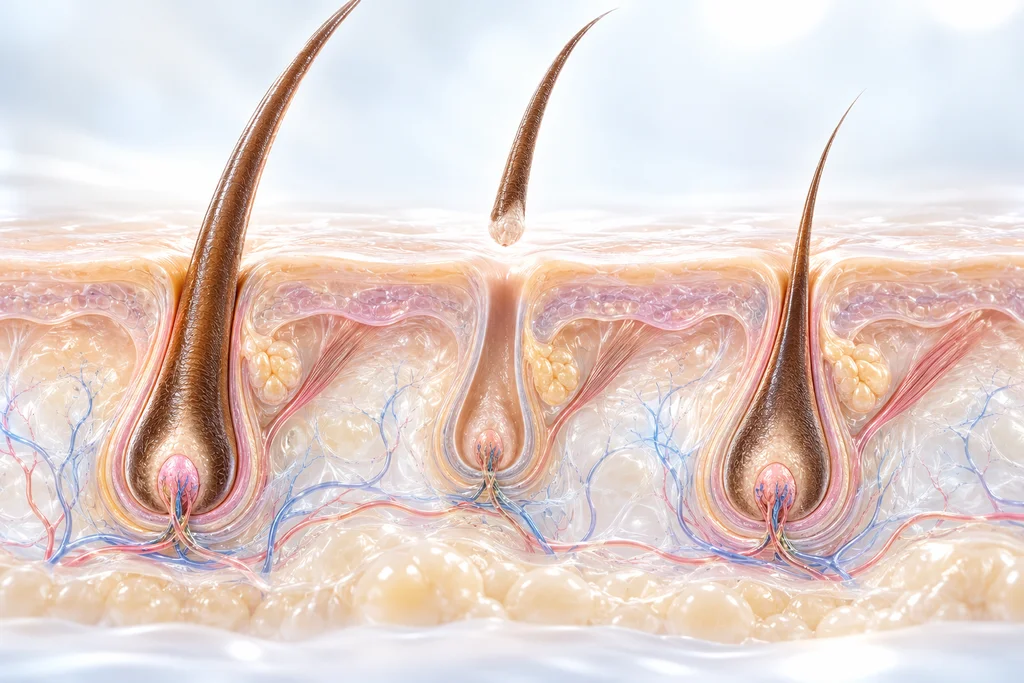
The visible hair is released
The same shaft detaches and leaves its canal. The follicle does not shed with it.
The structure that produces hair remains beneath the skin.
03 / 03
A new shaft develops
The follicle can produce another hair. Progress is assessed over the following months.
The structure that produces hair remains beneath the skin.
Implanted shafts may shed in the first few weeks. This alone does not mean the graft has been lost.
Reactive shedding of surrounding native hairs is called shock loss. It is often temporary; recovery also depends on their initial condition.
The drawing explains the principle. These phases occur over time, rather than all happening on the day of surgery.
Read the three stages
A visible shaft, a follicle beneath the skin
The shaft passes through the skin. The follicle that produces it lies beneath the surface.
The visible hair is released
The same shaft detaches and leaves its canal. The follicle does not shed with it.
A new shaft develops
The follicle can produce another hair. Progress is assessed over the following months.
When can you assess regrowth?
The first few weeks are too early to assess the cosmetic result. A thinner-looking phase may come before visible improvement. According to the AAD, results often become noticeable between six and nine months; some people need twelve months. [1]
With reactive shedding of native hairs, timing depends on the hair cycle and the individual situation. Surgery can trigger telogen effluvium, with shedding appearing several months after the trigger. Not all hairs change phases on the same day. [5]
Our guide to hair transplant progress provides broader context for your photos. Keep your follow-up appointments so the team can compare your current appearance with your starting point.
Practical steps during this phase
- Follow your team’s written aftercare instructions for washing, contact with the scalp and returning to activities. Ask for clarification before changing a routine you are unsure about.
- Do not pull on a hair to test whether it is secure or pick at crusts. The NHS emphasizes protecting grafts and following the postoperative care instructions. [6]
- Take photographs in consistent conditions: dry hair, similar lighting, the same distance and matching angles. Record the surgery date and the photo date.
- When contacting the clinic, explain when shedding started, where it is happening and which products you are using. Include an overview rather than only a very close photograph.
- Do not start a treatment or supplement simply to “stop shock loss.” Discuss whether a product is useful, and when to use it, with your treating doctor.
The aim is not to count every shed hair. It is to keep a straightforward routine and useful reference points for your follow-up.
When should you contact the team?
Shedding on its own is different from an area becoming painful, hot or oozing. Contact the clinic promptly if you experience severe pain or unexpected symptoms; the NHS advises contacting the surgical team in these circumstances. [6]
If thinning continues or growth seems out of step with the follow-up plan, arrange a review. The doctor can assess postoperative shedding, ongoing hair loss and other possible causes.
You can also read our hair transplant FAQs or contact NOVA to share your questions and arrange follow-up.
Common questions
Does everyone experience shock loss?
No. Shedding of native hairs is not inevitable. ISHRS notes greater susceptibility in miniaturized hairs and in female patients. The assessment before surgery is a chance to discuss this context. [2]
Does a white tip mean the entire follicle came out?
Not necessarily. A hair at the end of its cycle may have a keratinized club-shaped end. That small swelling is not the complete organ that produces the hair. [4]
Does shock loss mean my transplant has failed?
Early shedding alone is not enough to establish failure. Its location, accompanying symptoms and progress during follow-up matter. One photograph cannot replace that comparison.
Can a technique or instrument prevent it completely?
Instrument selection and careful planning are part of the surgical process. They cannot promise that no surrounding hair will react. Follow-up remains the way to understand your progress.
Sources and references
Further reading

Am I a good candidate for a hair transplant?
Donor area, hair loss progression, and expectations: understanding what makes a transplant plan feasible, adaptable, or discouraged, including at Norwood stages VI and VII.
Read the article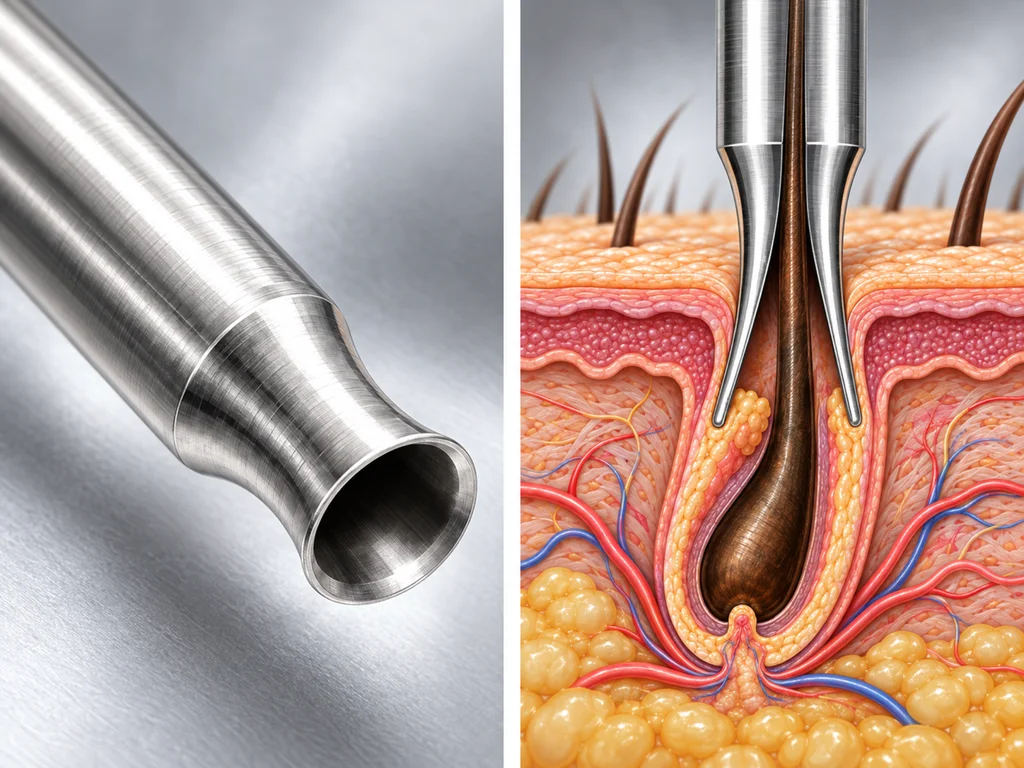
Punch Contour: protecting grafts during FUE harvesting
Punch geometry, graft checks, and donor-area planning: understand how FUE harvesting fits into a NOVA hair transplant.
Read the article
3,000-graft hair transplant: cost, coverage and limits
Understand 3,000 grafts, front-versus-crown priorities, donor preservation and NOVA fees.
Read the article
Choosing a Hair Transplant Center in Paris: Your Guide
Technique, donor area, a clear graft count, results, and follow-up: practical questions for choosing a hair transplant center in Paris.
Read the article