



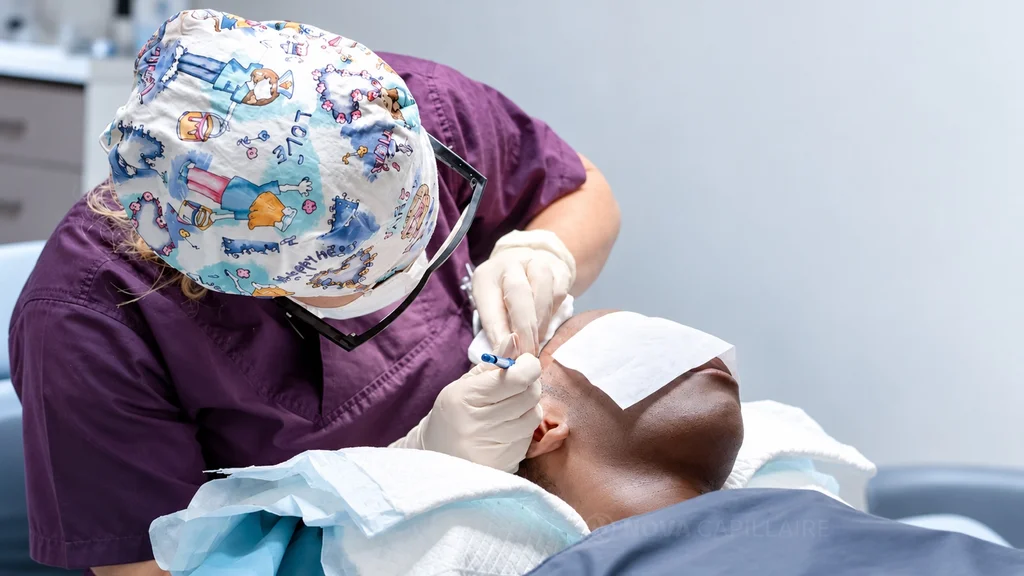
From harvesting to placement, each instrument has a specific role.
Three instruments, three different roles
The punch works in the donor area; the blade prepares the sites that will receive grafts; forceps place them. Comparing these instruments as if they performed the same task is misleading. FUE describes harvesting follicular units individually. Recipient-site preparation and graft placement are separate subsequent steps. [1]
| Instrument at NOVA | Stage | Role |
|---|---|---|
| Punch Contour | Donor harvesting | Release the follicular unit from its tissue attachments before removal. |
| Sapphire blade | Recipient-site preparation | Create sites according to the planned outline, direction, and distribution. |
| Implantation forceps | Graft placement | Position each graft in a prepared site. |
Punch Contour
- Stage
- Donor harvesting
- Role
- Release the follicular unit from its tissue attachments before removal.
Sapphire blade
- Stage
- Recipient-site preparation
- Role
- Create sites according to the planned outline, direction, and distribution.
Implantation forceps
- Stage
- Graft placement
- Role
- Position each graft in a prepared site.
This walkthrough complements our general guide to Afro-textured hair transplants. Here, we follow the graft and the decisions made at each stage.
Harvesting with follicular curvature in mind
The visible curl does not reveal the exact path of a follicle beneath the skin. Curvature varies between people and within a donor area. A clinical publication on curly hair describes the importance of observation and adjustments during harvesting. [2]
At NOVA, we use Punch Contour, manufactured to our specifications. Its progressively flared opening is designed to accommodate the passage of the follicular unit. The punch does not grip the bulb like forceps: it works around the graft to release the tissues holding it in place.
Instrument shape supports the technique; it does not replace inspection of the harvested grafts. Orientation, centering, and depth must respond to observations. A small retrospective series of 18 patients examined different punch designs in tightly curled Afro-textured hair. Its results apply to the instruments studied, not to NOVA’s Punch Contour. [3]
Donor reserve is another limit. Hair that looks full does not allow unlimited harvesting. Our article on coily hair and graft counts explains that balance.
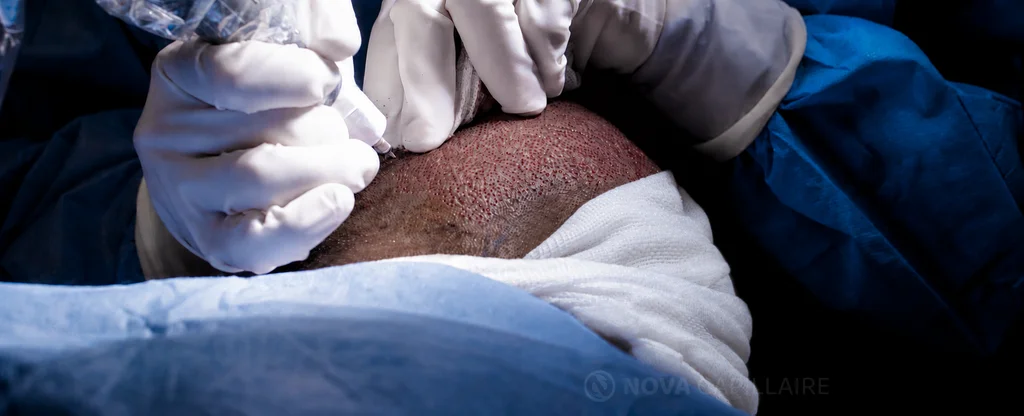
Donor harvesting with Punch Contour, adapting the technique to follicular curvature.
Inspecting and preserving grafts after harvesting
The work continues once a unit has been removed. At NOVA, examination under magnification complements observations during harvesting. It helps assess grafts and organize their distribution before placement. Curvature, length, and the number of hairs in each unit are among the characteristics to consider.
Between harvesting and implantation, grafts need careful handling and protection from drying. Their organization on the tray is part of the procedure. A tray of grafts in physiological saline illustrates this intermediate stage between harvesting and placement.
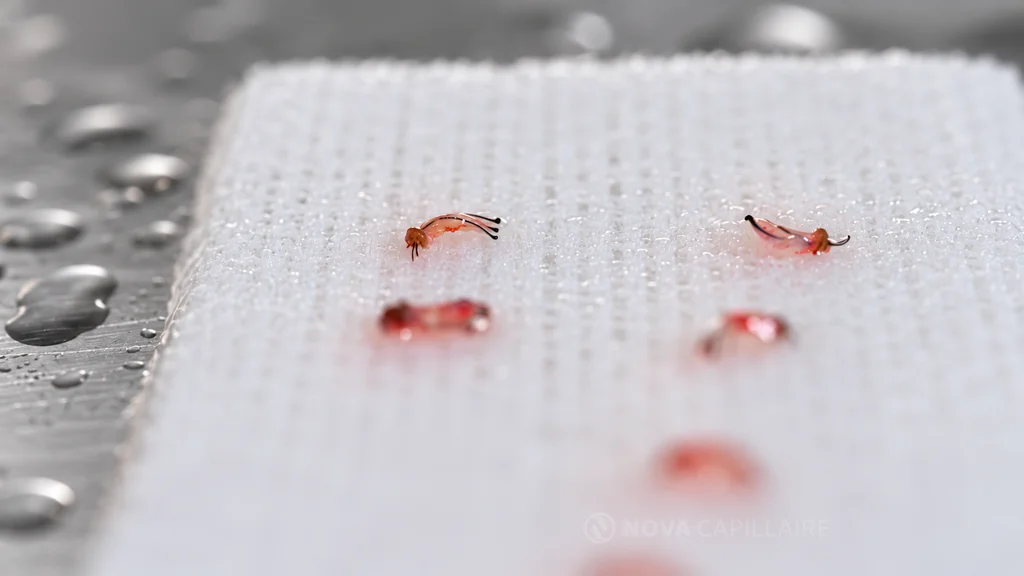
Coily hair grafts on a moistened pad before implantation.
Preparing recipient sites with sapphire blades
At NOVA, sapphire blades prepare recipient sites before graft placement. Hairline outline, angle, direction, and distribution are planned together. The blade does not harvest the follicle or replace graft inspection.
For a natural-looking hairline, our approach combines an irregular leading edge with single-hair grafts in the first row, followed by a gradual transition toward fuller units behind it. Distribution depends on the plan and the available grafts. Our hairline article explains this work.
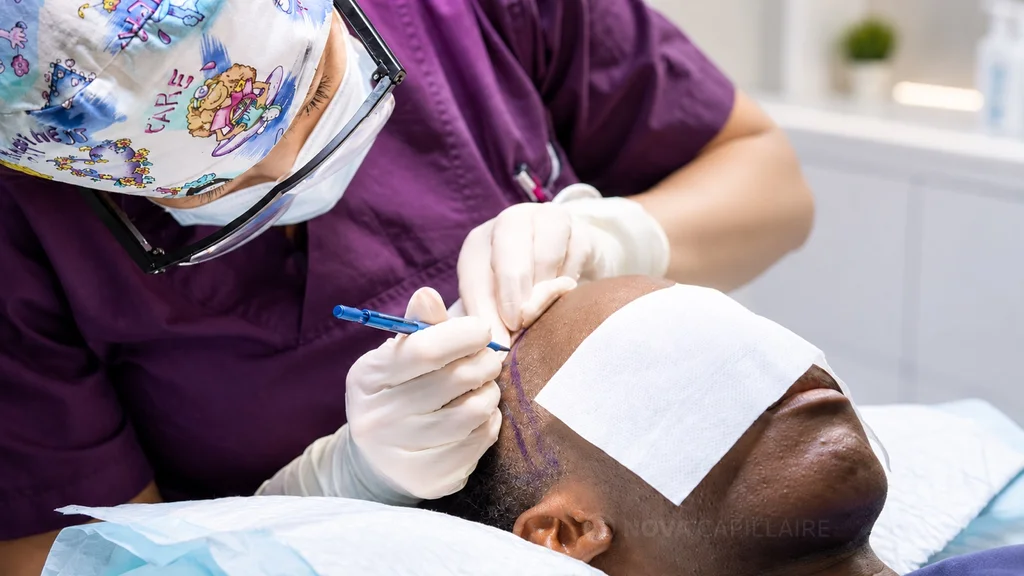
Hairline marking and frontal landmarks before recipient-site preparation.
Sapphire is an instrument choice within our protocol. The material alone does not establish better regrowth. Results also depend on planning, execution, and follow-up.
Sapphire and the Choi technique: comparing placement
The Choi technique uses an implanter pen into which a graft is loaded before placement. It concerns implantation; it does not independently resolve the challenge of harvesting a curved follicle. ISHRS distinguishes harvesting methods from the instruments used to place grafts. [1]
At NOVA, we favor sapphire-prepared sites and forceps placement. This workflow allows our team to prepare the sites, then select and position units without loading them into an implanter needle.
| Comparison point | Sapphire sites and forceps at NOVA | Choi technique |
|---|---|---|
| Site preparation | Sites are prepared before graft placement. | Depending on the model, a sharp implanter creates a site and deposits the graft; a dull model uses a pre-existing site. |
| Graft handling | The graft is held and positioned with forceps. | The graft is loaded into the implanter channel before placement. |
| Curved units | Gripping and insertion must respect their shape. | Needle selection and loading must accommodate their shape and dimensions. |
| Points requiring care | Avoid compression, traction, or bending during placement. | Avoid unsuitable loading, bending, or hooking during placement. |
| What guides the choice | The plan, grafts, workflow, and team’s skills. | The plan, grafts, instrument, and team’s skills. |
Site preparation
- Sapphire sites and forceps at NOVA
- Sites are prepared before graft placement.
- Choi technique
- Depending on the model, a sharp implanter creates a site and deposits the graft; a dull model uses a pre-existing site.
Graft handling
- Sapphire sites and forceps at NOVA
- The graft is held and positioned with forceps.
- Choi technique
- The graft is loaded into the implanter channel before placement.
Curved units
- Sapphire sites and forceps at NOVA
- Gripping and insertion must respect their shape.
- Choi technique
- Needle selection and loading must accommodate their shape and dimensions.
Points requiring care
- Sapphire sites and forceps at NOVA
- Avoid compression, traction, or bending during placement.
- Choi technique
- Avoid unsuitable loading, bending, or hooking during placement.
What guides the choice
- Sapphire sites and forceps at NOVA
- The plan, grafts, workflow, and team’s skills.
- Choi technique
- The plan, grafts, instrument, and team’s skills.
For strongly curved grafts, compatibility with the instrument and careful handling deserve particular attention. This explains our practice preference; it does not establish that the Choi technique is systematically unsuitable for every person with Afro-textured hair.
A publication on implanters describes potential injuries, including hooking, alongside good graft preservation under the conditions studied. It is not an Afro-specific comparison establishing sapphire’s superiority for all patients. [4] Our Sapphire FUE / Choi comparison explores these differences.
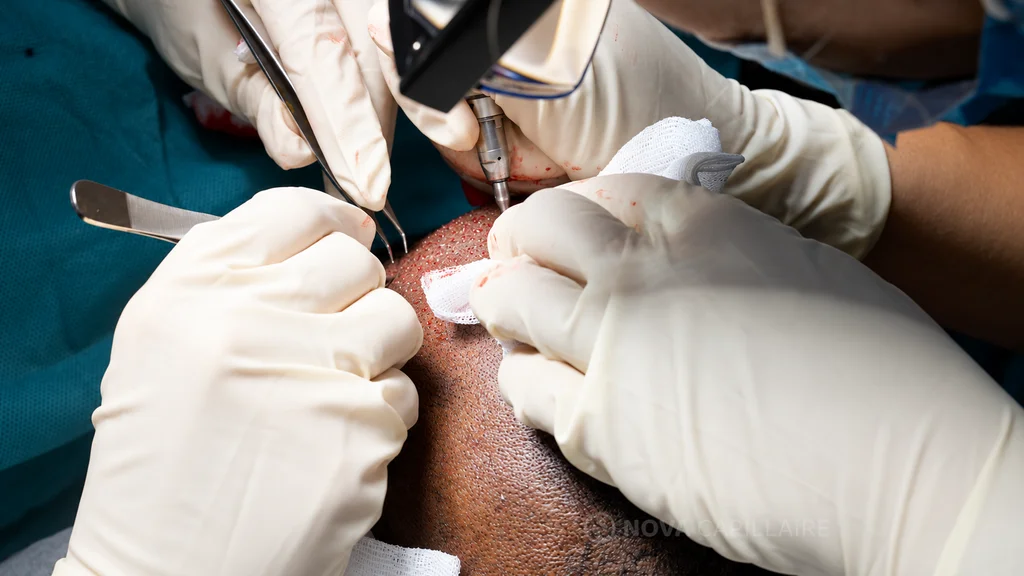
Close-up of the procedure during a coily hair transplant.
What the photographs should help you understand
A harvesting photograph, a view of grafts on the tray, and a placement photograph show three different stages. Together, they make the approach easier to understand than a sequence of unexplained results.
To assess regrowth, look at a complete case: baseline appearance, actual number of grafts implanted, areas treated, and follow-up interval. The results on our Afro-textured hair page provide that context. Each plan is individual; a photograph cannot promise the same result for another person.
Frequently asked questions
Does Punch Contour replace Sapphire FUE?
No. Punch Contour is used for FUE harvesting. Sapphire blades are used later to prepare recipient sites. They are complementary instruments in our workflow.
Does every person with Afro-textured hair have strongly curved follicles?
No. Visible texture does not describe every unit’s exact shape beneath the skin. Assessment and observations during harvesting help adapt the approach. [2]
Why show grafts on a tray?
To explain what happens between harvesting and implantation: inspection, organization, and keeping grafts in a storage medium. This stage matters even though it is less visible than a before-and-after result.
Is the Choi technique always discouraged for coily hair?
The selected sources do not justify a blanket prohibition. Curved grafts may require adaptations to loading and instrument selection. NOVA favors forceps placement in sapphire-prepared sites and explains that choice during assessment.
Does sapphire guarantee greater density?
No. Feasible density depends on factors including donor reserve, the area requiring coverage, and the treatment plan. The blade’s name is not a guarantee of regrowth or coverage.
Can I follow the same plan as another patient with Afro-textured hair?
A case can provide context, not a plan to copy. Diagnosis, donor reserve, treatment areas, and expectations need individual assessment.
Sources and references
References accessed October 25, 2026.
Further reading
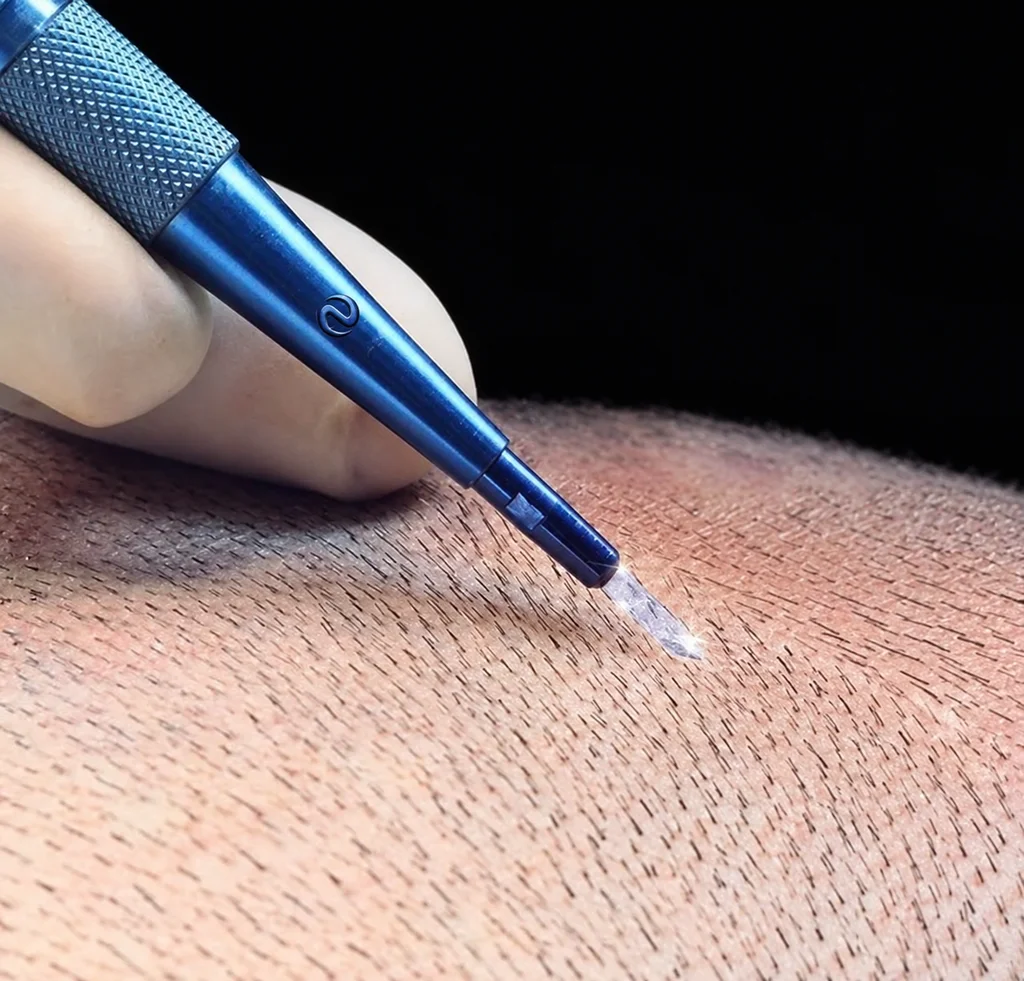
Sapphire FUE hair transplant: technique, results, and reviews
Is Sapphire FUE really suited to your hair loss? NOVA Capillaire explains the method, its advantages, limits, healing and results expected month by month.
Read the article
Smoking and hair loss: understanding the evidence without jumping to conclusions
Smoking is associated with some forms of pattern hair loss, but it cannot explain every case of shedding. What do studies show, what can quitting change, and what should you discuss before a hair transplant?
Read the article
Coily hair: why graft count does not tell the whole story
Curl, visible coverage, and donor supply: understanding an individual transplant plan through NOVA before-and-after cases.
Read the article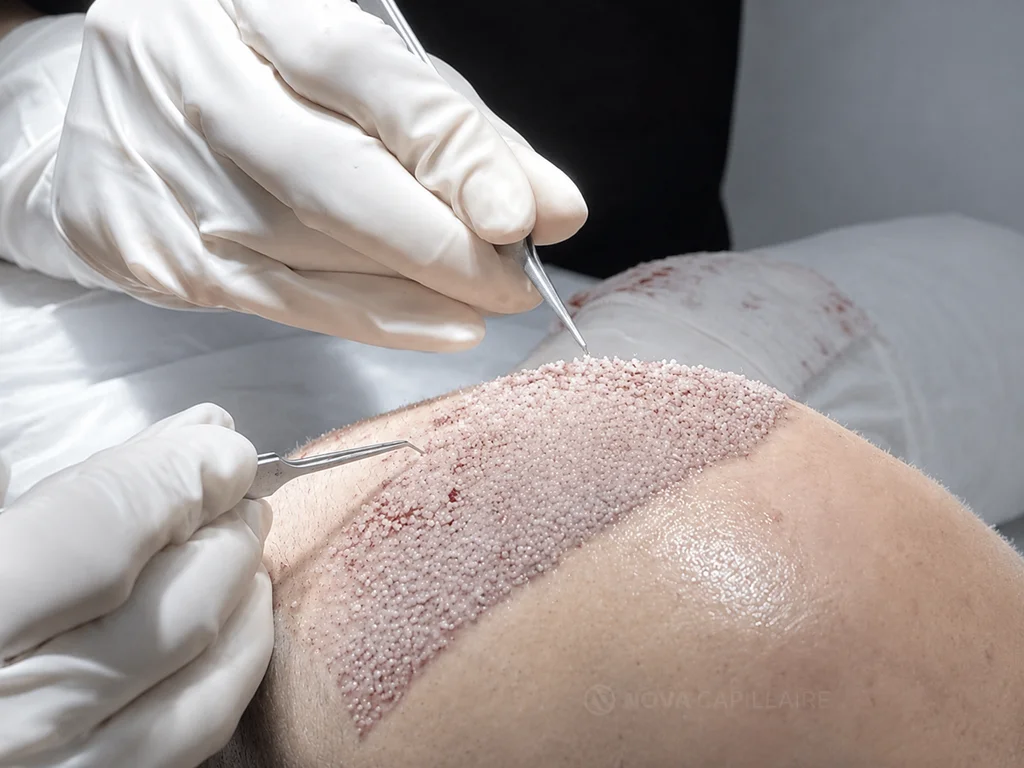
Scalp numbness after a hair transplant
Why your scalp may feel numb after a hair transplant, how sensation can change over several months, and when to contact your team.
Read the article