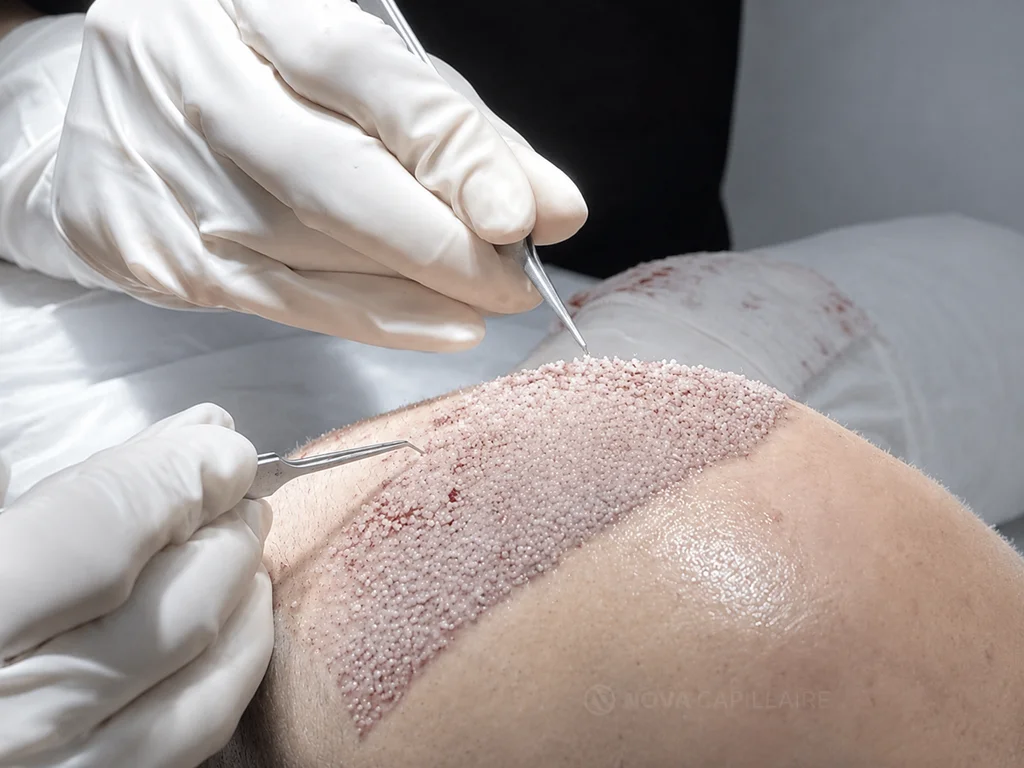
After a hair transplant, touching your scalp or washing your hair may feel different in some areas. The skin may feel less sensitive, almost as though a thin layer separates it from your fingertips. This can continue after the small wounds have closed.
Sensation may take several months to return. Recovery over six to twelve months has been described, but this is neither a universal timeline nor a promise of complete recovery. Changes over time and accompanying symptoms matter as much as the number of months since surgery. [1,2]
Why does the skin feel numb?
Nerves carry sensory signals from the scalp. Local anesthesia temporarily interrupts those signals during the procedure. Numbness that continues afterward does not mean the anesthetic remains active for months.
Harvesting and preparing implantation sites can affect small nerve branches in the skin. Reduced sensation is called hypoesthesia. Unusual sensations, such as tingling, are called paresthesia. Both the donor area and the recipient area can be affected. [1,3]
SCALP ANATOMY
A sensory network around the follicle
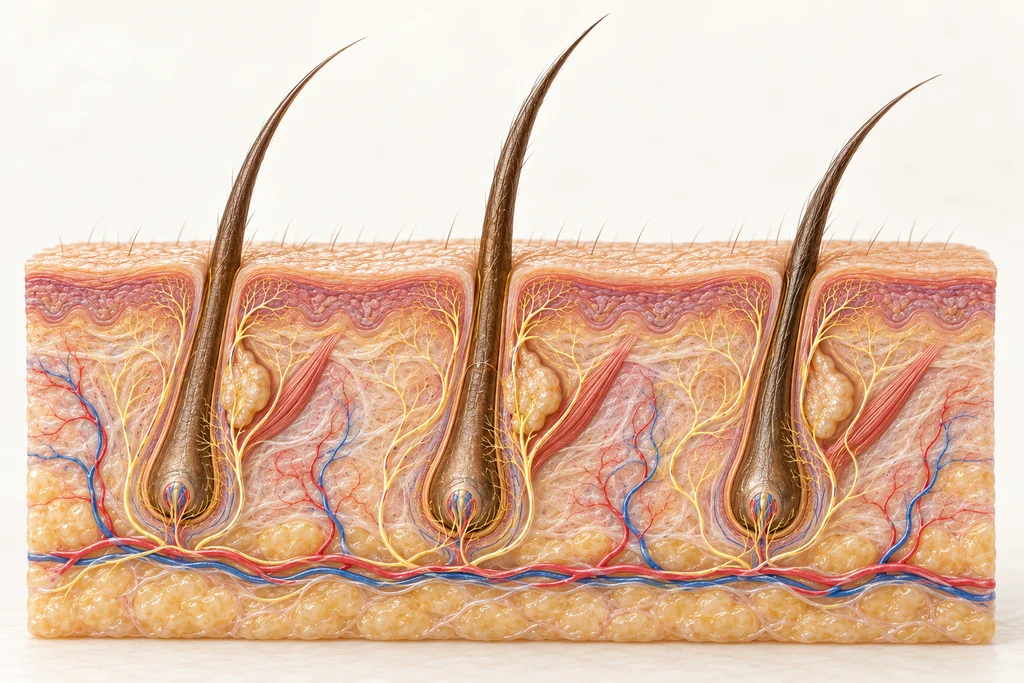
- Epidermis
- The outer skin layer.
- Dermis
- The layer containing follicles and many nerve branches.
- Subcutaneous tissue
- Deeper tissue rich in fat cells.
Nerve fibers
Fine branches in the skin carry sensory signals.
Around the follicle
Sensory endings surround follicles; hair movement can stimulate them.
After transplantation
The procedure can affect small nerve branches. Skin may feel less sensitive while they recover.
Nerve fibers are shown in yellow; blood vessels in red and blue.[6]
Can numbness last six months to a year?
Yes, this can happen. A medical chapter on hair transplant complications describes sensation returning over six to twelve months. [1]
Studies do not all report the same timeline. In a retrospective study of women who underwent transplantation, paresthesia had resolved before the six-month visit in almost all affected patients; one patient still had recipient-area paresthesia beyond six months. These observations cannot establish the same recovery deadline for everyone. [2]
Follow-up helps assess what is changing: is the less-sensitive patch getting smaller? Is the discomfort easing? Has pain developed? Persistent altered sensation should be discussed with the team rather than left unmentioned until a year has passed.
Hair growth and sensation need separate assessment
Seeing new hair grow does not, by itself, establish that sensation has recovered. Likewise, reduced sensation does not establish that grafts have been lost. The team assesses the skin, sensory symptoms, and hair growth separately.
A small study comparing transplant patients with controls measured a difference in the ability to distinguish two points touching the scalp. This examines one specific sensory function. It does not mean everyone loses the same percentage of overall sensation or that the test predicts an individual recovery date. [4]
What should you do day to day?
Continue washing and caring for your scalp according to your team's instructions. Do not test a numb patch with a needle, intense heat, or forceful rubbing. Take particular care with bumps and water temperature when skin feels less sensitive. Do not start vigorous massage, supplements, or treatments intended to “wake up the nerves” without discussing them with your team.
Before a follow-up conversation, note which area feels different, when the change began, and whether it is improving, stable, or worsening. These details complement an examination; a photograph cannot measure what you feel.
When should you contact the team?
Report an area that remains very numb, is not improving, or concerns you. Seek prompt advice for substantial or increasing pain, persistent burning, or repeated electric-shock sensations. Pain should not automatically be attributed to nerve recovery. [3]
Spreading redness, drainage, fever, or a concerning change in skin color also warrant prompt medical advice. Sensory symptoms and skin complications cannot be assessed by duration alone. [3]
Frequently asked questions
Does tingling prove that nerves are recovering?
Tingling can accompany changes in sensation, but does not establish their cause. Painful, persistent, or worsening symptoms need assessment.
Is numbness always temporary?
No. Lasting sensory changes are possible, so complete recovery by a particular date cannot be promised. [5]
Should I wait twelve months before seeking advice?
No. The six-to-twelve-month reference helps explain some longer recoveries. It does not replace follow-up or justify waiting when symptoms are troublesome or worsening.
Sources and references
| Source | Contribution and limitations |
|---|---|
| 1 — Küçüktaş, Complications of Hair Transplantation, 2017 | Medical chapter describing sensory changes and recovery over six to twelve months; not an individual guarantee. |
| 2 — Clinical Features of Patients Treated With Hair Transplants in Female Pattern Hair Loss | Retrospective study in women; paresthesia generally resolved before six months. Population and methods limit generalization. |
| 3 — Garg and Garg, Complications of Hair Transplant Procedures—Causes and Management | Complications and management; persistent neurological symptoms need clinical attention. |
| 4 — Ahmad and Mohmand, Effect of hair restoration surgery on the scalp sensitivity, 2020 | Small comparative two-point discrimination study; does not measure every aspect of sensation or predict individual recovery. |
| 5 — Hair Transplantation, StatPearls | Clinical overview listing temporary or permanent scalp numbness as possible complications. |
| 6 — Abraira et Ginty, The sensory neurons of touch, 2013 | Scientific review of touch receptors and their organization around follicles; does not establish a post-transplant recovery timeline. |
Further reading

Am I a good candidate for a hair transplant?
Donor area, hair loss progression, and expectations: understanding what makes a transplant plan feasible, adaptable, or discouraged, including at Norwood stages VI and VII.
Read the article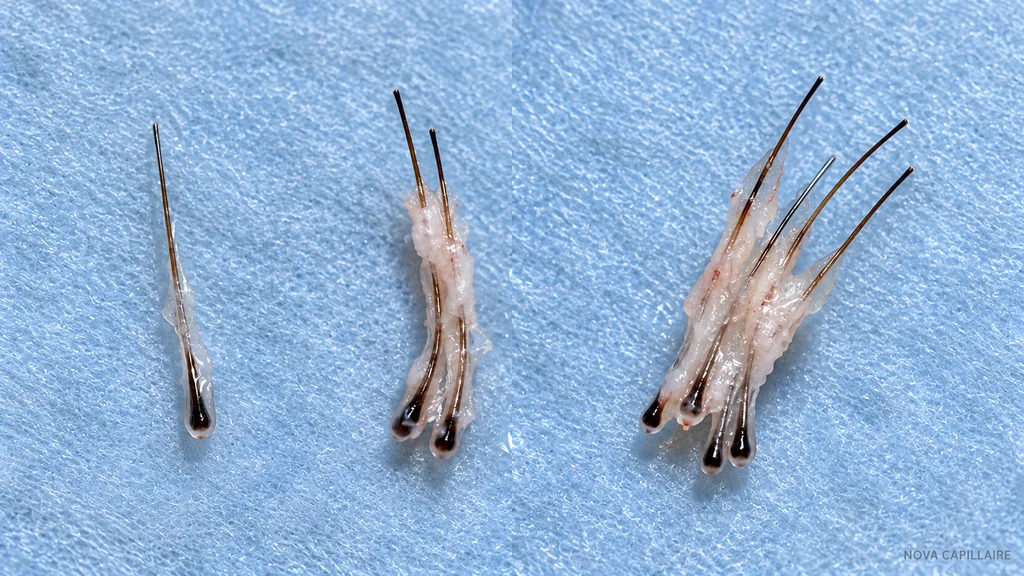
Hairs, follicles and grafts: understanding transplant numbers
One hair, several hairs, one graft: understand what is counted before comparing treatment plans.
Read the article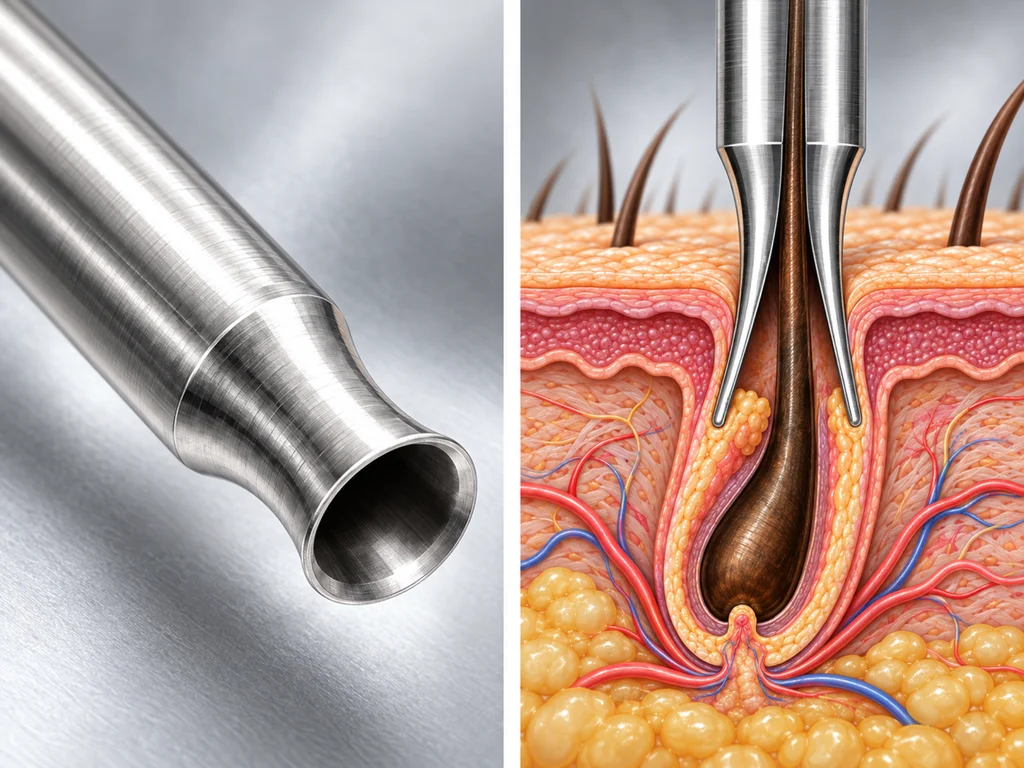
Punch Contour: protecting grafts during FUE harvesting
Punch geometry, graft checks, and donor-area planning: understand how FUE harvesting fits into a NOVA hair transplant.
Read the article
3,000-graft hair transplant: cost, coverage and limits
Understand 3,000 grafts, front-versus-crown priorities, donor preservation and NOVA fees.
Read the article